
Modern Biological Challenges: Deforestation, Defaunation, and the Role of Pathogenic Bacterial Genomics in Indonesia
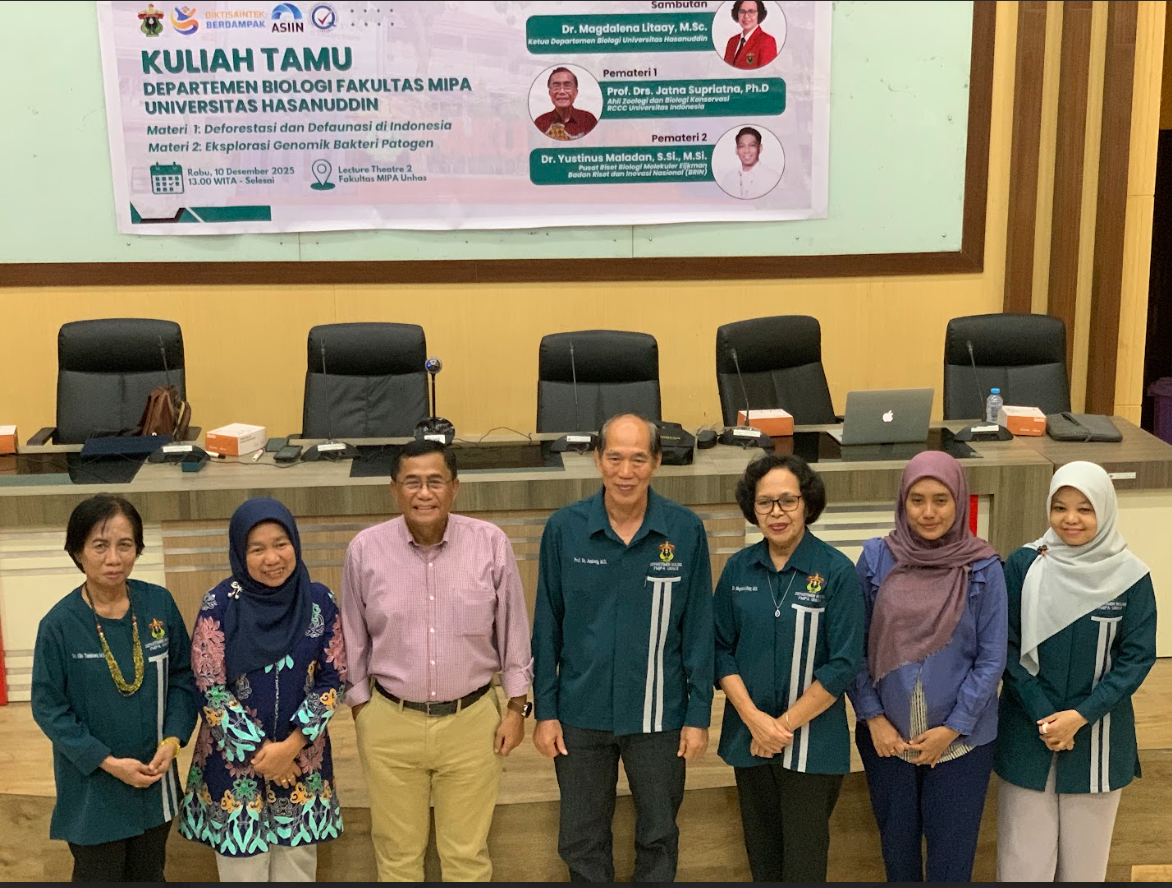
Department of Biology, Faculty of Mathematics and Natural Sciences (FMIPA) at Hasanuddin University is once again hosting a Guest Lecture on Wednesday, December 10, 2025, at Lecture Theatre 2 (LT 2) FMIPA. The event featured Prof. Drs. Jatna Supriatna, Ph.D., an expert in Zoology and Conservation Biology from the RCCC at the University of Indonesia, and Dr. Yustinus Maladan, M.Si. from the Eijkman Molecular Biology Research Center at BRIN, who delivered their presentations online via the Zoom Meeting application. The event was attended by lecturers and students from the undergraduate and graduate programs within the Department of Biology.
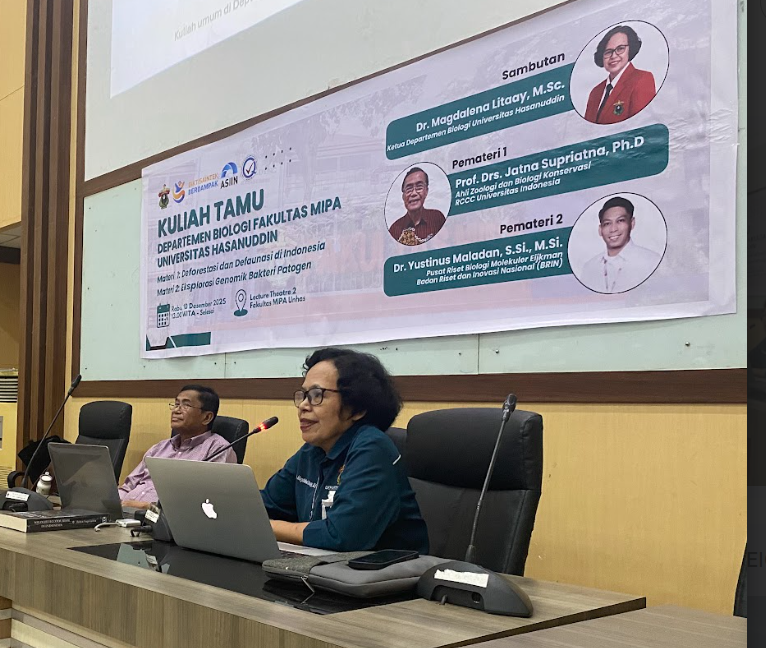
This event was officially opened by the Head of the Biology Department, Dr. Magdalena Litaay, M.Sc. In her speech, she expressed her appreciation for the guest lecture and emphasized the importance of active participation by all participants in taking advantage of the academic opportunities available. Furthermore, Dr. Magdalena Litaay emphasized that this guest lecture aimed to enrich the academic community's understanding of various ecological challenges and global health issues that have emerged in the modern era.
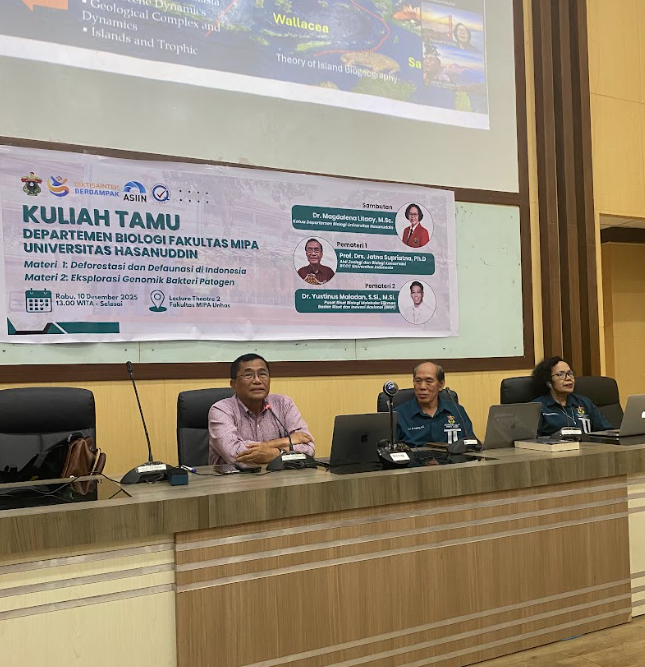
As a guest lecturer, Prof. Drs. Jatna Supriatna, Ph.D., guided by Prof. Dr. Ambeng, M.Si. as moderator, delivered a presentation on Deforestation and Defaunation in Indonesia. In his presentation, Prof. Jatna Supriatna explained the uniqueness of Indonesia's biodiversity from an evolutionary and biogeographical perspective, including the role of Sulawesi Island as a hybrid zone that contributes significantly to the high biodiversity of the Wallacea region. Furthermore, he described the dynamics of the threat of deforestation in Indonesia, which is fluctuating and has an impact on the occurrence of defaunation on various large islands. In addition, he also presented various approaches to solutions in efforts to control deforestation and its implications for accelerating global warming, which has the potential to increase sea surface temperatures and ultimately threaten the sustainability of marine ecosystems.
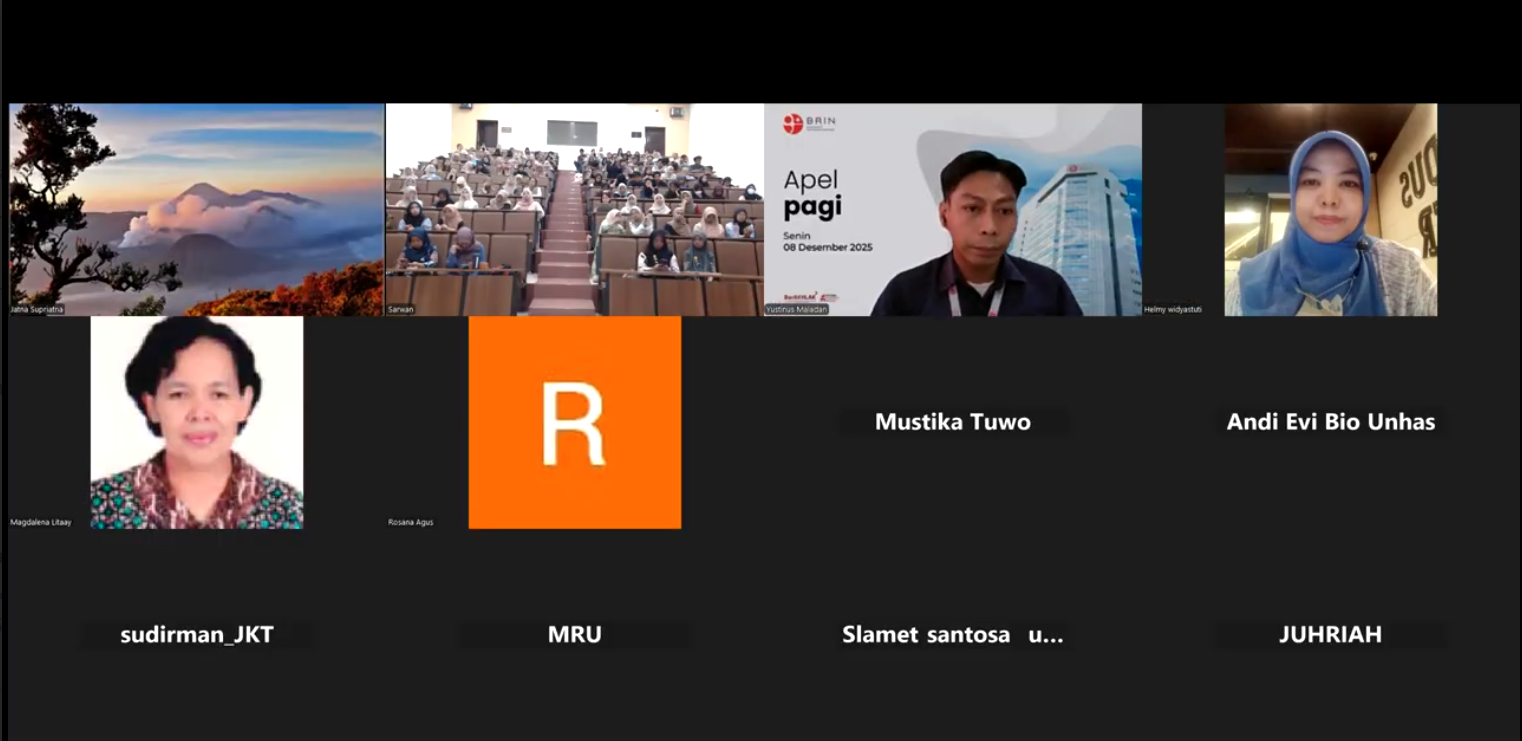
The second speaker, Dr. Yustinus Maladan, M.Si., presented material on Pathogenic Bacterial Genomic Exploration, guided by Dr. Helmy Widyastuti, M.Si., as the moderator. In his presentation, he explained the role of genomic analysis in identifying the genetic characteristics of pathogenic bacteria, including virulence and antibiotic resistance genes. This presentation emphasized the importance of the genomic approach as a basis for understanding the mechanisms of pathogenicity, the dynamics of microorganism evolution, and the development of strategies for the detection, prevention, and control of infectious diseases in the era of modern molecular biology.
After the presentation, the activity continued with an interactive discussion session involving students and speakers. This session was dynamic, marked by the enthusiasm of students in asking various questions and critical responses related to the issues of deforestation and defaunation in Indonesia, as well as the application of a genomic approach in the study of pathogenic bacteria. The discussion reflected the high level of interest of the participants in the integration of environmental and molecular biology issues, while enriching their academic understanding of ecological and health challenges in the modern era.
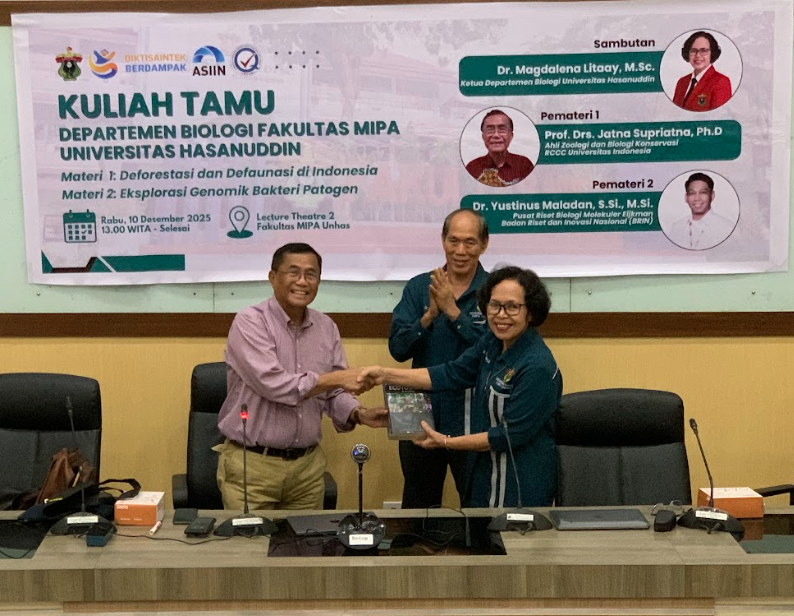
The guest lecture was concluded with a group photo session. As a token of appreciation, a souvenir in the form of a book written by Prof. Drs. Jatna Supriatna, Ph.D., was presented to the Head of the Biology Department, Faculty of Mathematics and Natural Sciences, Hasanuddin University.
Author: Nenis Sardiani, S.Si., M.Si.