
The Existence of Student Research in the Biology Study Program at Hasanuddin University at the Undergraduate Biology Research Colloquium (UBRC) 2026
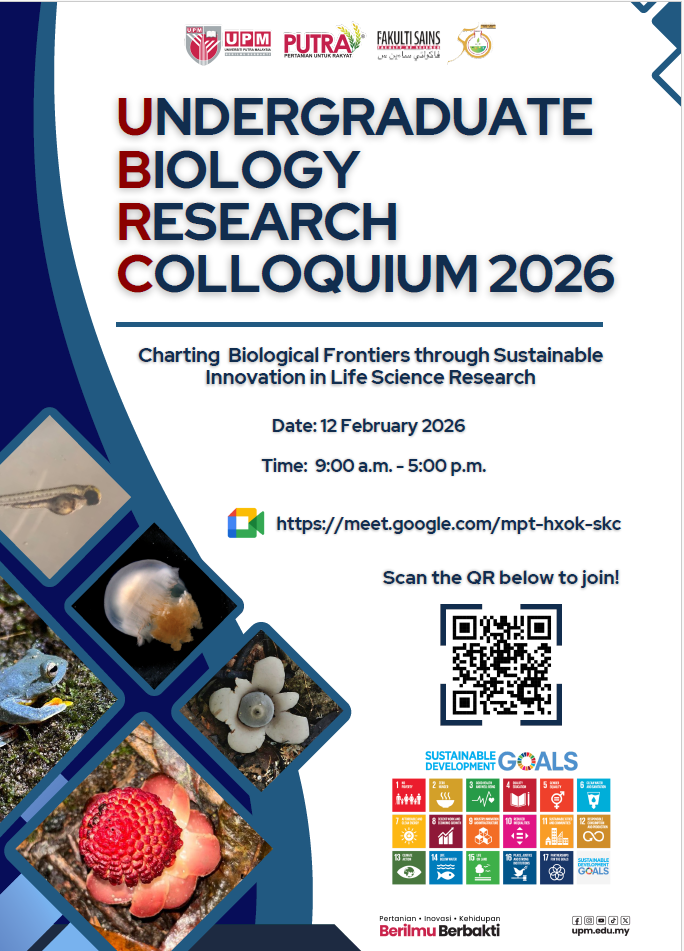
The Biology Study Program, Faculty of Mathematics and Natural Sciences, Hasanuddin University participated in the Undergraduate Biology Research Colloquium (UBRC) 2026, which was held online by Universiti Putra Malaysia on February 12, 2026. This event served as a scientific forum for biology undergraduates to present their research findings and exchange scientific ideas across institutions and countries. With the theme “Charting Biological Frontiers through Sustainable Innovation in Life Science Research,” the colloquium aimed to encourage innovative and sustainable biology research in line with the achievement of the Sustainable Development Goals (SDGs). Through participation in this event, students from the Biology Program at Hasanuddin University gain valuable international academic experience and expand their knowledge and networks in the field of life sciences.
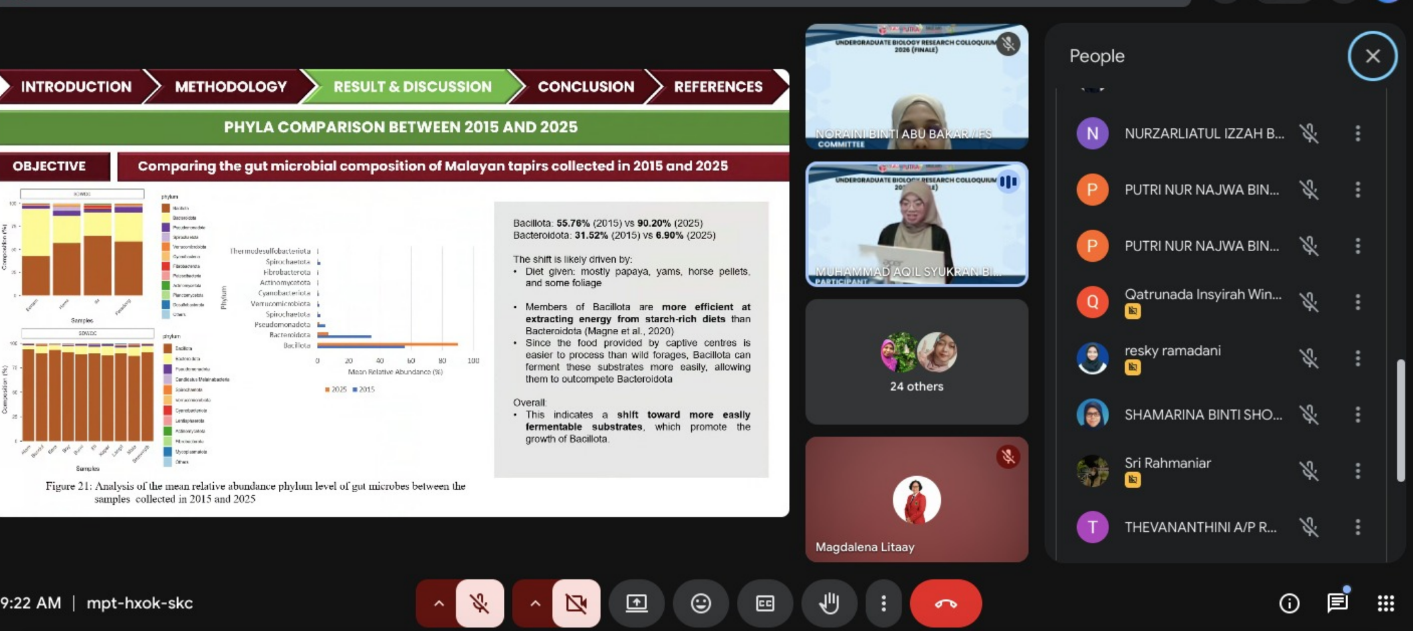
In this activity, students have the opportunity to present the results of their final research projects as part of an undergraduate scientific forum. The 2026 Undergraduate Biology Research Colloquium was officially opened by Dr. Noraini Abu Bakar, Ph.D., Senior Lecturer at the Department of Biology, Faculty of Science, Universiti Putra Malaysia. In her opening remarks, she emphasized the importance of scientific forums for undergraduate students as a means of developing research capacity, scientific communication, and strengthening international academic networks in the field of biology.
The event was attended by four students from the Biology Undergraduate Program, Faculty of Mathematics and Natural Sciences, Hasanuddin University. In addition to students from the Biology Program at Hasanuddin University, the event was also attended by students from the University of North Sumatra, Bogor Agricultural University, Universiti Putra Malaysia, and several other universities, creating a collaborative and cross-institutional academic discussion atmosphere.
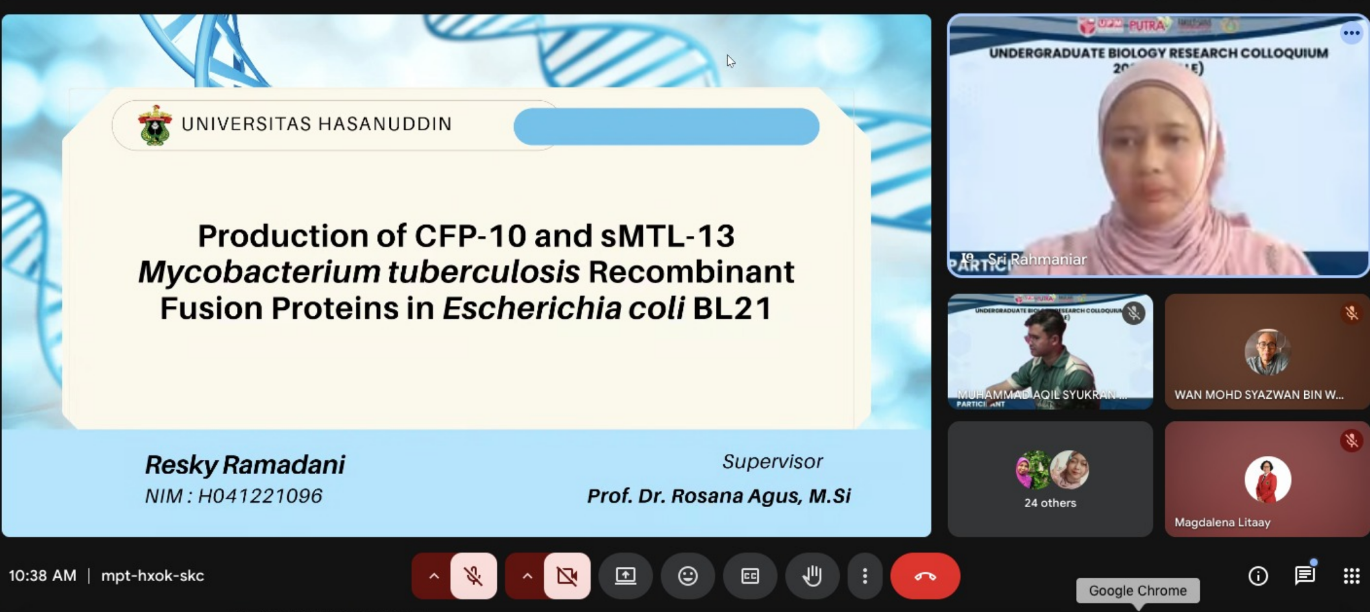
Resky Ramadani, as the first participant from the Biology Study Program at Hasanuddin University, presented his research results entitled “Production of CFP-10 and sMTL-13 Mycobacterium tuberculosis Recombinant Fusion Proteins in Escherichia coli BL21”. In his presentation, Resky explained the background for selecting the CFP-10 and sMTL-13 proteins as important candidates in the development of biomolecules based on tuberculosis diagnostics and immunology. This research is expected to contribute scientifically to the development of molecular approaches to support research on infectious diseases, particularly tuberculosis.
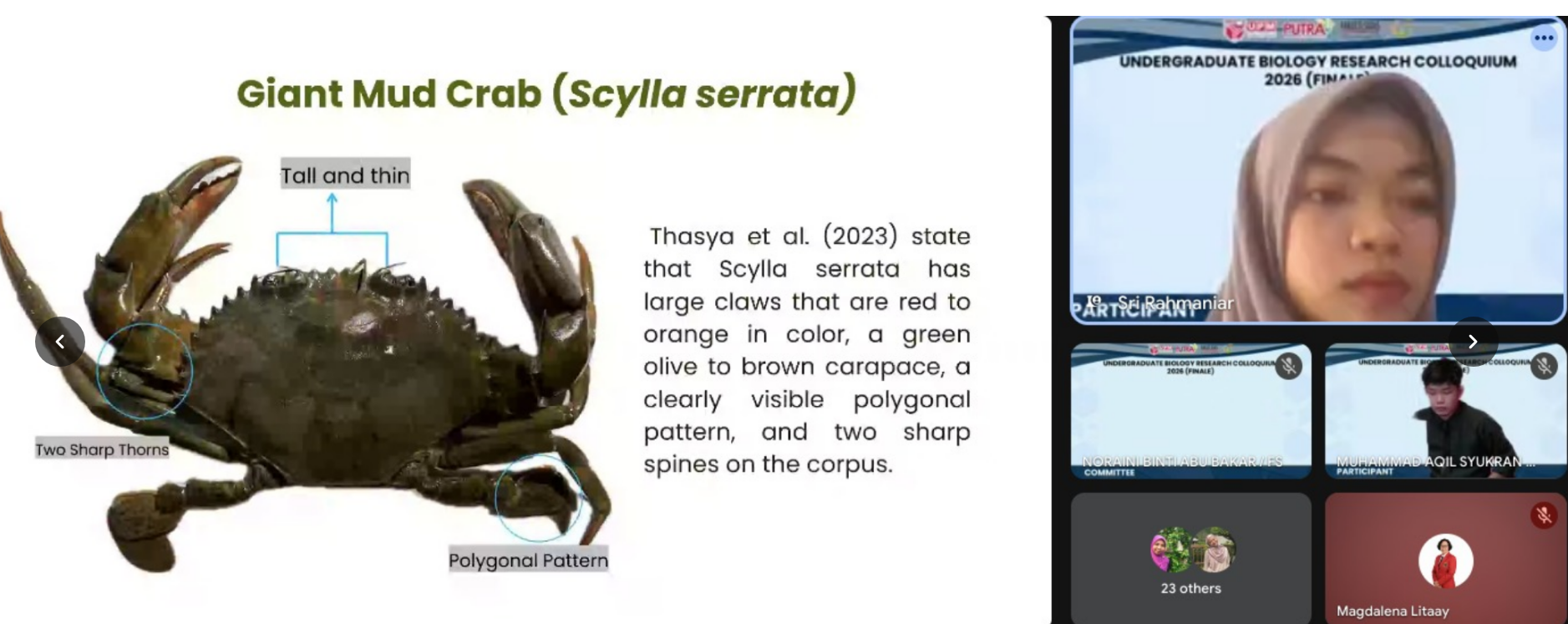
The second participant from the Biology Study Program at Hasanuddin University, A. Atiqah Nurul Amalyah Esa, presented her research results entitled “Morphometric Analysis of Mud Crabs (Scylla spp.) in the Kuri Caddi Mangrove Rehabilitation Area, Maros Regency, South Sulawesi”. In her presentation, Atiqah explained morphometric analysis as an approach to examine the variation in size and body proportions of mud crabs (Scylla spp.) living in the Kuri Caddi mangrove rehabilitation area. This study aims to assess the population status and biological response of mud crabs to mangrove ecosystem rehabilitation efforts, as well as to provide relevant scientific information for the sustainable management and conservation of coastal resources.
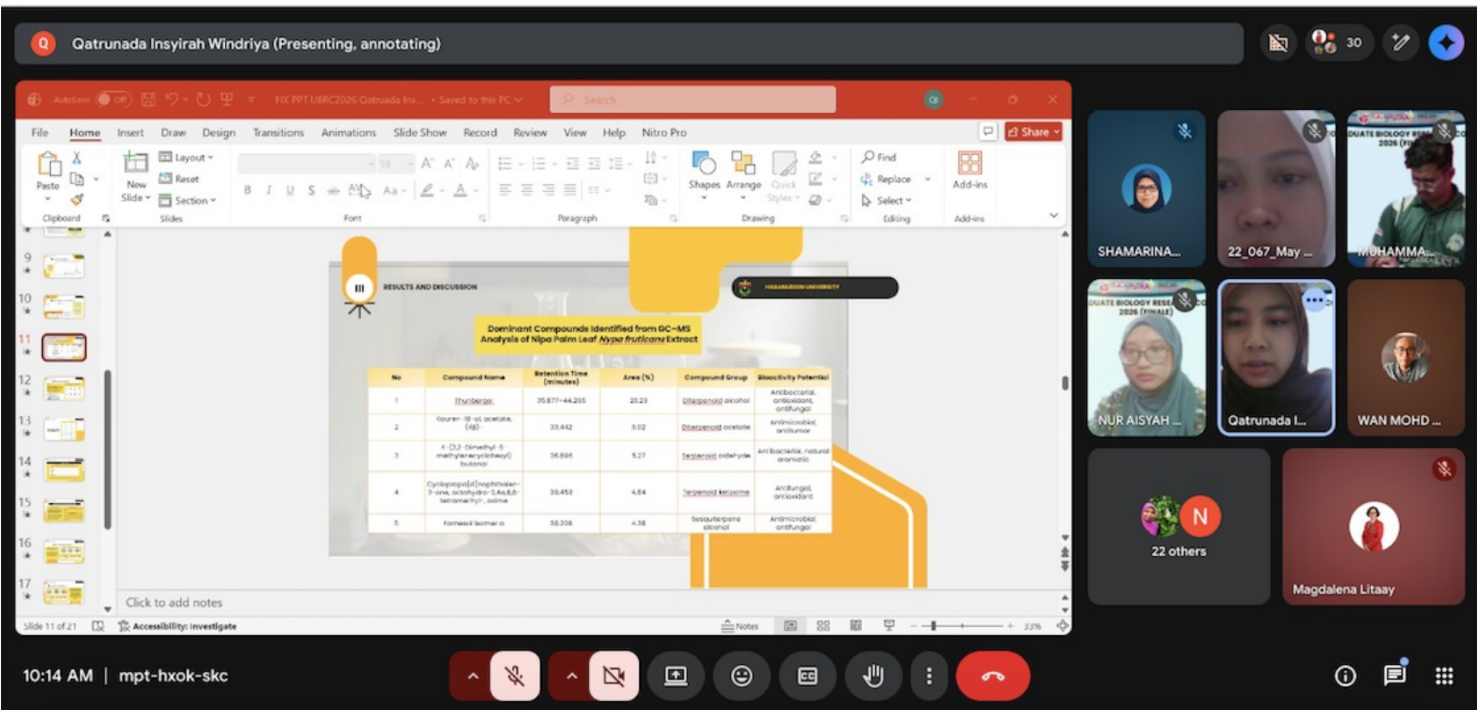
Next, Qatrunada Insyirah Windriya, the third participant from the Biology Study Program at Hasanuddin University, presented her research on “Bioactivity Assessment of Nipa Palm Leaf Extract as an Antibacterial and Cytotoxic Agent: An Integrated Experimental and Computational Approach Against Foodborne Pathogens Listeria monocytogenes and Vibrio parahaemolyticus.” In her presentation, Qatrunada explained the mechanism of inhibiting the growth of foodborne pathogens Listeria monocytogenes and Vibrio parahaemolyticus, and highlighted the potential use of natural materials as an alternative source of bioactive compounds in foodborne disease control.
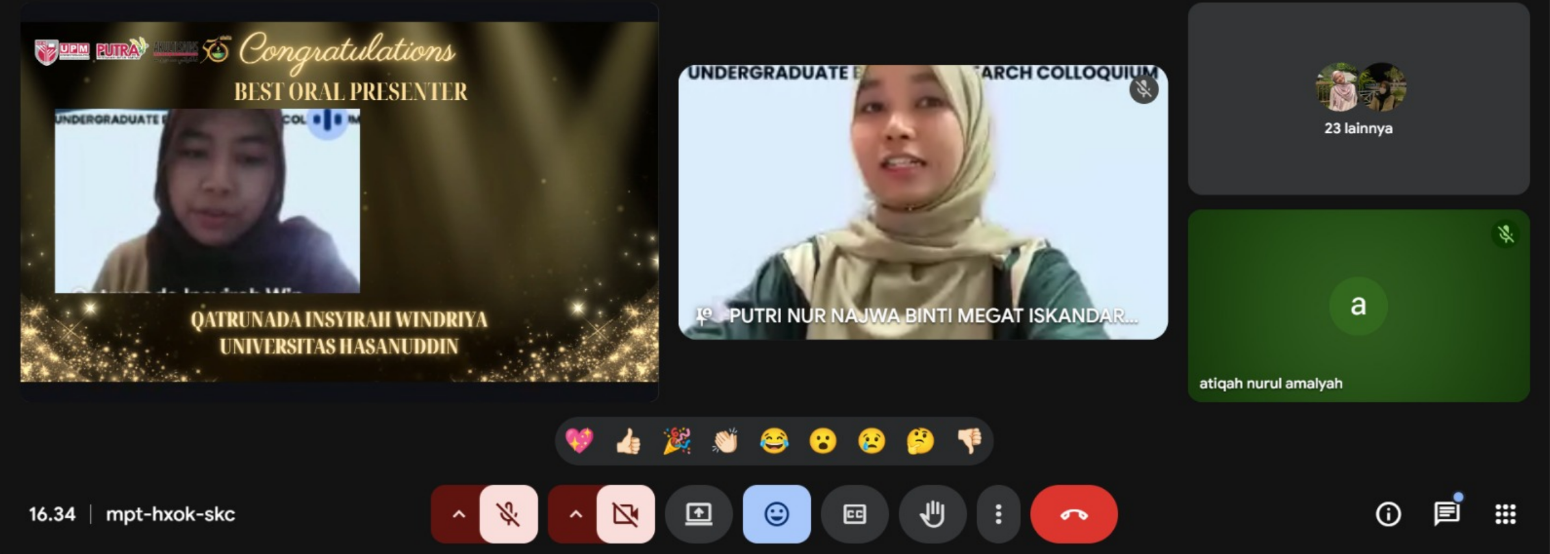
Qatrunada Insyirah Windriya won an award in the Best Oral Presenter category. This achievement is a form of recognition for the quality of scientific presentations, depth of research analysis, and academic communication skills displayed at the 2026 Undergraduate Biology Research Colloquium, as well as bringing pride to the Hasanuddin University Biology Study Program at the international level.
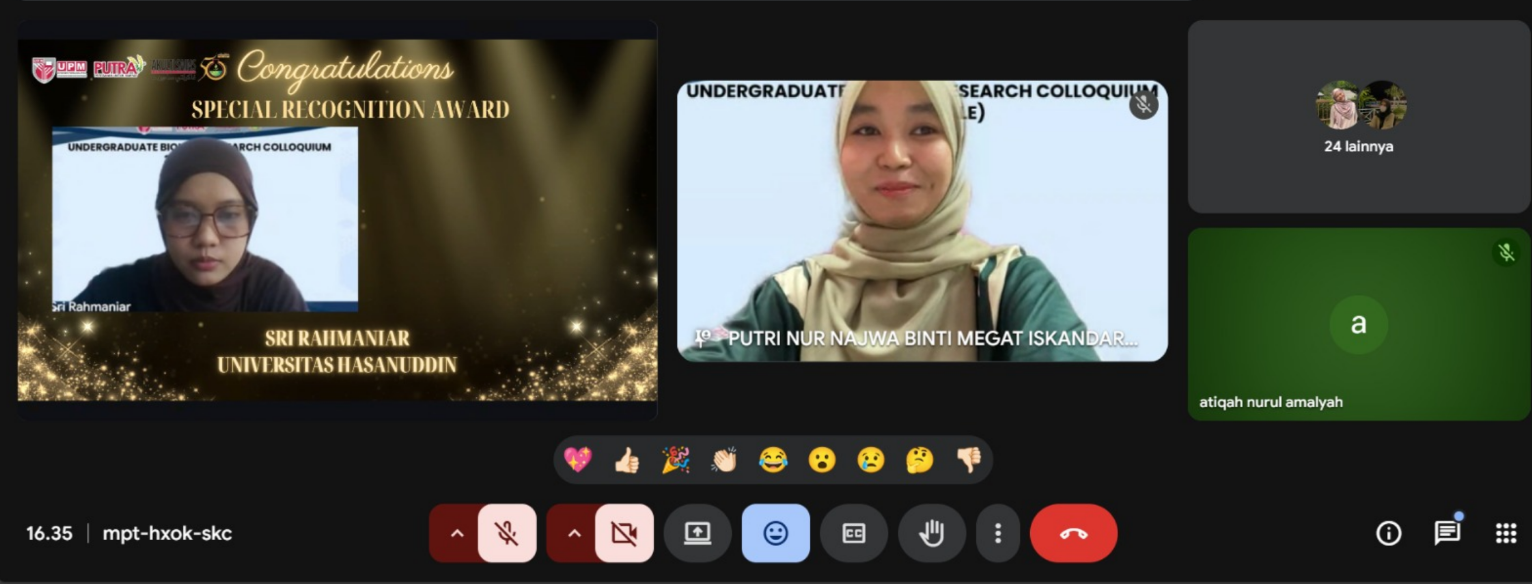
The last participant representing the Biology Study Program at Hasanuddin University, Sri Rahmaniar, presented her research results entitled “Ligation of the Rv3874 Mycobacterium tuberculosis Gene into the pTrcHisA Expression Vector and Transformation into Escherichia coli BL21”. This research discusses the stages of ligating the target gene into the pTrcHisA expression vector and the transformation process into the Escherichia coli BL21 host system as part of a recombinant protein production strategy. In her presentation, Sri Rahmaniar explained the significance of the Rv3874 gene in molecular biology studies of pathogens and its potential applications in the development of protein-based diagnostic and immunology research. Due to the quality of the research substance and the excellent presentation, Sri Rahmaniar's presentation also won the Special Recognition Award, which is a form of appreciation for the scientific contributions presented at the forum.
Author: Nenis Sardiani, S.Si., M.Si.