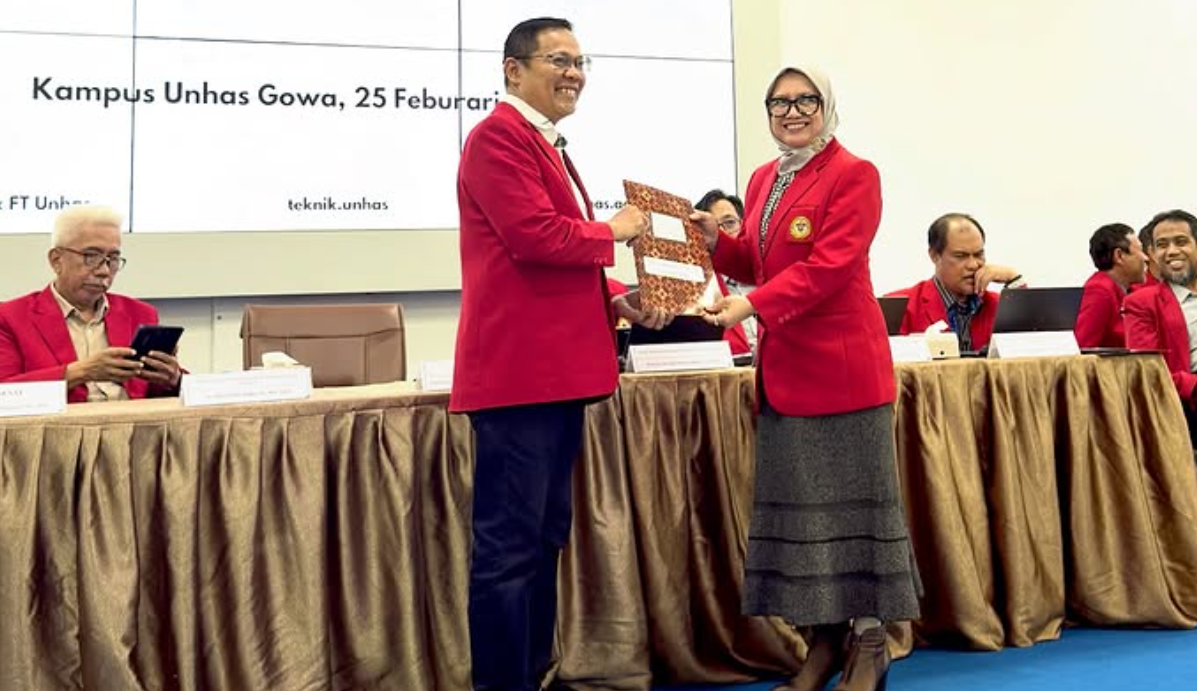
The Department of Informatics Engineering, Faculty of Engineering, Hasanuddin University (DTIF FT-UNHAS), which administers the Doctoral Program in Informatics (PSDIF), is part of the Faculty of Engineering's continuous institutional development. The Faculty of Engineering was established on September 7, 1960, while the Department of Informatics Engineering was officially founded in March 2008 in response to the rapid advancement of information technology and computing disciplines. Following the approval for the establishment of the study program by the Hasanuddin University Board of Trustees on April 8, 2025, the Doctoral Program in Informatics was officially established through Rector's Decree No. 05380/UN4.1/KEP/2025 dated April 15, 2025.
The rapid advancement of information and communication technologies in the era of global digital transformation has fundamentally reshaped various sectors, including industry, government, education, healthcare, and society. Significant progress in Artificial Intelligence (AI), Cloud Computing, the Internet of Things (IoT), Distributed Computing, Cybersecurity, and Big Data Analytics has created an increasing demand for doctoral-level professionals capable of producing scientific innovations, leading strategic research initiatives, and contributing to solutions for national and global challenges.
As a public university committed to the vision of the Indonesian Maritime Continent, Hasanuddin University bears a strategic responsibility to advance science and technology that are relevant to the geographical, social, economic, and environmental characteristics of Indonesia as an archipelagic nation. The Indonesian Maritime Continent concept views the terrestrial, marine, and atmospheric domains as an integrated system requiring advanced information technology and intelligent computing to support natural resource management, maritime security, transportation systems, digital economy development, disaster mitigation, environmental sustainability, and evidence-based policymaking.
The Doctoral Program in Informatics at the Faculty of Engineering, Hasanuddin University, is established to address these challenges through research-based doctoral education that emphasizes scientific novelty, societal relevance, and meaningful contributions to the advancement of informatics and computing technologies. The program is designed to produce graduates capable of developing new theories, methodologies, and technological innovations through original, interdisciplinary, and impactful research.
The curriculum of the Doctoral Program in Informatics is developed in accordance with the Indonesian National Standards for Higher Education (SN-Dikti), the Indonesian National Qualifications Framework (KKNI) Level 9, the principles of Outcome-Based Education (OBE), and Hasanuddin University's Internal Quality Assurance System (SPMI). Curriculum development is conducted continuously through periodic evaluation and review, taking into account the latest developments in informatics, stakeholder needs, national and international benchmarking results, and strategic policies in higher education.
The curriculum development process is carried out systematically to ensure alignment among the program's vision and mission, graduate profile, Program Learning Outcomes (PLOs), bodies of knowledge, curriculum structure, learning strategies, assessment methods, and quality assurance mechanisms. This integrated approach ensures that the doctoral education process remains academically rigorous, responsive to scientific and technological developments, and relevant to national and global development priorities.
Through a comprehensive, adaptive, and research-oriented curriculum, the Doctoral Program in Informatics at Hasanuddin University aims to produce graduates with strong academic integrity, independent research capabilities, scientific leadership, and significant contributions to the advancement of informatics and pervasive computing technologies. Graduates are expected to become innovators and thought leaders who contribute to sustainable development and strengthen Indonesia's competitiveness as a globally recognized Indonesian Maritime Continent.
Ketik minimal 2 karakter lalu tekan Enter