The Department of Administrative Sciences, Faculty of Social and Political Sciences, Hasanuddin University, Holds an International Guest Lecture on AI Disruption and Digital Governance
The Department of Administrative Sciences, Faculty of Social and Political Sciences, Hasanuddin University, Holds an International Guest Lecture on AI Disruption and Digital Governance
The Department of Administrative Sciences, Faculty of Social and Political Sciences (FISIP) at Hasanuddin University, is once again hosting a guest lecture as part of its regular academic program at the beginning of the semester. This activity is part of the department's commitment to strengthening its international network by featuring speakers from reputable partner universities abroad.
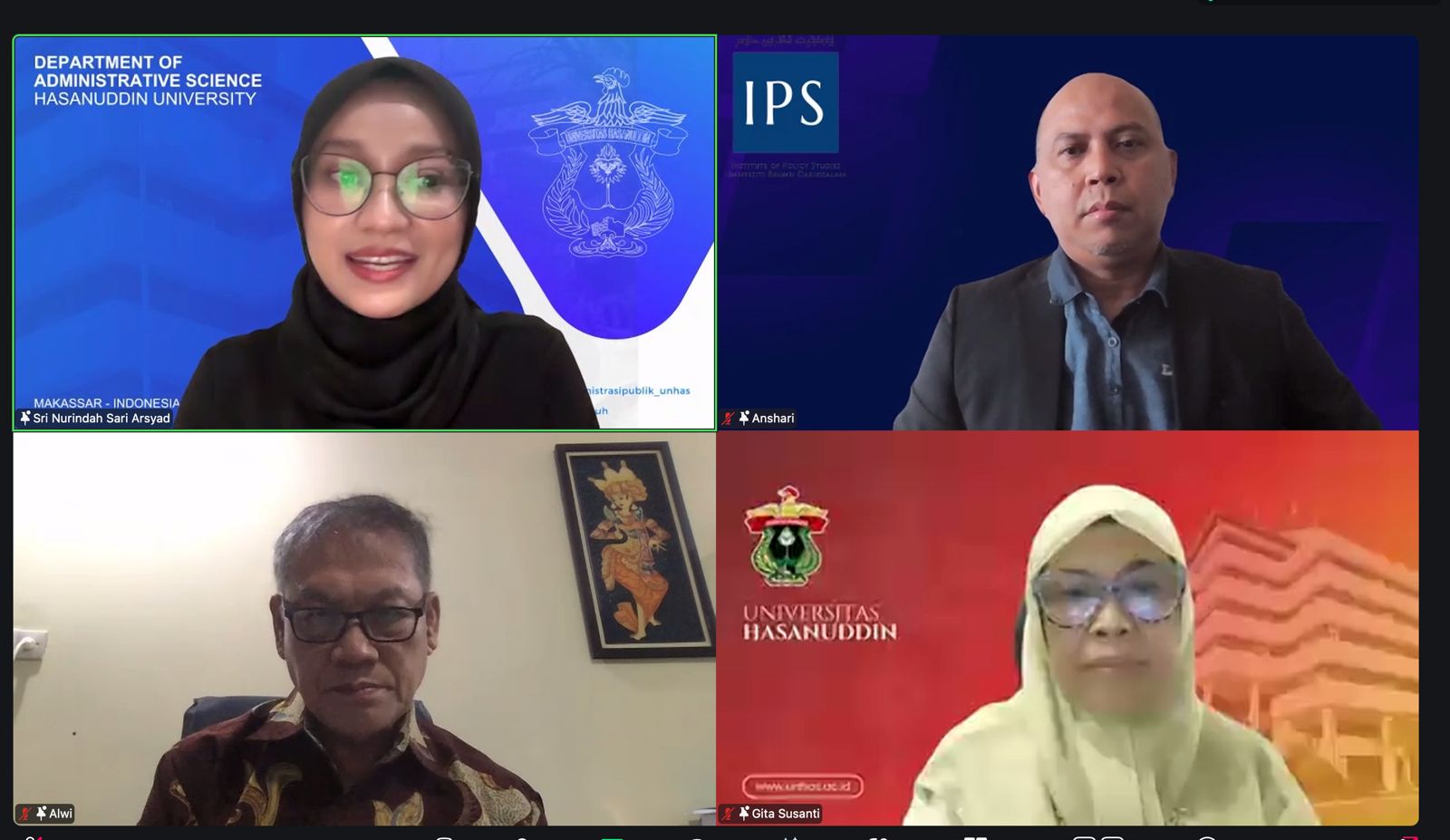
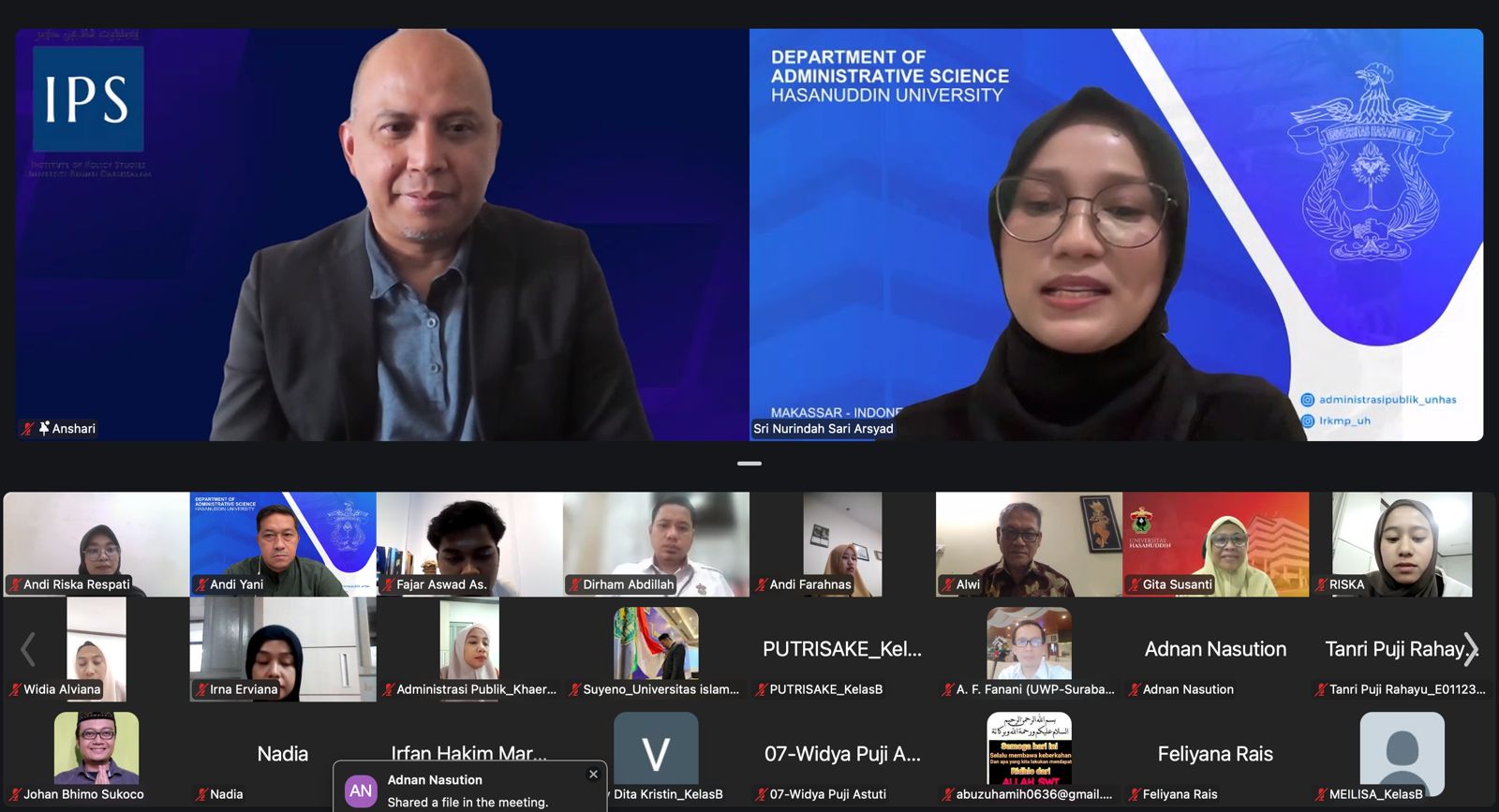
On Monday, February 23, 2026, a guest lecture entitled “Managing Disruptive Innovation in Artificial Intelligence for Digital Governance” presented Assoc. Prof. Dr. Muhammad Anshari Bin Ali, Director of the Institute of Policy Studies, Universiti Brunei Darussalam. The guest lecture was moderated by Sri Nurindah Sari Arsyad, Research Assistant for Policy & Governance (POLiGOV) Laboratory, FISIP Unhas. The activity was held online and attended by the Head of the Department of Administrative Sciences, Prof. Dr. Awli, Head of the Master of Public Administration Program, Prof. Dr. Gita Susanti, lecturers of the Department of Administrative Sciences, Unhas, as well as undergraduate and postgraduate students, both from Hasanuddin University and from other universities.
In his presentation, Prof. Anshari explained the importance of understanding the hierarchy of knowledge management through the concept of Data–Information–Knowledge–Wisdom (DIKW) and the urgency of transforming passive knowledge into active knowledge in public organizations. He also emphasized that the development of artificial intelligence (AI) presents both challenges and opportunities for governance, necessitating stronger analytical and strategic capacity from policymakers.
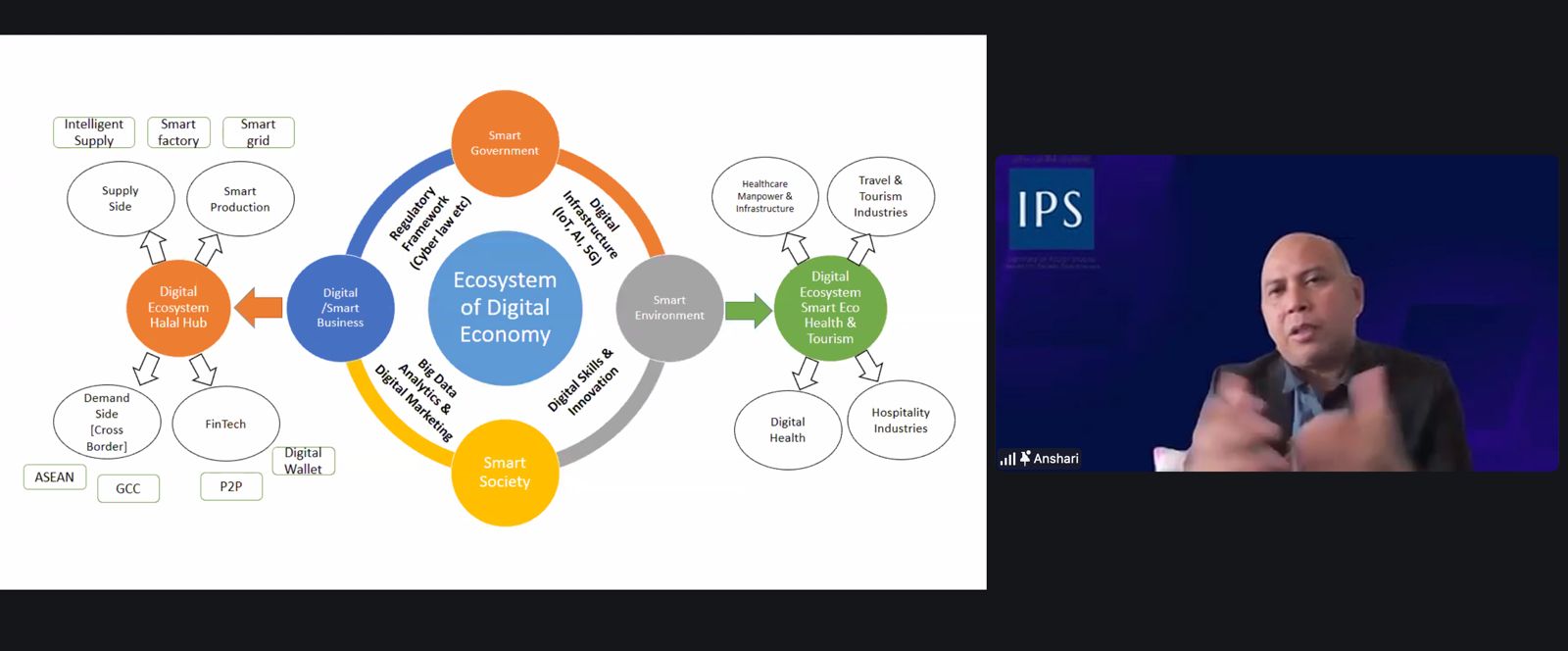
The resource person further explained that public policy in the digital era needs to be designed based on the four pillars of digital development: smart society, smart environment, smart governance, and smart business. These four pillars are considered crucial for realizing governance that is adaptive, inclusive, and responsive to global technological disruption.
The event continued with an interactive discussion session, where lecturers and students raised questions and offered critical responses regarding the implications of AI for public policy and digital governance reform. The participants' enthusiasm demonstrated the strong academic interest in the issue of disruptive innovation in public administration.
This guest lecture marks the first step in a collaboration between the Department of Administrative Sciences, Faculty of Social and Political Sciences, Hasanuddin University, and the Institute of Policy Studies, Universiti Brunei Darussalam. Going forward, this collaboration is expected to expand into broader academic collaborations, encompassing joint research, scientific publications, and strengthening international networks.