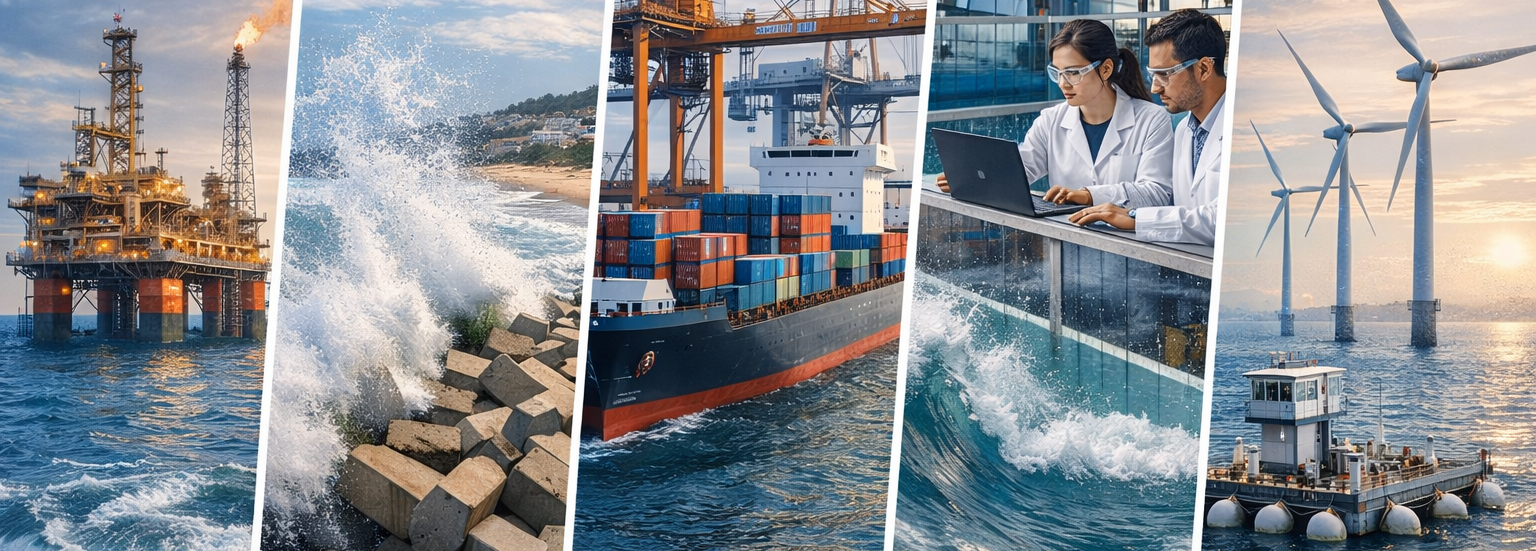
The Ocean Engineering Study Program at Universitas Hasanuddin originated from the Offshore Structure sub-program within the Department of Naval Architecture, Faculty of Engineering, which was established in 1995. This initiative was driven by the growing demand for advanced engineering expertise to support offshore structures, coastal infrastructure, and the sustainable development of Indonesia’s vast ocean territory.
As academic interest expanded and research topics diversified encompassing offshore engineering, port systems, and coastal and nearshore processes the sub-program evolved into the Undergraduate Program in Ocean Engineering. The program officially received its operational license in 2001 and began admitting students in the 2002/2003 academic year, marking a key milestone in strengthening ocean engineering education in Eastern Indonesia.
Over the years, the undergraduate program has demonstrated continuous improvement in academic quality, research performance, and graduate outcomes. These efforts culminated in the achievement of Excellent (Unggul) accreditation from the National Accreditation Board for Higher Education (BAN-PT), followed by international accreditation from IABEE, confirming its alignment with nationally and internationally recognized standards in engineering education.
The strong interest of graduates in pursuing advanced studies, coupled with the limited availability of ocean engineering master’s programs in Eastern Indonesia, motivated Universitas Hasanuddin to establish the Master’s Program in Ocean Engineering. This initiative was intended to meet the growing need for highly qualified professionals and researchers capable of addressing complex ocean and maritime engineering challenges.
The Master’s Program in Ocean Engineering at Universitas Hasanuddin is designed with a multidisciplinary, research-oriented, and laboratory-based approach, closely connected to real-world industrial, environmental, and policy contexts. By integrating engineering analysis, management principles, and ocean governance perspectives, the program aspires to become a center of excellence in ocean science and technology, contributing to sustainable maritime development at national and global scales.