Unhas Department of Biology Holds Community Service Event to Optimize the Use of Leaf Litter for the Production of Eco-Friendly Compost
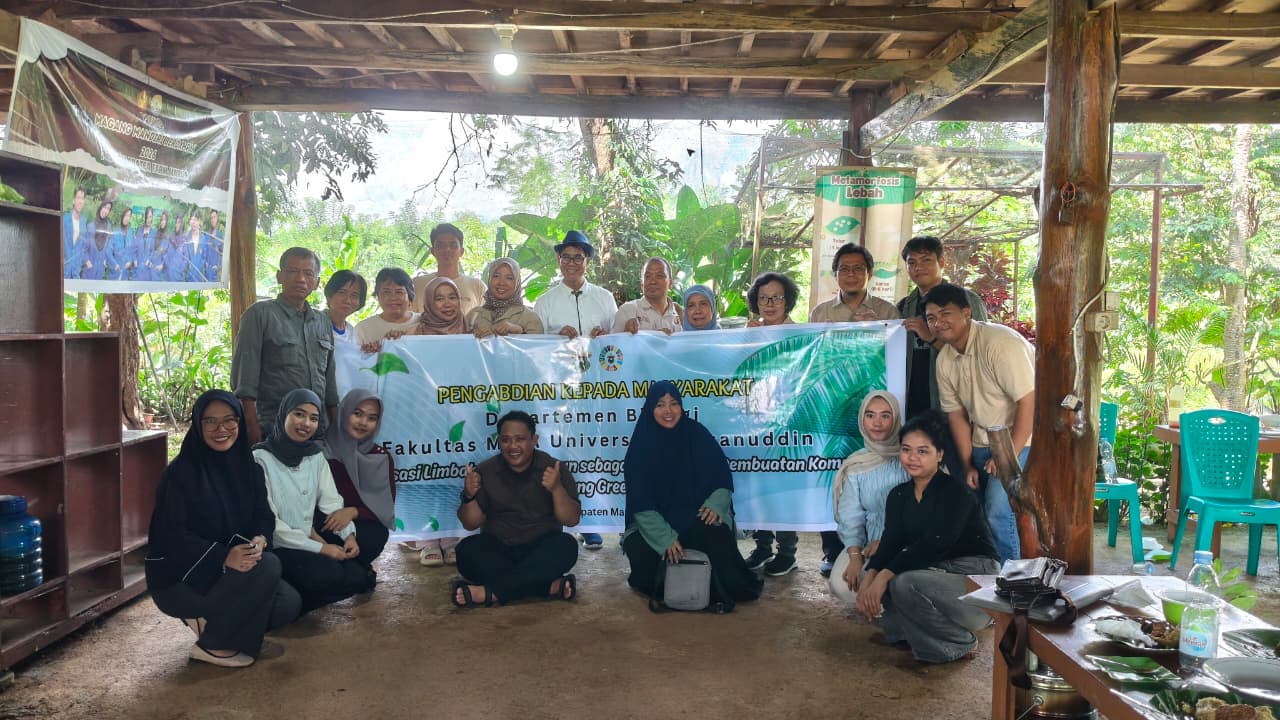
The Department of Biology, Faculty of Mathematics and Natural Sciences (FMIPA), Hasanuddin University once again held a Community Service (PkM) event as part of its implementation of the Tri Dharma of Higher Education. The event, titled “Optimizing Leaf Litter as Raw Material for Compost Production to Support a Green Environment,” was held on Saturday, May 16, 2026, in Pucak Village, Maros Regency, with local residents participating.
The event was officially opened by the Chair of the Department of Biology at FMIPA Unhas, Dr. Magdalena Litaay, M.Sc. In her remarks, she stated that utilizing organic waste by processing it into compost is a concrete step toward supporting sustainable environmental management. In addition to reducing the volume of organic waste, this event is also expected to raise public awareness of the importance of preserving the environment through the use of simple technologies that can be easily applied in daily life.
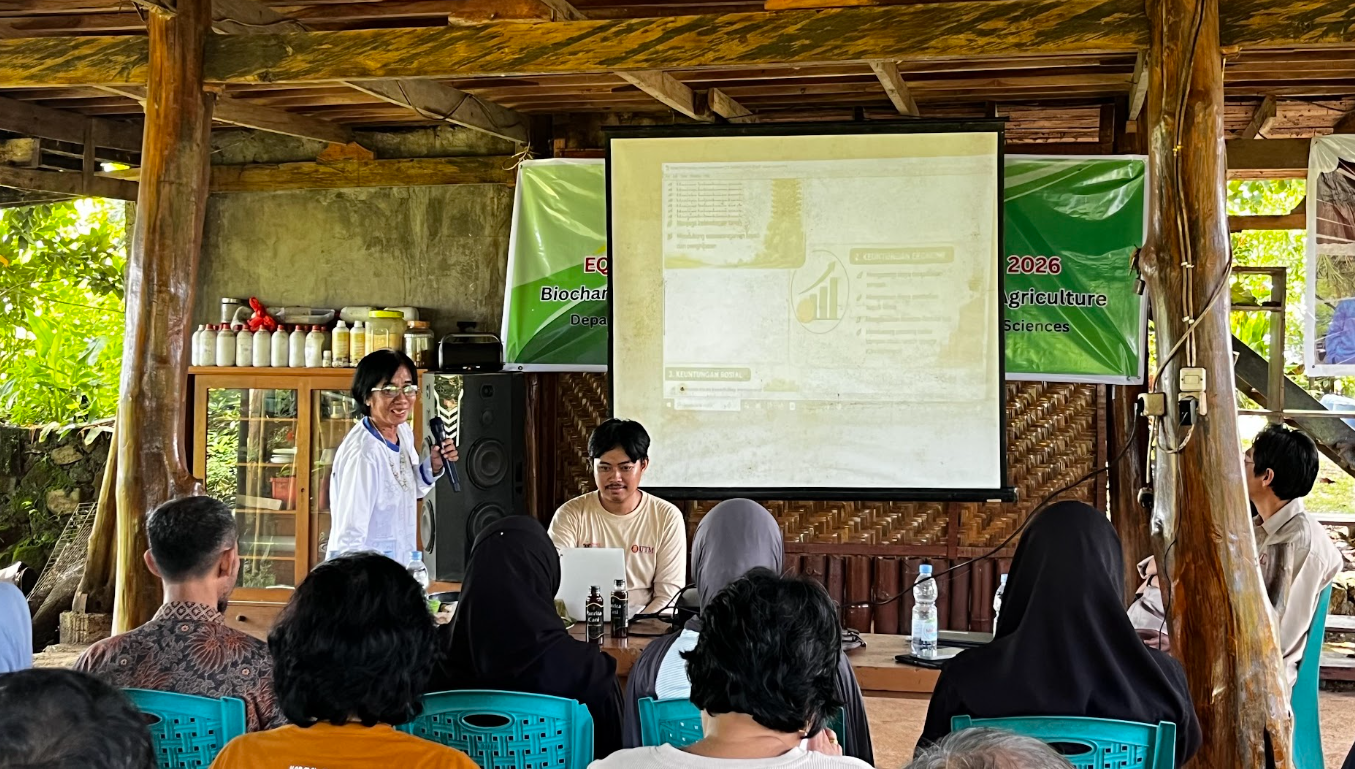
This community service activity was chaired by Dr. Elis Tambaru, M.Si., who also served as the keynote speaker. During the presentation session, Dr. Elis explained the potential of leaf litter as a compost raw material that offers significant benefits for soil fertility and land productivity. She outlined the various stages of the composting process, from sorting organic materials and mixing to decomposition, as well as techniques for utilizing compost as an environmentally friendly organic fertilizer.
Through an interactive presentation, participants gained an understanding of the importance of community-based organic waste management as an effort to reduce environmental pollution while creating a greener environment. The community’s enthusiasm was evident from the various questions and discussions that took place during the event, particularly regarding the application of composting techniques using materials available in their local environment.
This initiative is expected to enhance the community’s capacity to manage household and environmental organic waste and transform it into useful products. In addition to providing ecological benefits through waste reduction, the use of compost also has the potential to support the community’s agricultural and backyard gardening activities in a more sustainable manner.
The implementation of this community service initiative reflects the commitment of the Department of Biology, Faculty of Mathematics and Natural Sciences, Hasanuddin University, to supporting the achievement of the Sustainable Development Goals (SDGs)—specifically SDG 1 (No Poverty) through enhancing the community’s economic potential based on the utilization of local resources; SDG 4 (Quality Education) through education and knowledge transfer to the community; and SDG 17 (Partnerships for the Goals) through collaboration between universities and the community in realizing sustainable development.
Author: Nenis Sardiani, S.Si., M.Si.