
English Department, HPI and Hasanuddin University Language Services Center Collaborate to Present a Guest Lecture on Sworn Translation in the Age of AI
HPI and Hasanuddin University Language Services Center Collaborate to Present a Guest Lecture on Sworn Translation in the Age of AI
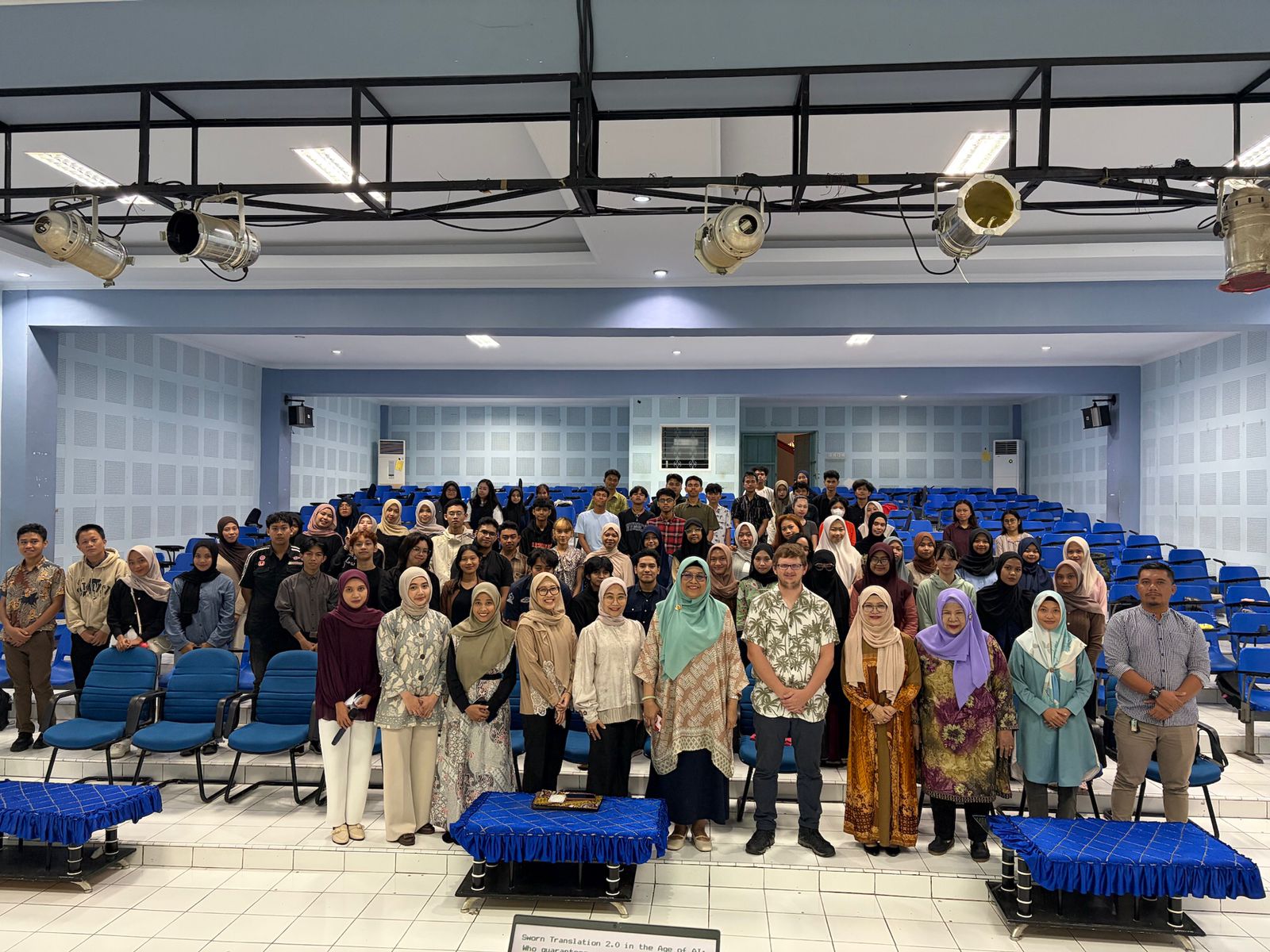
Makassar, March 6, 2026 — The development of Artificial Intelligence (AI) has brought significant changes across various fields, including the world of translation. In response to these developments, a guest lecture entitled “Sworn Translation 2.0 in the Age of AI: Who Guarantees Accuracy, and Should We Fear Being Replaced?” was held on March 6, 2026, through a collaboration between the Indonesian Translators Association (HPI) and the Language Services Center of Hasanuddin University.
The event featured Dr. Daniel Krausse, B.A., M.A. as the main speaker. In his presentation, Dr. Krausse critically examined the position of sworn translators amid the increasingly widespread use of AI technology in translation practice. This topic is highly relevant, as it raises fundamental questions about who guarantees the accuracy of translations, particularly for official documents, and whether the presence of AI truly poses a threat to the profession of human translators.
Through this guest lecture, participants were encouraged to understand that although AI offers speed and efficiency, aspects such as accuracy of meaning, legal responsibility, cultural sensitivity, and the validity of official documents still require the role of competent human professionals. In the context of sworn translation, accuracy concerns not only linguistic equivalence but also legitimacy, trust, and professional accountability.
The collaboration between HPI and the Language Services Center of Hasanuddin University in organizing this event reflects a shared commitment to creating an academic forum that responds to the challenges of the times. The event also served as an important platform for students, lecturers, language practitioners, and translators to reflect on the future of the translation profession in the digital era.
With the successful implementation of this guest lecture, it is hoped that participants gained broader insight into the transformation of the translation world, particularly sworn translation, and are better prepared to face the changes brought about by AI technology. Rather than merely fearing replacement, professionals in the field were encouraged to view AI as both a challenge and an opportunity to strengthen quality, ethics, and professionalism in translation.