Student Notes on the Bone–Soppeng Excavation
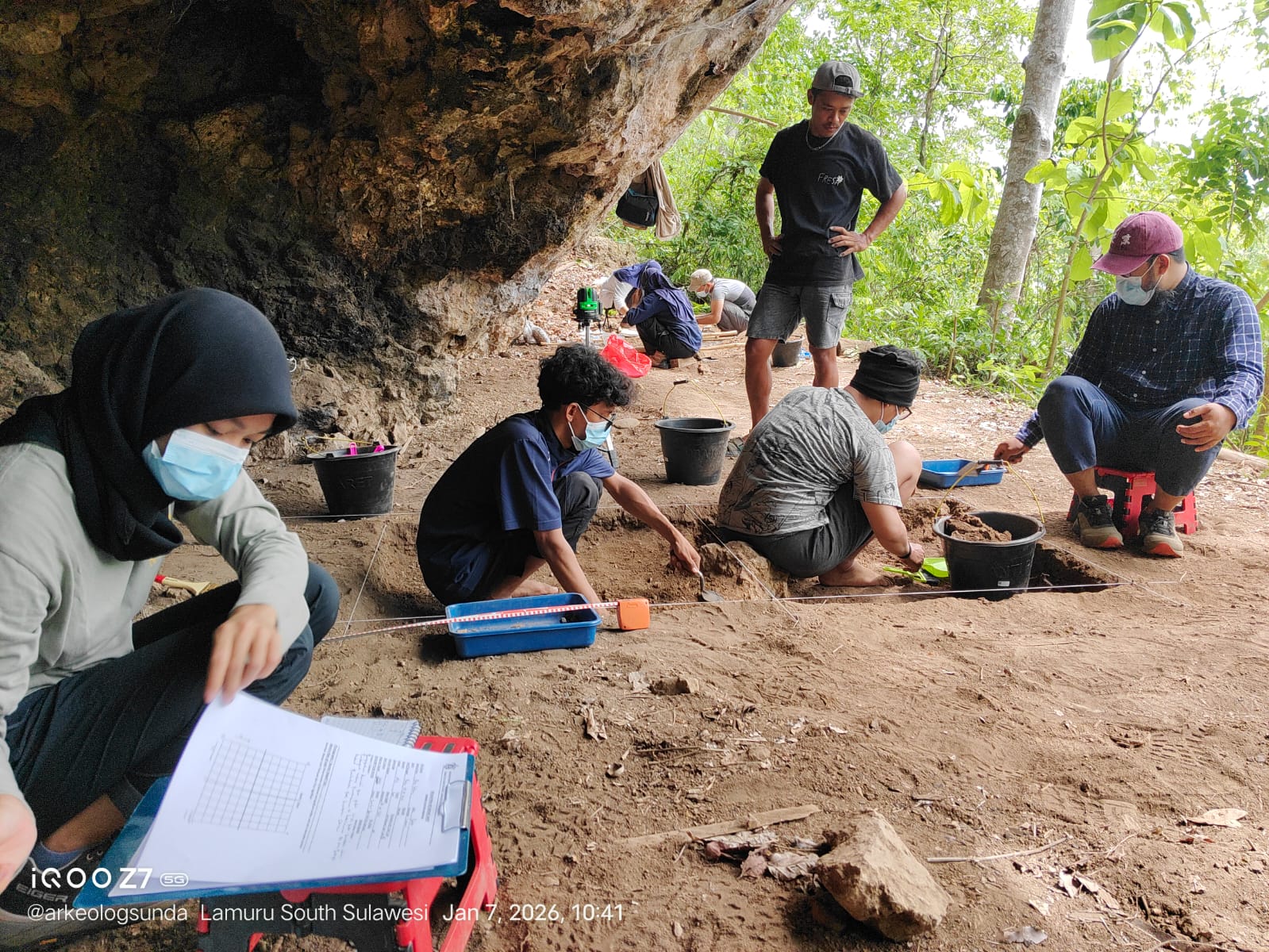
Starting the year by participating in an 18-day excavation in the Bone–Soppeng Regency was a valuable field experience for me as a student. This activity was not only about digging the ground and recording findings, but also about understanding the long process of archaeological research directly in the field. Every day at the site provided new experiences that I could not fully obtain in the classroom.
During this activity, four sites were excavated, each with different characteristics. The differences in the context of these sites taught me that each location has its own story and challenges, ranging from stratigraphic conditions and types of findings to the excavation approach used. Through direct involvement, I began to understand the importance of precision, patience, and teamwork in every stage of research.
This experience felt even more meaningful because I had the opportunity to work and learn directly with extraordinary researchers. Meeting, discussing, and working with them opened my perspective on many things, not only from an academic point of view, but also from a personal point of view as a prospective researcher. The way the researchers behaved in the field, discussed, and made decisions became a valuable lesson in itself.
This activity was made even more special because I was able to learn directly from two Bakrie Award recipients, Mr Budi and Mr Basran. For me, working with them was a very inspiring experience. Their explanations in the field, both regarding the context of the site and their research experiences, made the learning process feel lively and enjoyable. The intense yet friendly atmosphere in the field made this excavation activity exciting, full of discussion, and far from rigid.
During the 18 days of the activity, I realised that excavation is not only about the findings, but also about the continuous learning process. The fatigue in the field was compensated by the knowledge and experience I gained every day. This activity not only broadened my academic knowledge, but also strengthened my interest and conviction to continue learning and working in the field of archaeology.
Through my involvement in this excavation, I learned that being an archaeology student is not just about understanding theory, but also about being prepared to face the realities in the field. I learned to be more sensitive to context, more patient in the process, and more open to discussion and other people's points of view. This activity taught me that knowledge is built through cooperation, perseverance, and respect for the data and the environment in which the research is conducted. More than just an academic experience, this excavation shaped my perspective as a learner—that every site has a story, every process has meaning, and every opportunity in the field is an invaluable learning space in my journey as a student.
Ketik minimal 2 karakter lalu tekan Enter