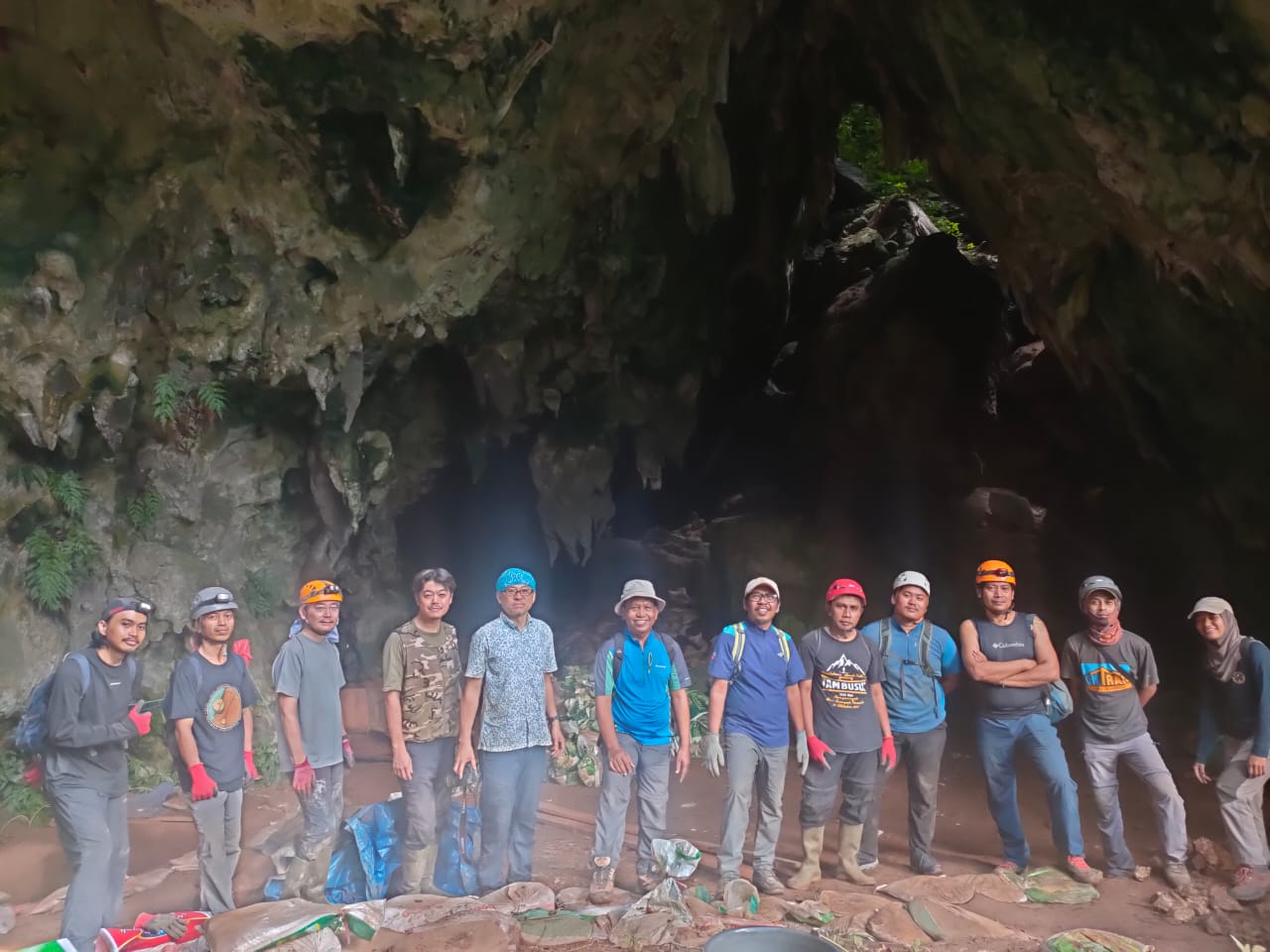
As an archaeology student, I grew up with the awareness that Indonesia is a country rich in natural resources. Almost every region has hills and mountains that hold great economic potential, so it is not uncommon for them to be mined, both legally and illegally. These activities do benefit many parties, but they often sacrifice the environment and irreplaceable traces of the past. This awareness grew stronger when, in 2023, I was directly involved in excavation activities at a cave called Gua Vavompogaro, better known as Gua Topogaro.
For almost a month, I and a team of researchers participated in excavation activities, which were a collaboration between BRIN and the Japanese Museum of Ethnology. Topogaro Cave is located in Topogaro Village, West Bungku District, Morowali Regency, Central Sulawesi. This cave was first discovered in 2016 and is known as one of the oldest human habitation caves in Sulawesi. Based on research findings, this cave has been inhabited by humans since around 40,000–44,000 years ago, making it a very important site in the study of early human migration in the Wallacea region.
During the excavation, I realised that archaeological research is not only about discoveries, but also about the process and struggles in the field. Access to Topogaro Cave was not easy. The path to the site was quite steep and had to be traversed on foot through the hills, and the conditions were even more challenging because the excavation took place during the rainy season. Slippery ground, almost daily rainfall, and limited logistical access were all part of the inseparable field experience.
Previous researchers had discovered a variety of remarkable archaeological remains. One of the most striking finds was more than 30 wooden coffins scattered across the cave floor, some of which still contained human skeletal remains. This discovery indicates the existence of complex burial practices and provides insight into the belief systems and culture of past societies. In addition, there were pottery shards in various shapes, such as pots, jugs, jars, and bowls. These pottery pieces had a rich variety of decorations—around 57 motifs—made using incised, stamped, carved, and applied techniques. Typologically, these findings indicate the influence of the Sa Huynh–Kalanay and Lapita traditions, which point to a network of interaction and human mobility in prehistoric times.
Various stone tools were also found, reflecting the technological capabilities and skills of ancient humans in utilising the natural resources around them. Equally important, the remains of fauna such as rats, bats, wild boars and anoa provide information about the ancient environmental conditions and the relationship between humans and the ecosystems in which they lived.
In addition to excavation activities inside the cave, we also conducted surveys around the Topogaro Cave area. From these surveys, we discovered a location that is strongly suspected to have been a workshop for human activities in the past. This assumption is based on the discovery of a fairly large concentration of stone flakes, which indicates workshop activities, such as the manufacture or maintenance of stone tools. This finding shows that the area around the cave was not only used as a living space, but also as part of a broader system of prehistoric human activities.
For me, these artefacts are not merely objects found, but pieces of a story about how humans survived, adapted and migrated thousands of years ago. However, despite its scientific value, Topogaro Cave faces a real threat. Mining activities located not far from this site have the potential to damage the highly valuable archaeological context. Although the local government has implemented a zoning system, protection for this cave still requires more serious attention.
This field experience truly opened my eyes to the fact that Topogaro Cave is not just a residential site, but a cultural landscape that records traces of human life from various aspects over thousands of years. Despite its rich scientific value, this cave is in a vulnerable position due to mining activities not far from the site. Although the local government has implemented a zoning system, I realise that the protection of Topogaro Cave still requires much more serious attention so that the existing archaeological remains are not lost before they can be fully studied. Through my direct involvement in this excavation, I learned that preserving archaeological sites is not only the duty of researchers or the government, but our shared responsibility. For me, Topogaro Cave is not just a space of rock behind the hills that continues to be excavated, but a silent witness to the long journey of human migration, a heritage that deserves to be preserved, cared for, and respected so that the stories of the past remain alive and can be passed on to future generations.
Ketik minimal 2 karakter lalu tekan Enter