Written by Muhammad Rimo Ntolagi (Master's Degree Student in Archaeology at Hasanuddin University)
Visiting a fort site with components such as cannons and bastions, as well as sturdy structures, may spark the imagination about conflicts that occurred in the past. Various assumptions accompanied by true and false stories flow like a rushing river accompanied by logs, unstoppable. This raises questions such as why, how, and what was the purpose of building a fort?
Various questions can be asked, and our minds as a peaceful modern society try to simulate what might have motivated a community to go to the trouble of building a fortress with its inherent military attributes. It is correct to assume that the initial purpose of building a fortress was for defence in the event of war, but it is not wrong to think that fortresses were built solely as symbols of strength or power without the aim of preventing conflict. The second assumption seems like an anomaly. However, the purpose of building a fort as a symbol of strength, power, and wealth is indeed true, and Baadia Fort and the historical narrative behind it prove that forts were not always built to face war.
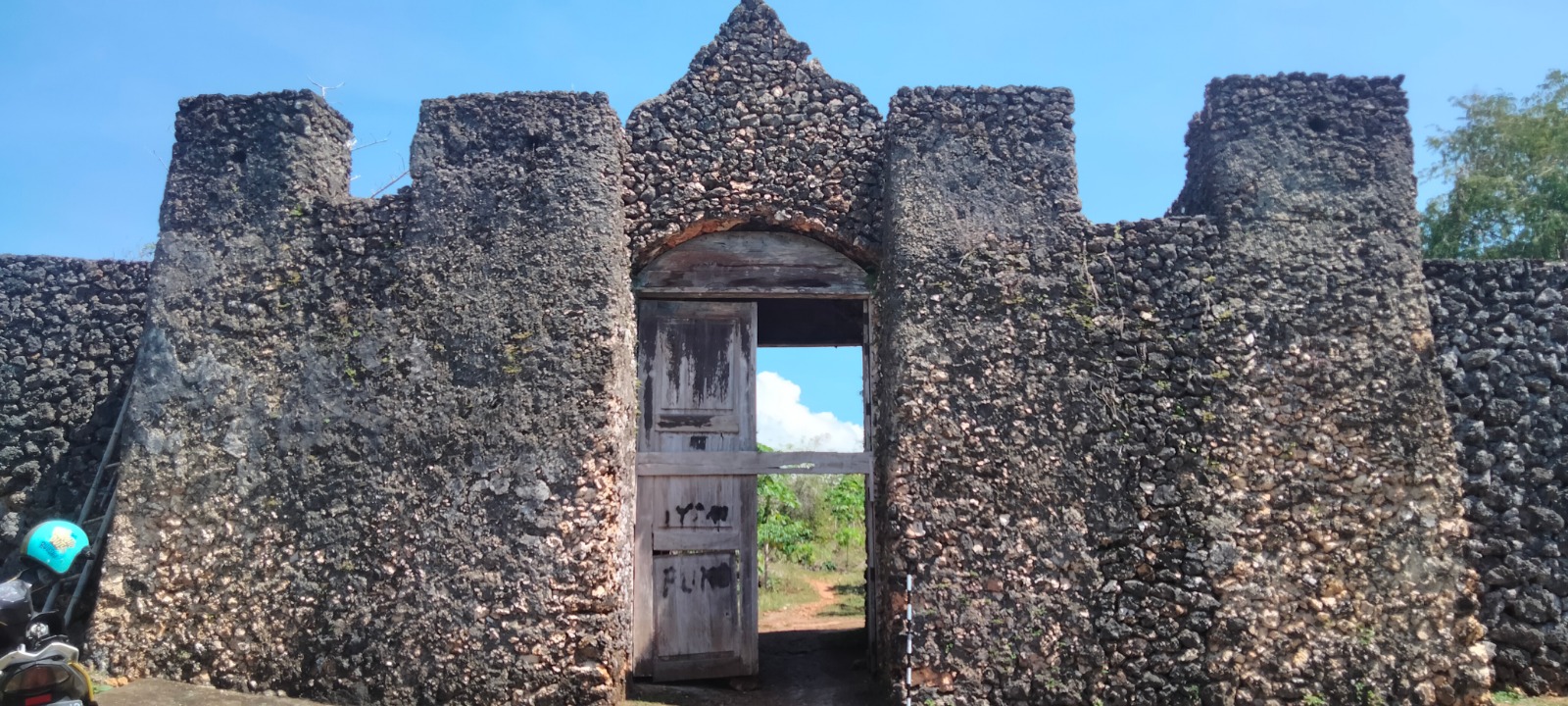
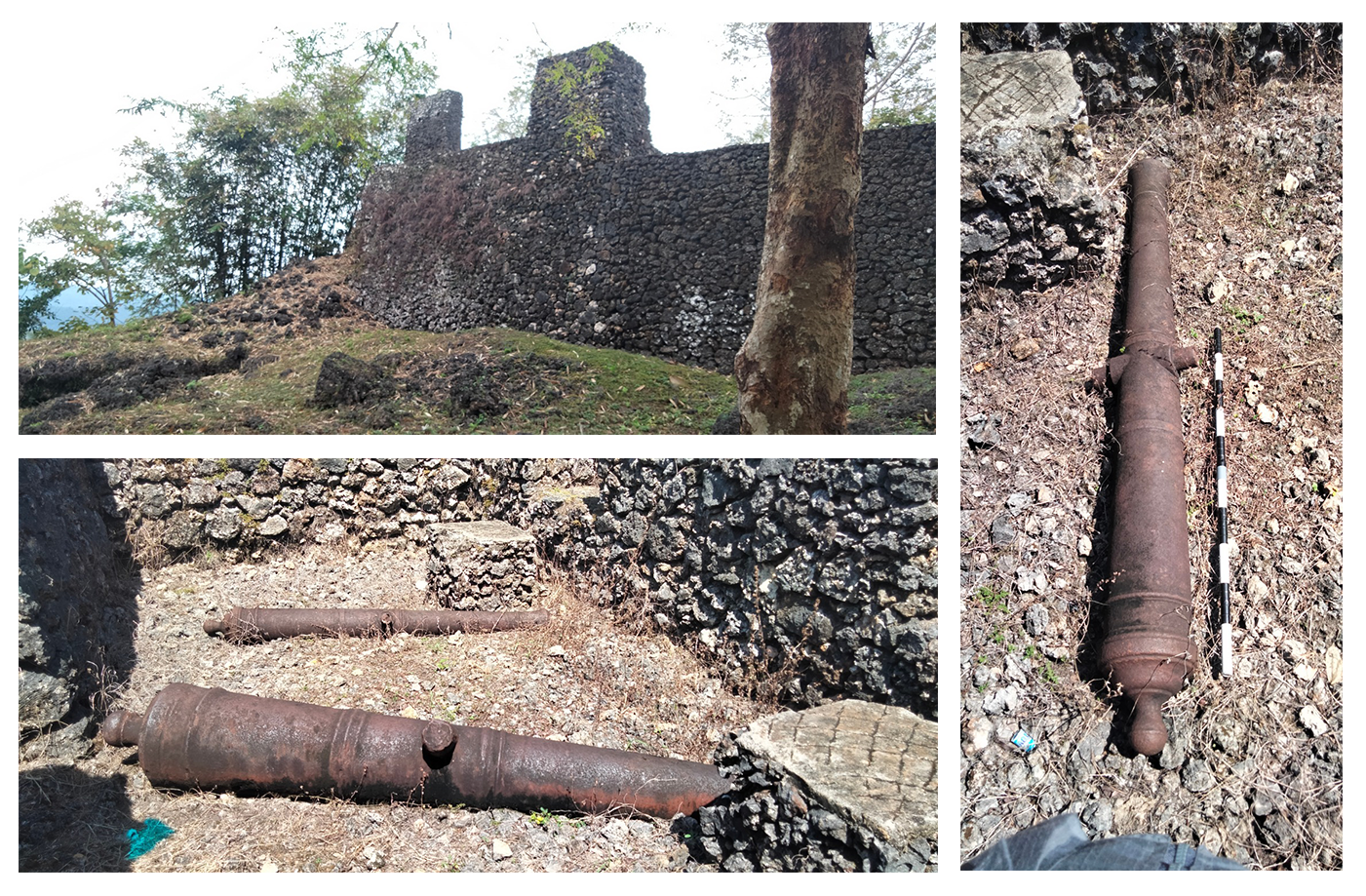
Located in Baubau City, Southeast Sulawesi, Baadia Fort is situated on a karst hill overlooking the sea and residential areas. The history of the fort began with Sultan Muhammad Idrus Kaimuddin I's decision to build a fort in the forest on the southern side of Wolio Fort (the centre of power of the Buton Sultanate). The first step was to clear the forest on the karst hill where the fort would be built in order to open up a path and prepare the initial settlement. The abundance of coral stone made it easier to build the walls, but it still took time and other materials such as mortar to strengthen the structure. It is estimated that the construction process took more than twenty years until Baadia Fort was completed and inhabited by the sultan. However, the existence of the settlement also encouraged the need for a house of worship, so the construction of the Quba Mosque went hand in hand with the construction of the fort (Zuhdi et al., 1996).
This fort was equipped with military attributes that were standard for the time, ready to face conflict. However, the books Nusantara, Nusantaria, and Sejarah Buton Yang Diabaikan (The Neglected History of Buton) show that global conditions, and specifically those in Buton, were relatively stable throughout the 19th century (Vlekke, 1964; Bowring, 2019; Zuhdi, 2011). Human rights, the idea of improving the quality of education, and freedom of trade were trends during that century, which correlated with global stability. Conflicts leading to war could occur at any time in various kingdoms/countries, but the percentage was small, especially since the tendency was to choose the option of peace negotiations between powers in order to prevent larger conflicts. Conflicts decreased, relations between powers stabilised, and society had the opportunity to shift its focus to improving its standard of living. Specifically, the Sultanate of Buton experienced a golden age in the same century, characterised by economic stability, good relations between powers, and improvements in the quality of education. Thus, a period of peace ensued.
The presence of Baadia Fort in times of peace raises new questions: why was the fort built in a situation where there was minimal conflict? What motivated the sultan to build a new defensive structure? And what kind of enemy was he trying to anticipate?
To answer these questions, it is necessary to review the conflicts that occurred in the past. In the 18th century, there was a confrontation between Buton and the Dutch, caused by Sultan Himayatuddin's disagreement with the "perpetual" agreement, which according to the Dutch was valid for as long as necessary. The consequences of this deviation led to conflict and are remembered as the Dutch turmoil era (zamani kaheruna Walanda), a historical trauma that changed the Buton Sultanate's view of its allies as time bombs that could explode into a threat at any time. Damage occurred in vital sectors of the sultanate, including ports, forts, and settlements. Nobles and civilians were also victims of the turmoil (Munafi, 2022). It took a long time to restore the sultanate after the war. Reconciliation between officials of the two powers took place and gave birth to a new agreement that reconciled the two interests.
Peace was achieved, but the fall of the VOC as part of Dutch identity ultimately changed various agreements and concessions regarding the restrictions that had been imposed. Thus, the sultanate gradually improved and entered a golden age. In relation to the presence of Fort Baadia, the decision to establish the fort was seen as a form of threat mitigation based on the trauma experienced by the Sultanate of Buton in the previous century. With indicators of relatively peaceful conditions, minimal conflict, and gradual global improvement, the existence of the fort in times of peace was not only a function of power and strength, but also a form of conflict mitigation in case of friction between powers.
The conclusion that can be drawn is that the presence of a fort in a country during times of peace is not an inexplicable paradox. Baadia Fort is evidence of the stability of the Buton Sultanate's security and economy, enabling it to establish a fort during times of peace, complete with military attributes. This decision also demonstrates the sultan's readiness to face conflicts that could occur at any time.
Ketik minimal 2 karakter lalu tekan Enter