By: Eklesia Karin Parrangan
![]()
Initially, I thought Bumiayu was merely a research location,
just a place for me to carry out my internship activities. However, as time
went by, I began to realize that Bumiayu is not just a place, but a space that
holds long-standing memories gradually coming to be understood. It started with
classroom sessions providing foundational knowledge to grasp what Bumiayu has
to offer.
I did not only learn how to excavate or read soil layers,
but I was also introduced to various scientific approaches that opened up new
perspectives on the past. This included learning about ethnographic methods in
oral tradition research, as well as being introduced to modern scanning
technologies such as the 3D Laser Scanner BLK 360 and the handheld 3D Einscan
Scanner, which enable more detailed and precise site documentation.
Additionally, the paleobotany materials delivered by Dr. Anna Florin demonstrated
how plant remains can reveal patterns of past lifeways, while the study of
zooarchaeology in Southeast Asia and the Pacific by Dylan Gaffney from Oxford
University broadened my understanding of human-animal relationships within
cultural contexts.
Through this series of materials, I increasingly realized
that understanding the past cannot be approached in just one way. It requires a
combination of scientific rigor, technology, and the ability to read small
traces that often go unnoticed. It was from this that I began to understand
that before truly "listening" to Bumiayu's story in the field, I was
first trained to recognize the various languages that the past uses to speak to
us.
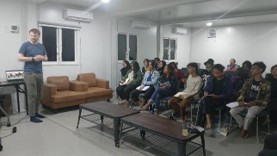
Zooarchaeological in Southeast Asia and the Pacific by Dylan Gaffney
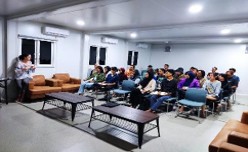
Materials on Paleobotany presented by Dr. Anna Florin
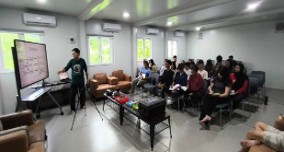
Introduction to the BLK 360 3D Laser Scanner and Einscan Handheld 3D Scanner by Mas Dewangga
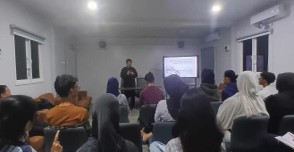
Ethnographic Methods in Oral Tradition Research – Materials Presented by Dr. Herry Yogaswara