A Day with the Community and Nature at Rammang-Rammang
Maros-Rammang-Rammang in Maros Regency, South Sulawesi, became the destination for a group of students from Hefei University of Technology, China, who are currently studying in the Department of Indonesian Literature at Hasanuddin University, on Saturday, November 29, 2025. At exactly 10:40 WITA, the Chinese students together with lecturers from Indonesian Literature arrived to take part in a fieldtrip aimed at exploring the karst landscape while learning about the lives of the surrounding communities.
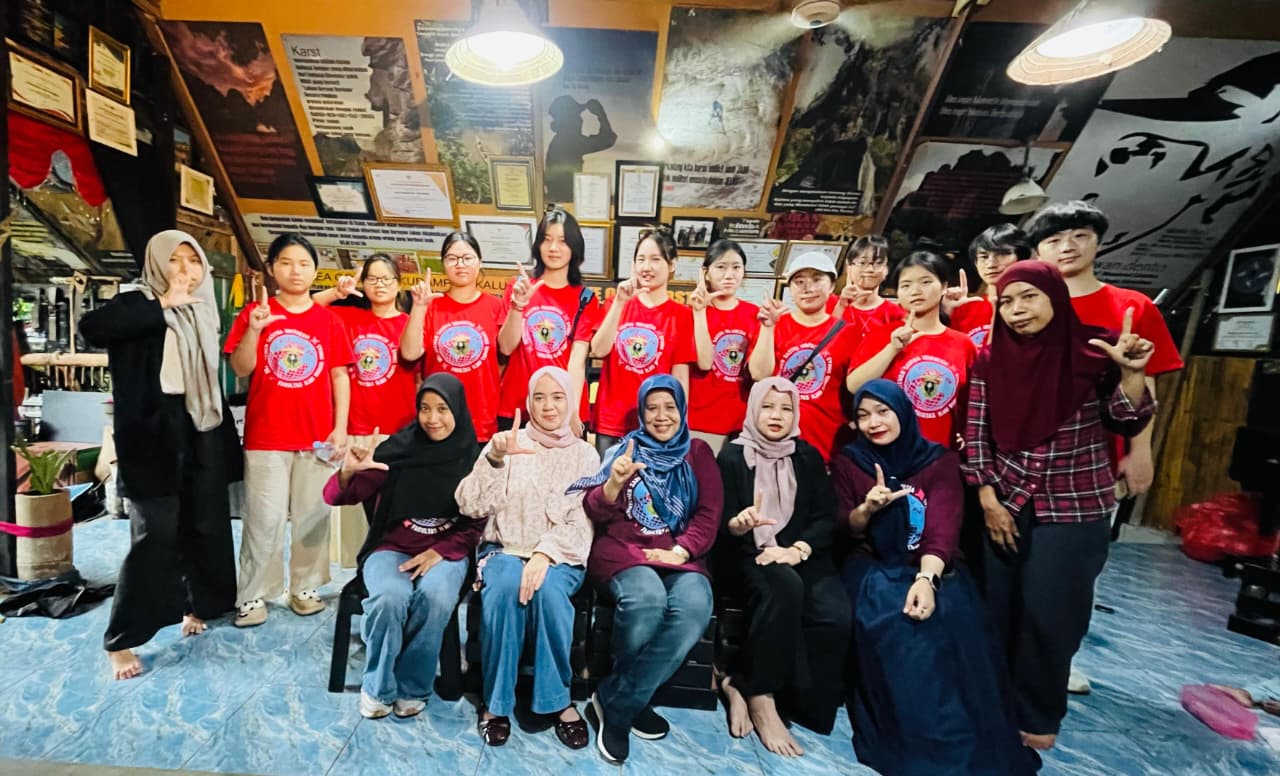
Before venturing into the karst area, the group visited the Rumah Belajar Anak Sungai (Riverside Learning House) in Salenrang Village. This learning center, pioneered by Muhammad Ikhwan—better known as Iwan Bento—serves as a hub for community activities, where children learn to dance, recite the Qur’an, hold discussions, and attend English classes. For the students, this visit opened new perspectives on how community-based education works in areas far from formal service centers.
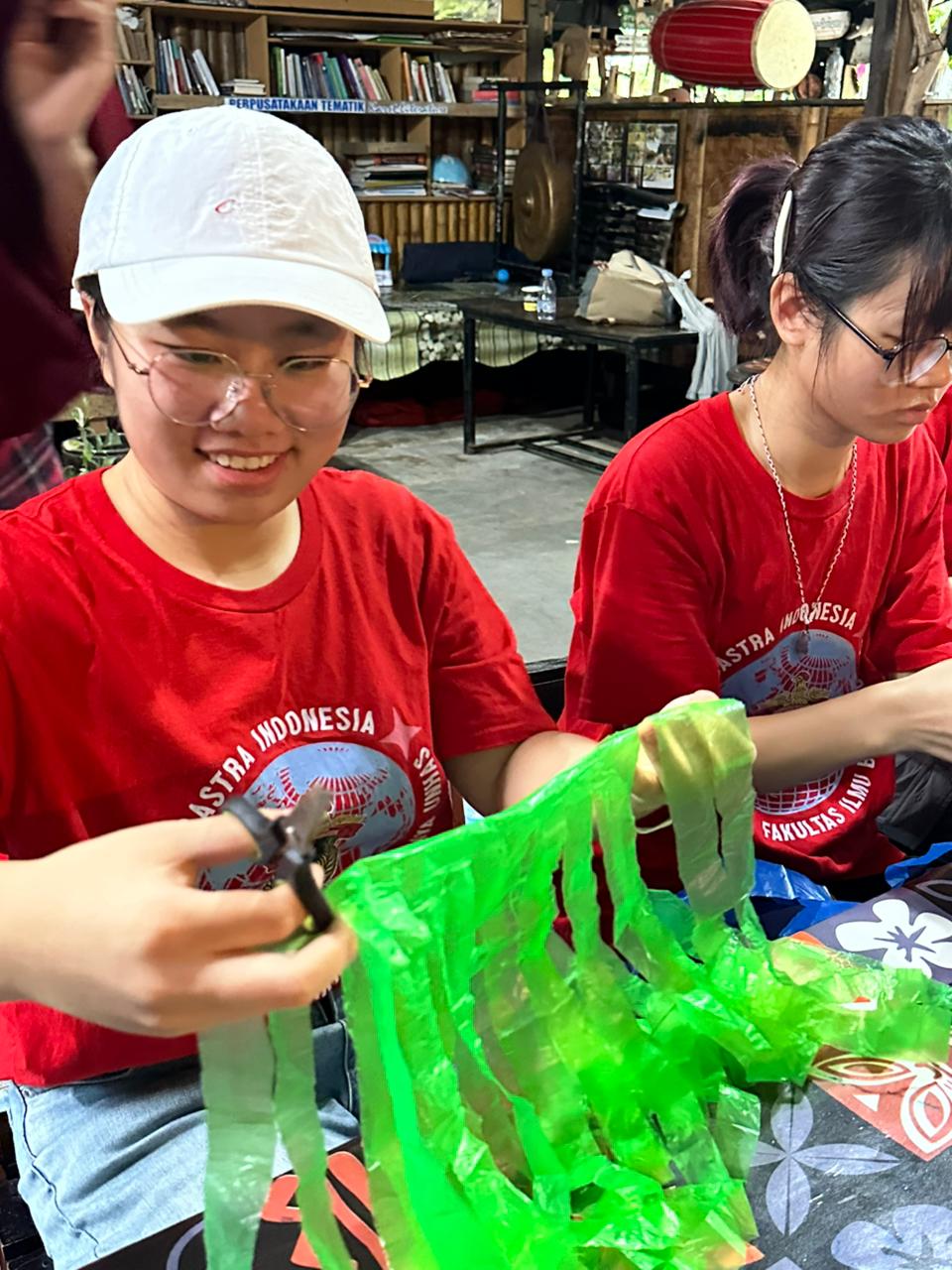
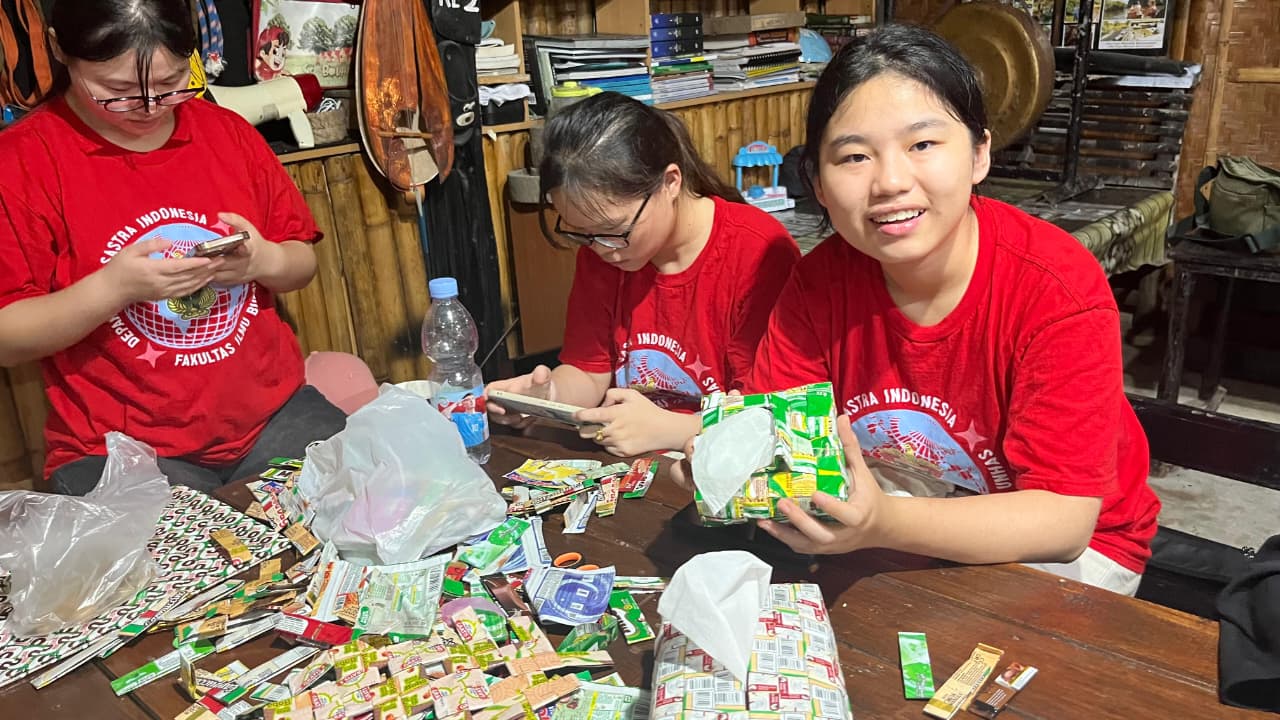
One activity that caught their attention was the handicraft program using plastic packaging waste. Local women transformed Milo, Pop Ice, and instant coffee wrappers into bags, tissue holders, and tablecloths. The students were invited to try the process themselves. Simple interactions—mixing Indonesian, hand gestures, and a little English—created a warm atmosphere. They witnessed how items considered useless could be turned into valuable products that support family income. Through Iwan Bento’s explanation, the students realized that empowerment efforts do not always require large facilities. Small initiatives carried out consistently can bring real impact to society.
This experience also helped them connect development theories learned in class with the everyday practices of local residents. During the activity, Jing Chunlu—nicknamed Luna—shared that it was her first time turning pieces of plastic into threads for weaving a bag, and she found her hands stiff. Meanwhile, Nadia eagerly began crocheting after making a pattern, as she often crochets with wool yarn back in China.
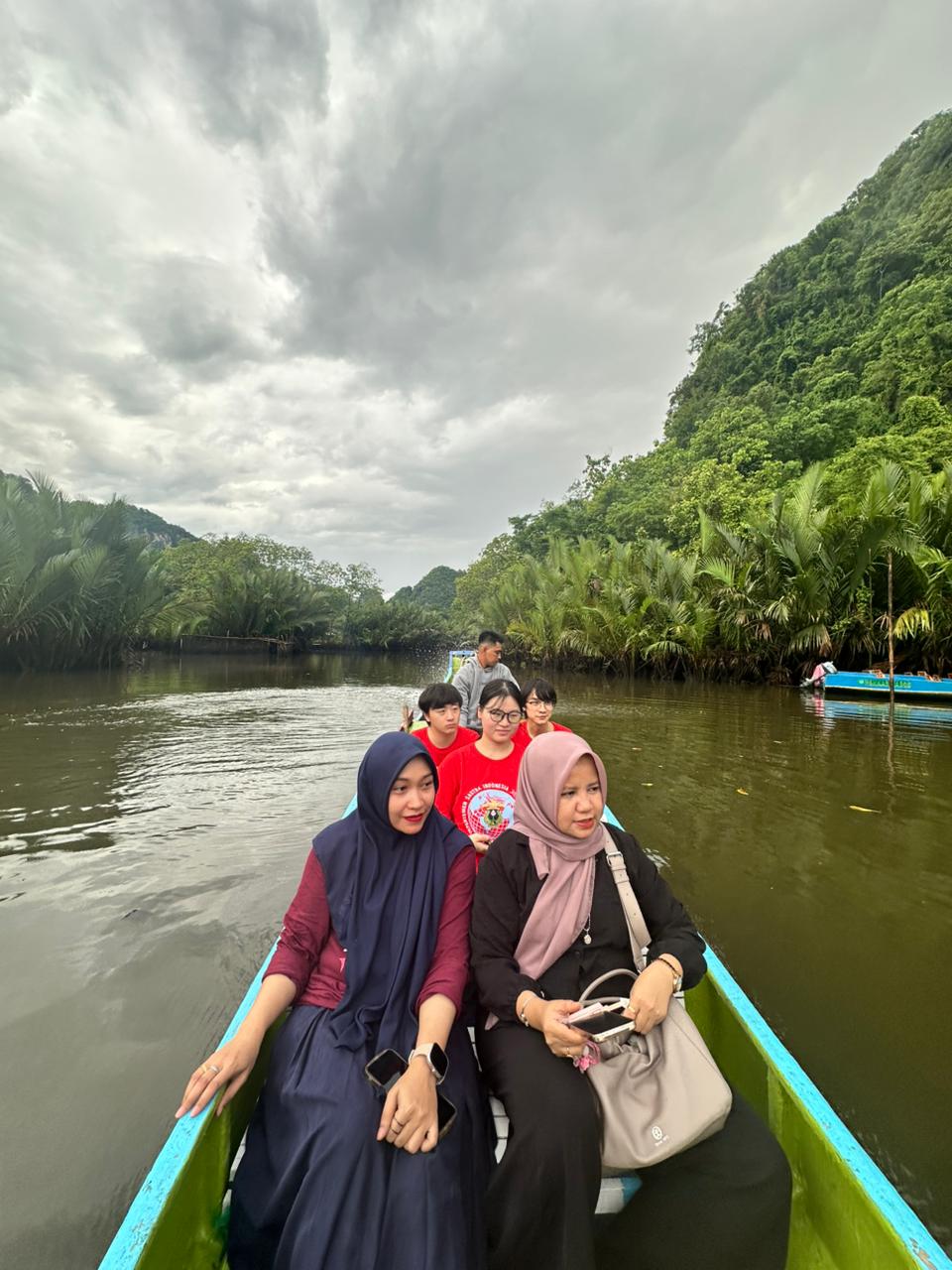
After the session ended and while waiting for the rain to subside, the group took photos together before continuing their journey to the main Rammang-Rammang area. The trip became even more exciting when they boarded small boats to travel along the river. The boats moved slowly past nipa palms and several settlements, while the students enjoyed a new atmosphere they might never have experienced before. During the ride, Mikaya was given the chance to sit at the front of the boat for photos. She was delighted with the result, as the view captured the karst mountains framed by nipa trees.
The excitement grew when the boats reached Dermaga Tiga (Pier Three). The students and lecturers had to walk past rows of fishponds owned by local residents. Beyond the water plots, towering karst mountains stood majestically. The scenery was breathtaking, as if transporting the group into another world. The calm water reflected the dramatic shapes of the karst, making the short journey one of the most memorable moments.
The Chinese students were thrilled with the fieldtrip. One of them, Jeslyn, said, “These mountains are so beautiful, and this has been such an enjoyable trip. I don’t feel tired at all—only happy.” (ipa/*)