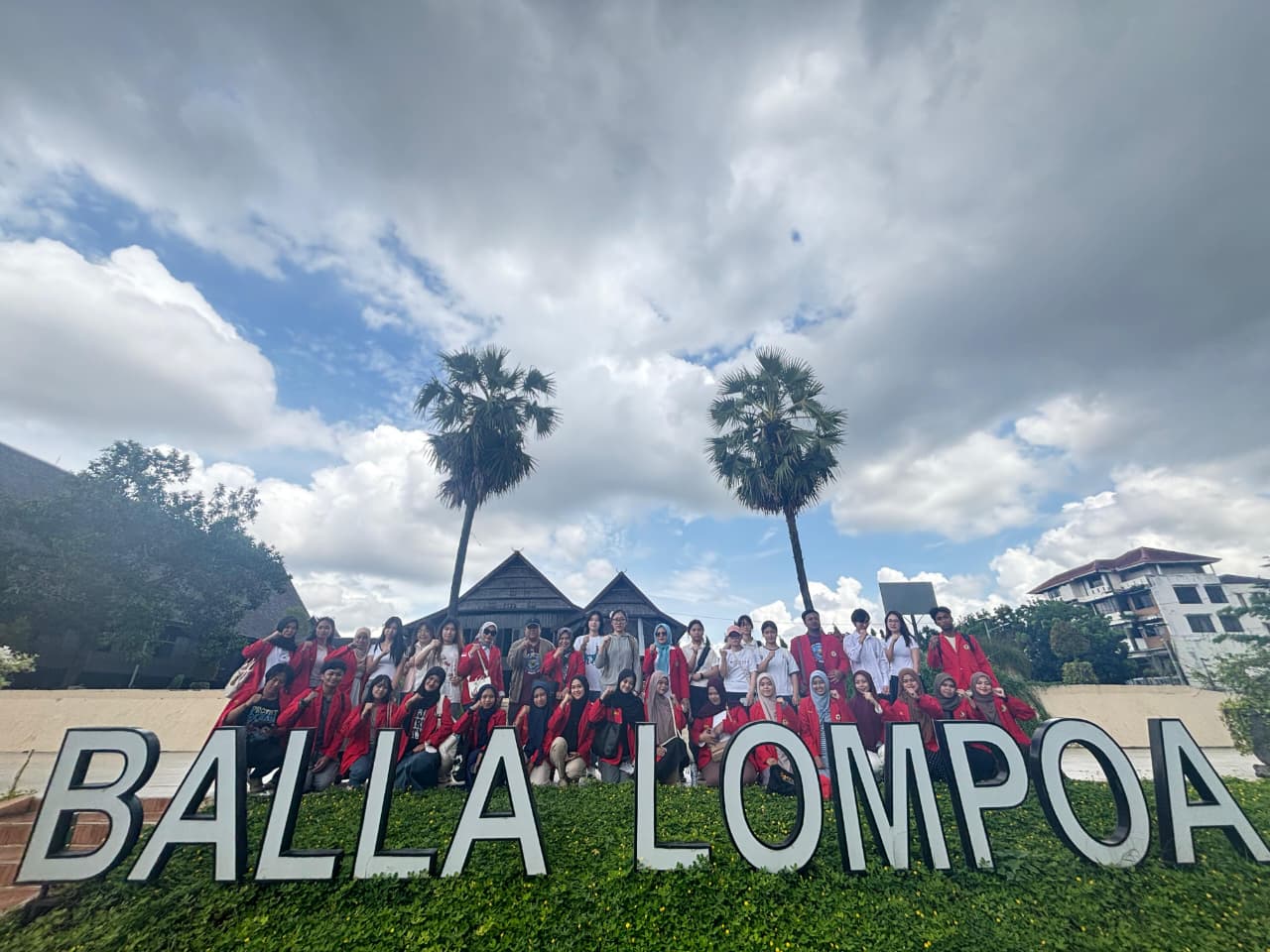
Chinese Students Explore the Glory of Gowa: History, Culture, and Resistance
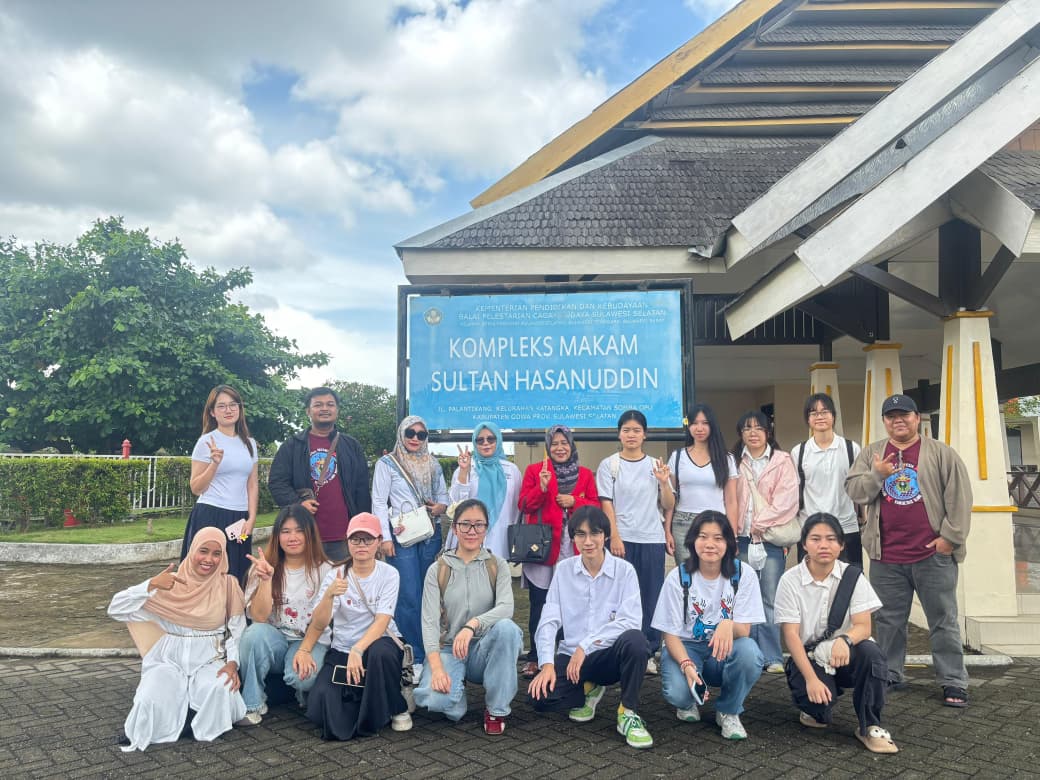
Makassar — Dozens of Chinese students currently studying in the Department of Indonesian Literature embarked on a cultural journey to several historical sites of the Gowa Kingdom on Sunday, November 30, 2025. The one-day program, which began at 9:30 a.m. local time, covered four main destinations: the Tombs of the Kings of Gowa, Balla Lompoa Museum, Fort Somba Opu, and Fort Rotterdam. Accompanied by Indonesian Literature students, the group enthusiastically followed each activity filled with the historical and cultural values of South Sulawesi.
Learning About Sultan Hasanuddin at the Tombs of the Kings of Gowa
The first stop was the Tombs of the Kings of Gowa, a historic burial complex that serves as the resting place of Gowa’s rulers, including Sultan Hasanuddin, the great figure known as the Rooster of the East. Here, the students received explanations about the royal family lineage and the heroic journey of Sultan Hasanuddin.
The guide recounted how Sultan Hasanuddin led the people of Gowa in fierce resistance against the VOC in the 17th century. His courage and determination in defending sovereignty captured the students’ attention. Many Chinese students carefully noted stories of his war strategies and the moment of his passing, which later earned him recognition as one of Indonesia’s national heroes.
This visit provided a powerful introduction to understanding the roots of South Sulawesi’s resistance against colonialism.
Balla Lompoa: A Warm Welcome and Traces of Gowa’s Glory
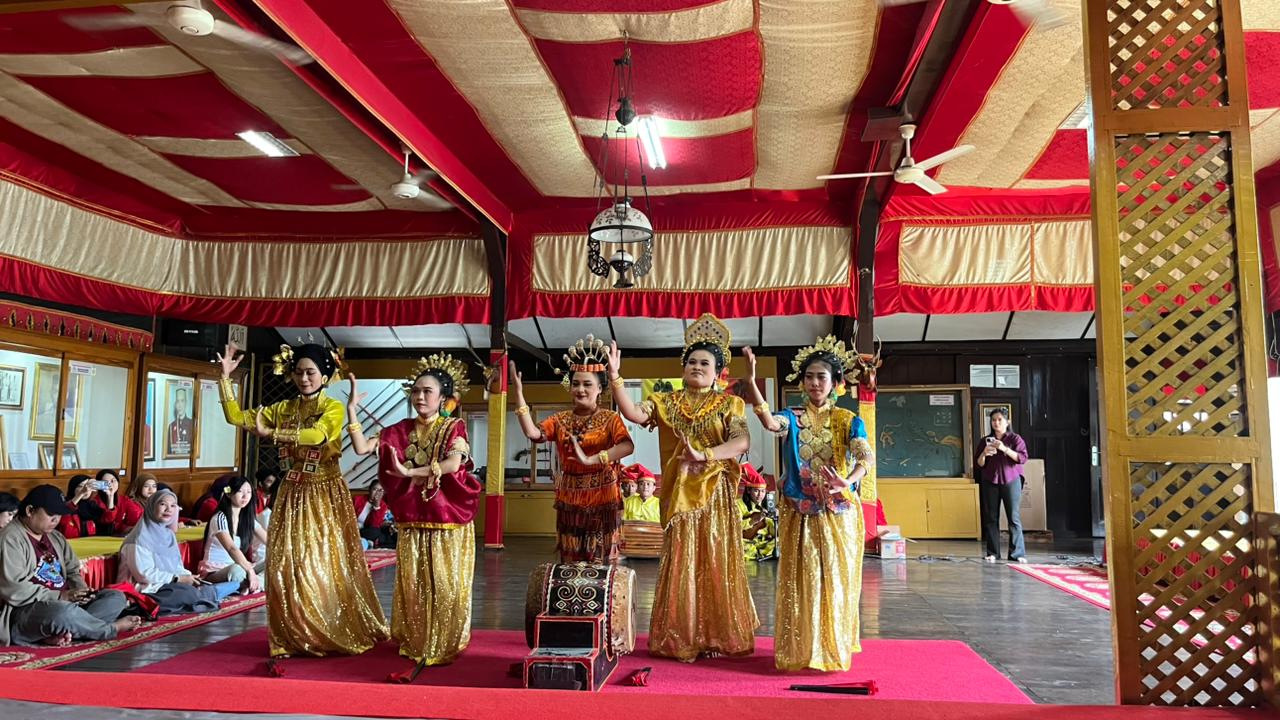
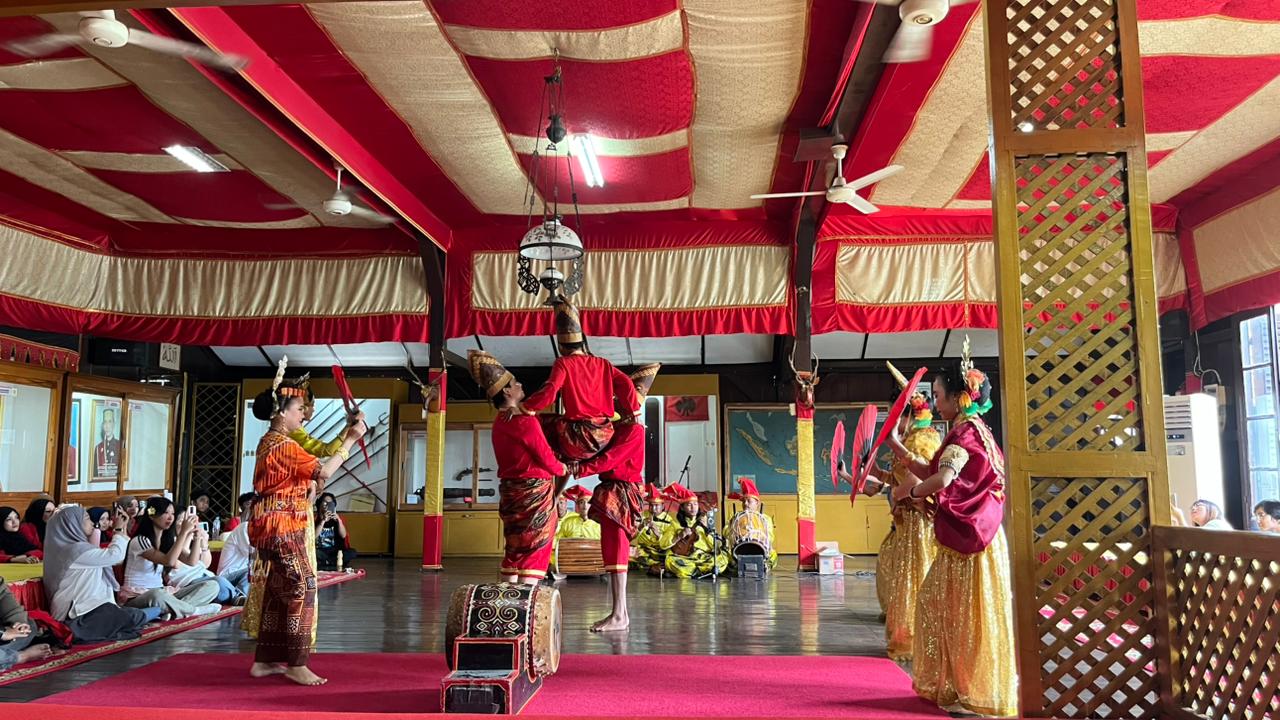
The group then continued to Balla Lompoa, the museum and former palace of the Gowa Kingdom located in Gowa Regency. Upon arrival, they were warmly welcomed with the Four Ethnic Dance—Makassar, Bugis, Mandar, and Toraja—performed in vibrant costumes representing the cultural diversity of South Sulawesi.
Adding to the excitement, three men in bold red uniforms showcased the traditional sport sepak takraw, impressing the students with acrobatic and energetic moves. Loud applause followed each skillful strike of the rattan ball.
The welcoming ceremony was attended by representatives of the Gowa Regency Tourism Office. In his remarks, the Head of Tourism emphasized that Balla Lompoa stands as proof of the Gowa Kingdom’s grandeur in the past. He explained that the museum is now part of a cultural heritage site, preserving royal relics after Gowa officially became part of Indonesia in 1959.
He noted that more than 800 royal artifacts are stored and displayed in the museum, ranging from weapons, ceremonial attire of kings and queens, baju bodo’ (traditional Bugis-Makassar clothing), to a replica of the royal crown. “The original crown is highly sacred,” he said. “It is only unveiled once a year, on Eid al-Adha.”
After the ceremony and a short break, the students toured the collections. They were particularly fascinated by the lontaramanuscripts, traditional texts that have been a source of knowledge for the Bugis-Makassar people for centuries. They also learned about the writing system, royal customs, and the philosophies embedded in traditional clothing and weaponry.
Fort Somba Opu: The Last Stronghold Against Dutch Attacks
Leaving Balla Lompoa, the journey continued to Fort Somba Opu, a historic site that today also features traditional houses from various ethnic groups in South Sulawesi. In the past, this fort was the Gowa Kingdom’s main defense center and played a crucial role in battles against the Dutch.
The Head of the Indonesian Literature Department, Mrs. Muslimat, gave a detailed explanation of the fort’s history. She described how Fort Somba Opu was strategically built, surrounded by two major rivers and the sea. This location made the fort both a hub of trade control and a stronghold against VOC attacks.
The Chinese students eagerly took photos, especially around the traditional houses that showcased South Sulawesi’s cultural diversity. Some engaged in discussions about the fort’s defensive structures and how the Gowa people protected their territory from colonial pressure.
Fort Rotterdam and La Galigo Museum: A Stirring Finale
The final destination was Fort Rotterdam, a grand colonial-era building that has become one of Makassar’s landmarks. Inside the fort complex, the group visited the La Galigo Museum, which houses collections of archaeology, ethnography, and the history of Sulawesi’s civilizations.
Here, the Chinese students’ enthusiasm grew even stronger. Belinda, one of the participants, expressed her delight at seeing such a comprehensive museum collection. She said she finally understood how the Dutch colonized Indonesia, particularly South Sulawesi, to seize spices and natural wealth. “But the kings of South Sulawesi fought hard to defend their land,” she remarked with admiration.
The visit to Fort Rotterdam served as a powerful conclusion to the cultural journey. The students not only gained visual experiences but also deep insights into the history, resistance, and cultural greatness of South Sulawesi’s people.
Cross-Cultural Enrichment
Through this program, both Chinese and Indonesian Literature students expanded their cross-cultural horizons and strengthened their understanding of historical heritage—an essential part of Indonesia’s national identity.