
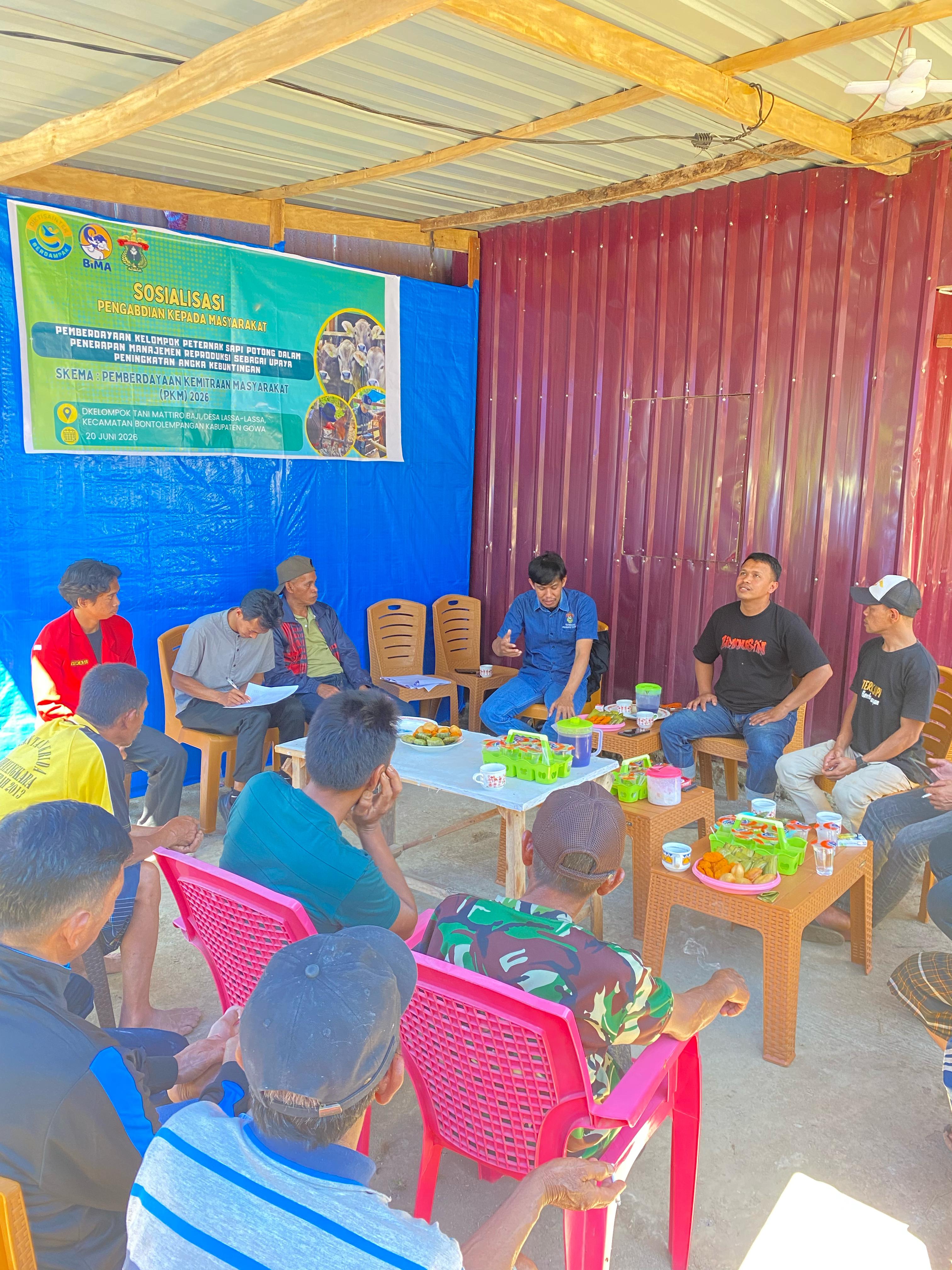
Empowering Beef Cattle Farmers in Gowa: Hasanuddin University Vocational Team Enhances Pregnancy Rates through Reproductive Management
As part of its commitment to supporting Indonesia's national food security program and improving the productivity of smallholder livestock farming, a team of lecturers from the Animal Production Technology Study Program, Faculty of Vocational Studies, Hasanuddin University, conducted a community service program funded by the BIMA (Research and Community Service Information System) Program of the Ministry of Higher Education, Science, and Technology of the Republic of Indonesia (Kemendiktisaintek) under the Community Partnership Empowerment (PKM) Scheme.
The program, entitled "Empowering Cattle Farmer Groups through the Implementation of Reproductive Management to Improve Pregnancy Rates," was implemented in collaboration with the Mattiro Baji Farmer Group in Lassa-Lassa Village, Bontolempangan District, Gowa Regency, South Sulawesi.
The initiative was motivated by the low reproductive efficiency observed in smallholder beef cattle production systems. Field assessments indicated that pregnancy rates within the farmer group remained relatively low. In addition, reproductive disorders such as anestrus, repeat breeder syndrome, and prolonged days open were frequently encountered, leading to reduced livestock productivity and slower growth of the local beef cattle population.
The project leader, Hasrin, S.Pt., M.Si., explained that the program aims to strengthen farmers' capacity in implementing effective reproductive management through technical training, on-site mentoring, and the establishment of a structured reproductive recording system. He emphasized that reproductive efficiency is one of the most critical factors in increasing both the productivity and population of beef cattle in smallholder farming systems.
The program was carried out through several stages, including community outreach, technical training, technology implementation, mentoring and evaluation, and farmer empowerment. During the training sessions, participants received practical instruction on beef cattle breeding management, the identification and management of reproductive disorders, estrus detection, and simple reproductive record-keeping methods that can be easily implemented at the farmer group level.
In addition to the training activities, the community service team introduced several educational innovations, including a Beef Cattle Breeding Management Handbook, a Reproductive Disorders Handbook, and a Reproductive Record-Keeping Handbook. These practical guides are expected to help farmers accurately detect estrus, determine the optimal breeding time, recognize reproductive disorders at an early stage, and implement sustainable reproductive management practices.
Through this program, the team aims to increase the pregnancy rate of beef cattle to 80 percent, reduce the incidence of reproductive disorders from approximately 60 percent to below 20 percent, and encourage all members of the farmer group to actively maintain reproductive records. Achieving these targets is expected to improve the efficiency of cattle production while supporting the growth of the beef cattle population in Gowa Regency, particularly in Bontolempangan District.
The program received a positive response from members of the Mattiro Baji Farmer Group. Farmers acknowledged that the activities provided valuable knowledge and practical skills in reproductive management that had not previously been implemented effectively. With continuous mentoring over the coming months, they expect to improve livestock productivity and increase household income through a higher number of calves born each year.
Through close collaboration among the government, higher education institutions, and local communities, this initiative is expected to serve as a model for community-based beef cattle development. Ultimately, the program aims to enhance farmers' welfare while contributing to Indonesia's national food security by ensuring a sustainable supply of high-quality animal protein.
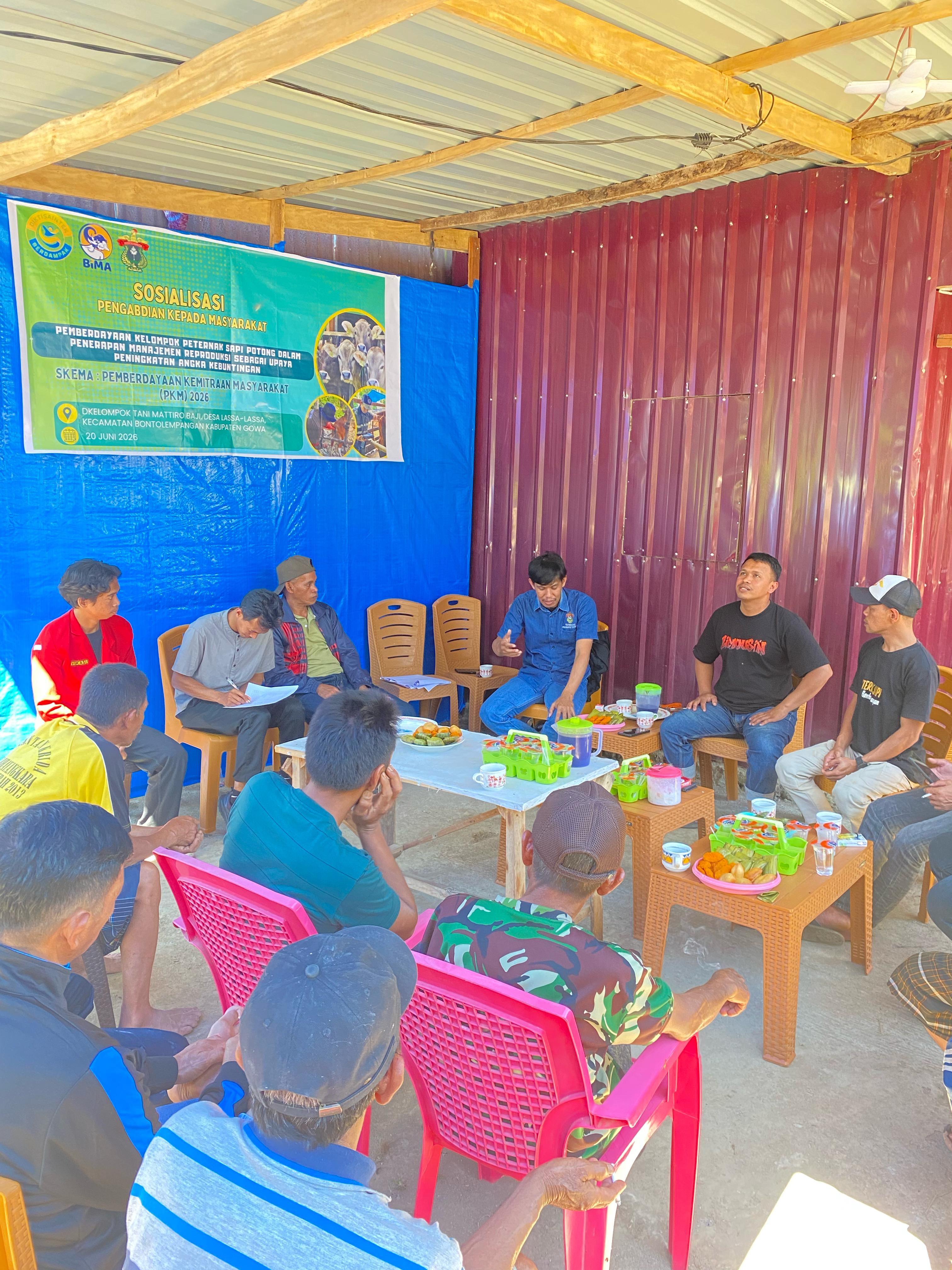
Hasanuddin University Vocational Faculty Lecturers Strengthen Reproductive Management Practices to Improve Beef Cattle Pregnancy Rates in Gowa