Welenrenge Model Strengthens Maritime Character Education for Students in Bulukumba
BULUKUMBA — Hasanuddin University (Unhas) reaffirmed its commitment to the Tri Dharma of Higher Education through its Community Service Program under the Community Partnership Scheme (PKM), held in Bulukumba Regency on Saturday (June 13, 2026).
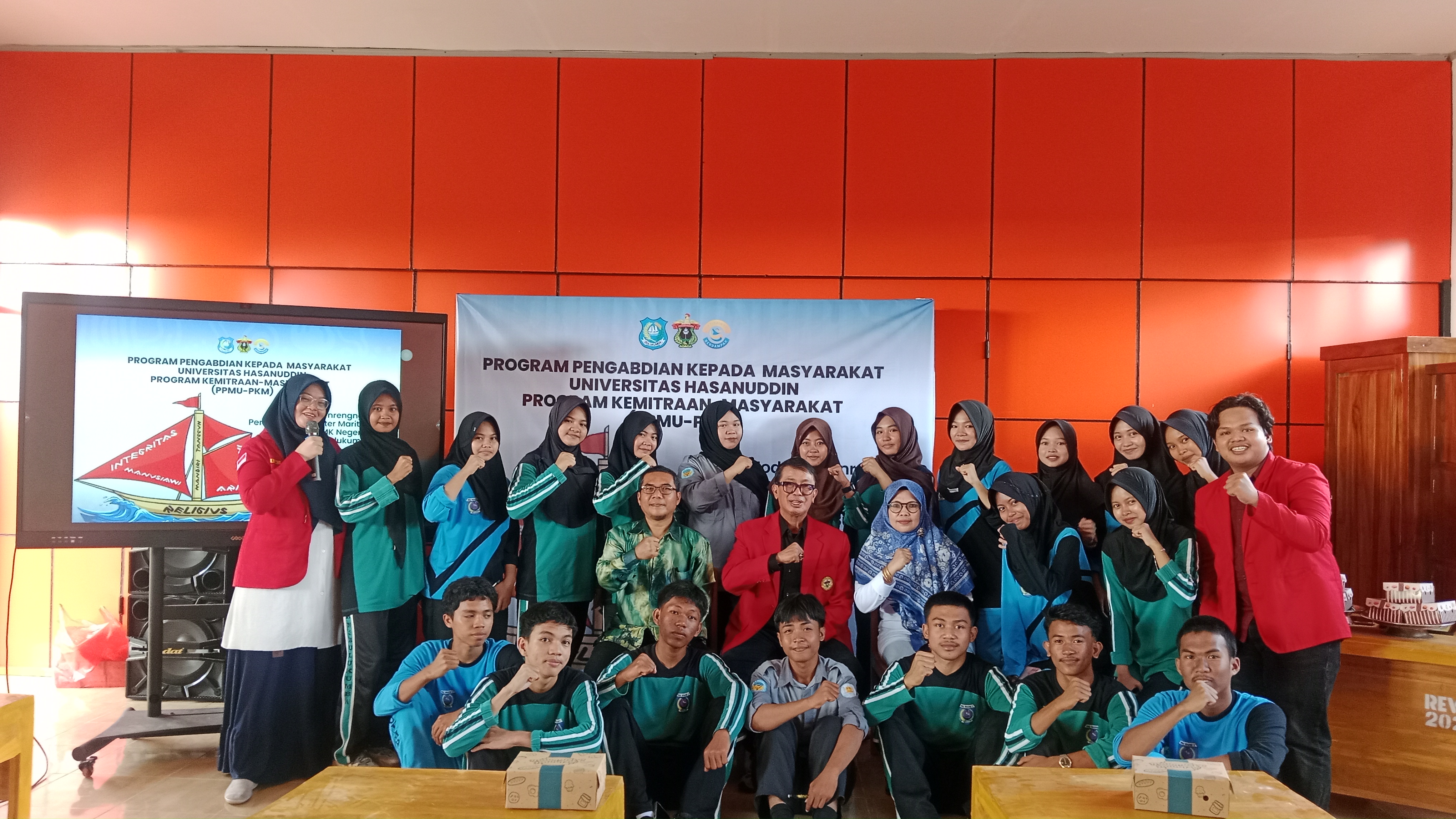
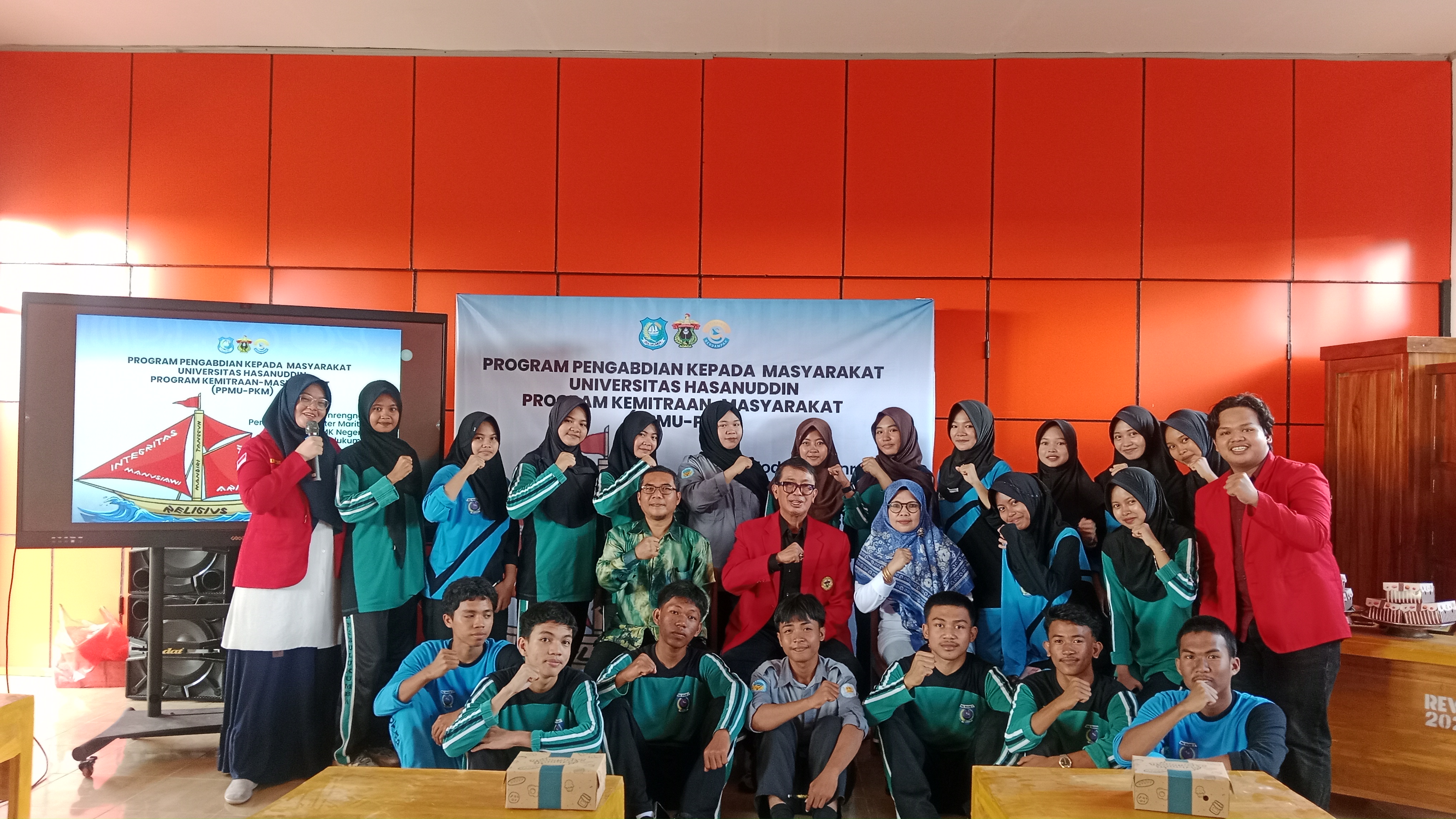
Carrying the theme "The Welenrenge Model: Strengthening Maritime Character," the program brought together academics from the Faculty of Cultural Sciences (FIB), Hasanuddin University, and students of SMKN 3 Bulukumba, with SMA Negeri 9 Bulukumba serving as the host venue. The initiative aimed to instill character values, leadership, and maritime local wisdom rooted in the Bugis-Makassar cultural heritage.
The community service team was led by Prof. A. B. Takko Bandung, accompanied by Dr. St. Nursa'adah and Ilham as team members. The program also involved student assistants: Asmira, Ilma Ratmiyanti, Syahrul Ramadhan, Azizah Az Zahrah, and Ismail Basri.
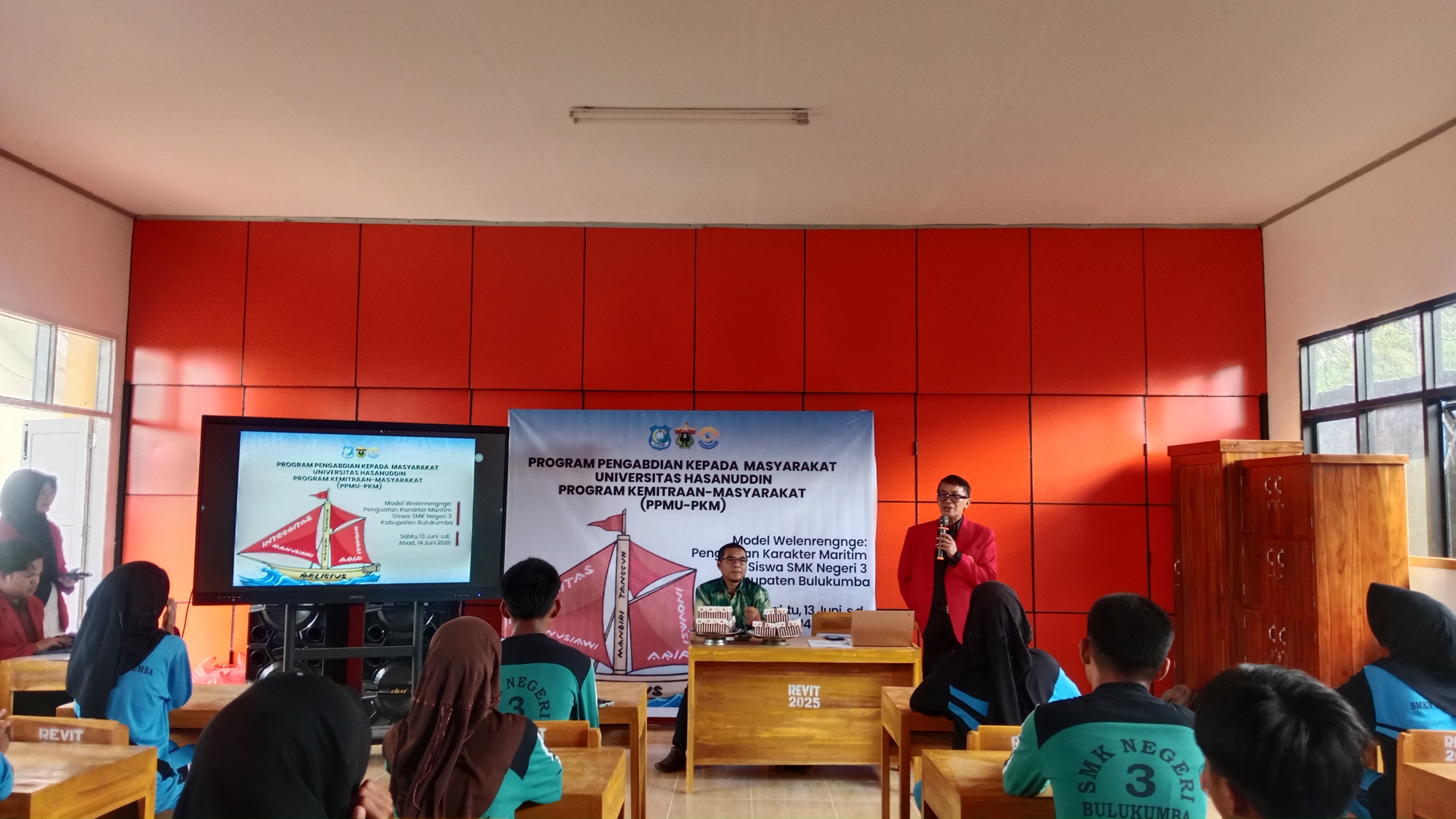
The event was officially opened by Muhammad Ikbal, Vice Principal of SMKN 3 Bulukumba, who expressed his appreciation for the presence of the Hasanuddin University team.
According to Ikbal, the participation of Unhas academics was a source of pride for the school and demonstrated the university's genuine commitment to supporting human resource development in the region.
"The most appropriate words we can express today are Alhamdulillah. The presence of our respected elders from Hasanuddin University in Bulukumba Regency, particularly at SMKN 3 Bulukumba and SMA Negeri 9 Bulukumba as the host school, is something we are truly proud of and deeply grateful for," he said.
He emphasized that community service programs such as this are strategically important because they provide students with direct learning experiences from university scholars.
"We highly appreciate this program. Not every university, whether public or private, consistently carries out initiatives like this. Yet community service is one of the fundamental missions of the Tri Dharma of Higher Education. Therefore, we sincerely appreciate Hasanuddin University for continuously reaching out and contributing to the people of South Sulawesi," he added.
Ikbal also conveyed his gratitude to Prof. Takko Bandung and the entire team for selecting Bulukumba as the location for the program.
"On behalf of the entire SMKN 3 Bulukumba community, we extend our deepest appreciation to Prof. A. B. Takko Bandung and his team for coming to our school to carry out one of the noble responsibilities of higher education, namely community service," he remarked.
He expressed hope that the collaboration would continue through future partnerships between schools and universities.
"We are always open and ready to support community service programs conducted by Hasanuddin University and other higher education institutions. May this collaboration continue for the advancement of education and the character development of our younger generation," he concluded.
During the session, Prof. Takko presented the Welenrenge Model, a character-building framework inspired by the exemplary values of Sawerigading, the legendary hero of the Bugis epic I La Galigo. According to him, the model offers valuable guidance for young people in developing character, leadership, and personal identity.
He also introduced the concept of The Alena, or the model of the self, explaining that human behavior is shaped by accumulated life experiences, including what individuals see, hear, read, and the social environments in which they interact.
"Every individual or community acts based on the experiences they have accumulated. Therefore, the most important step is to know oneself. Once a person understands who they are, they can better understand their purpose in life and the direction of their actions," he explained.
Prof. Takko then referred to the Greek philosopher Socrates and his famous maxim, "Know Yourself." He pointed out that a similar principle exists in Bugis-Makassar local wisdom through the saying "Ajeppui Alemu, Muajeppui Puangmu," which conveys that a person who truly understands oneself will also come to know God and live a meaningful and cultured life.
He further explained that the concept is grounded in Islamic teachings, highlighting humanity's role as khalifah (steward) on earth as stated in Qur'an, Surah Al-Baqarah (2:30), and as servants of Allah as mentioned in Surah Az-Zariyat (51:56).
According to Prof. Takko, the The Alena approach enables individuals to discover their authentic selves. By understanding their identity, they can recognize their weaknesses, develop their strengths, and cultivate positive energy and motivation to improve their lives.
"Why a person does something is known only to that person and to Allah. Once individuals discover their true model of self, they become capable of organizing their lives, improving themselves, and renewing their positive energy," he said.
The participants showed great enthusiasm during the discussion session. One of the students, Muh. Farid Reyhan, Chair of the Student Council (OSIS) of SMKN 3 Bulukumba, asked about the factors that shape the character of the Bugis-Makassar people.
Responding to the question, Prof. Takko explained that character is not formed instantly but develops gradually through life experiences and environmental influences.
"It depends greatly on what a person sees, hears, and reads. Equally important is the people with whom they interact. Social environments profoundly influence one's way of thinking, behaving, and even speaking," he explained.
He added that earlier generations of the Bugis-Makassar people were widely recognized for their strong manners and character because cultural education was consistently transmitted through families and customary traditions.
"Previous generations possessed refined language and admirable conduct because they were educated through customs that were practiced consistently. These values were passed down from one generation to the next, creating a strong cultural character within society," he noted.
Prof. Takko also encouraged students to be wise in choosing their social circles and the information they consume every day, emphasizing that these factors significantly influence one's future character.
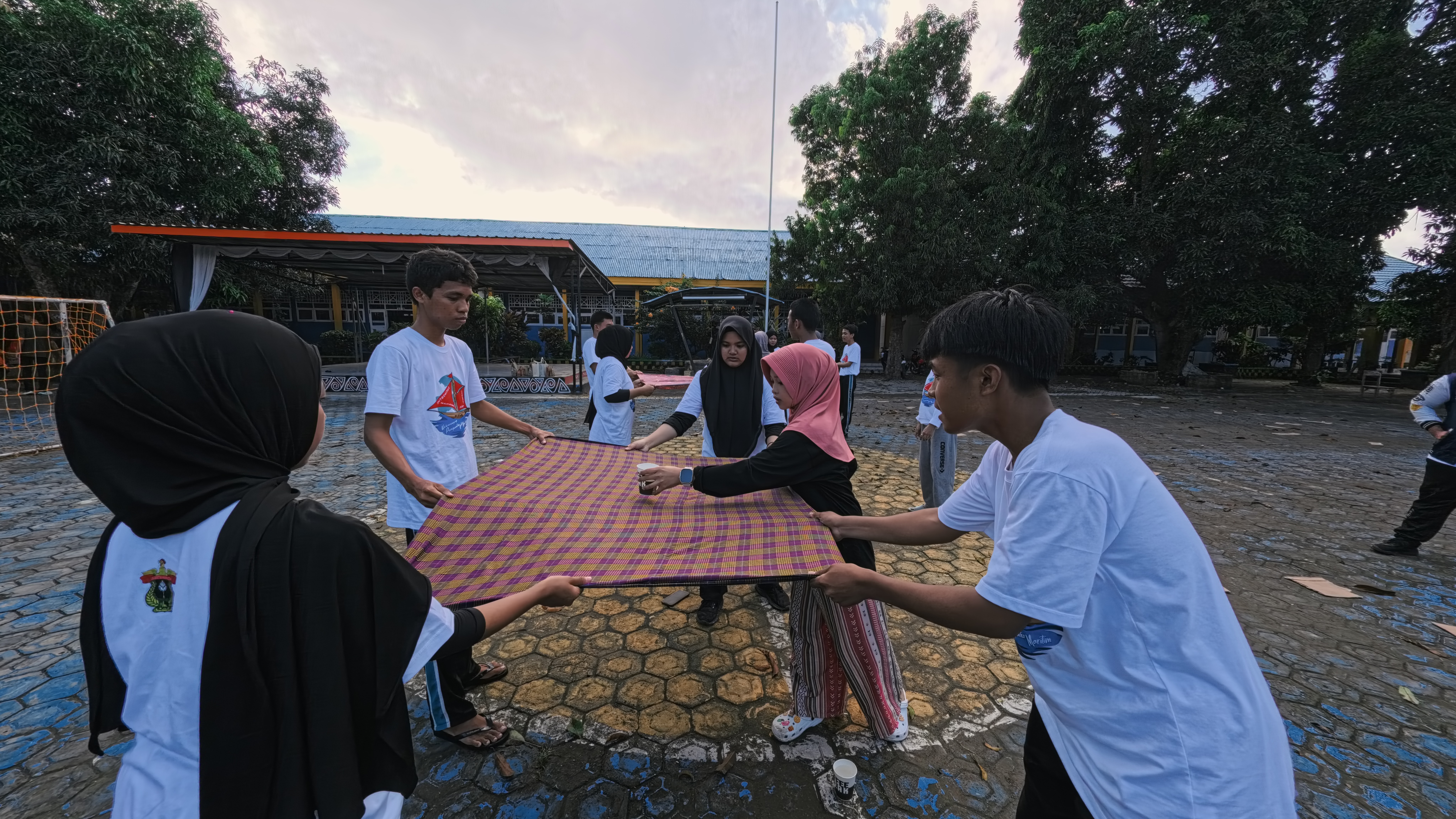
The program concluded with an interactive discussion and received enthusiastic responses from participants. Through this community service initiative, Hasanuddin University not only shared academic knowledge with students but also reinforced efforts to preserve local cultural values as the foundation for character development among the younger generation. (*)