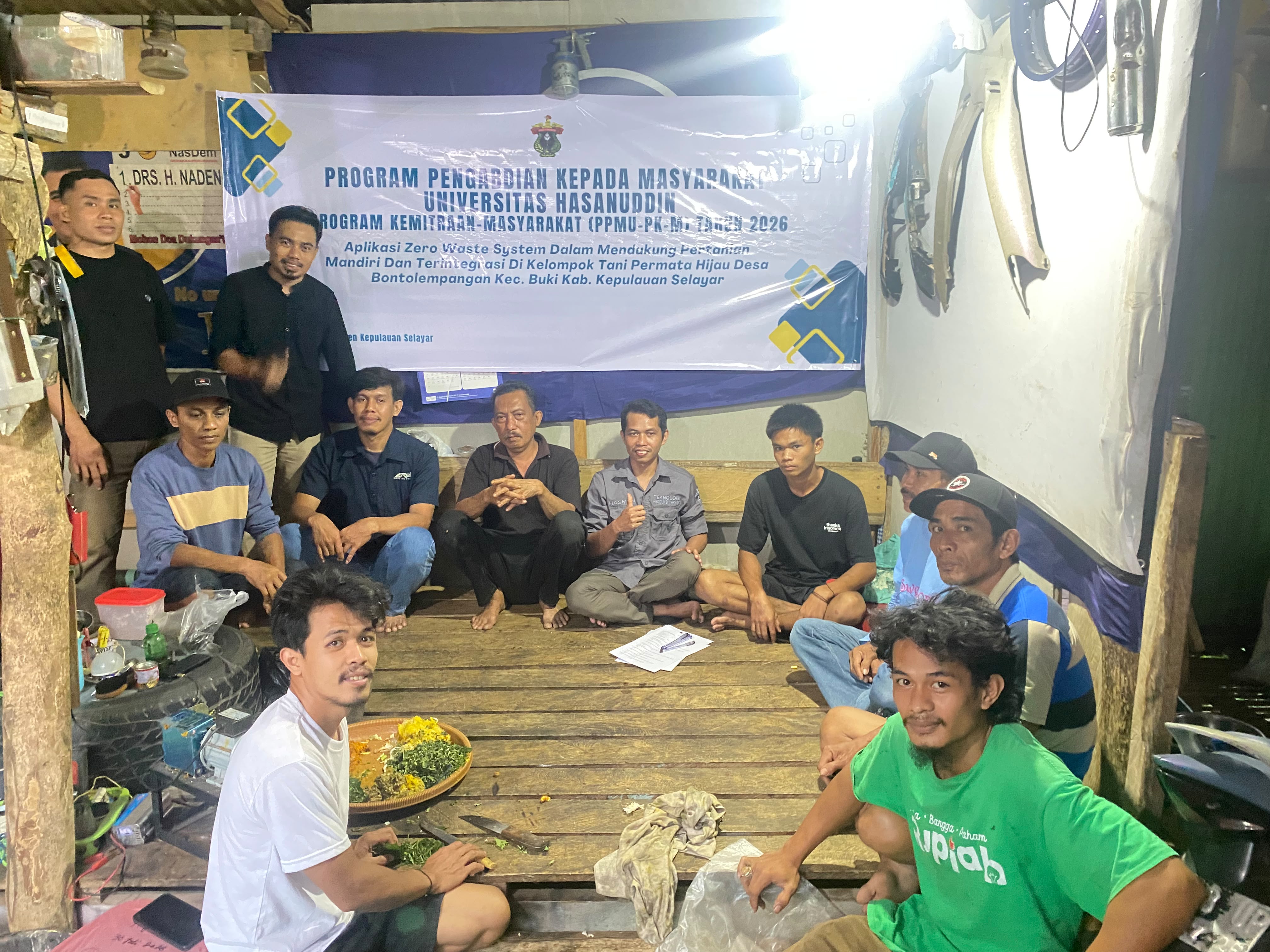
Hasanuddin University Increases the Capacity of the Permata Hijau Farmers Group Through Training on Processing Livestock Waste into Compost Fertilizer and Biopesticides
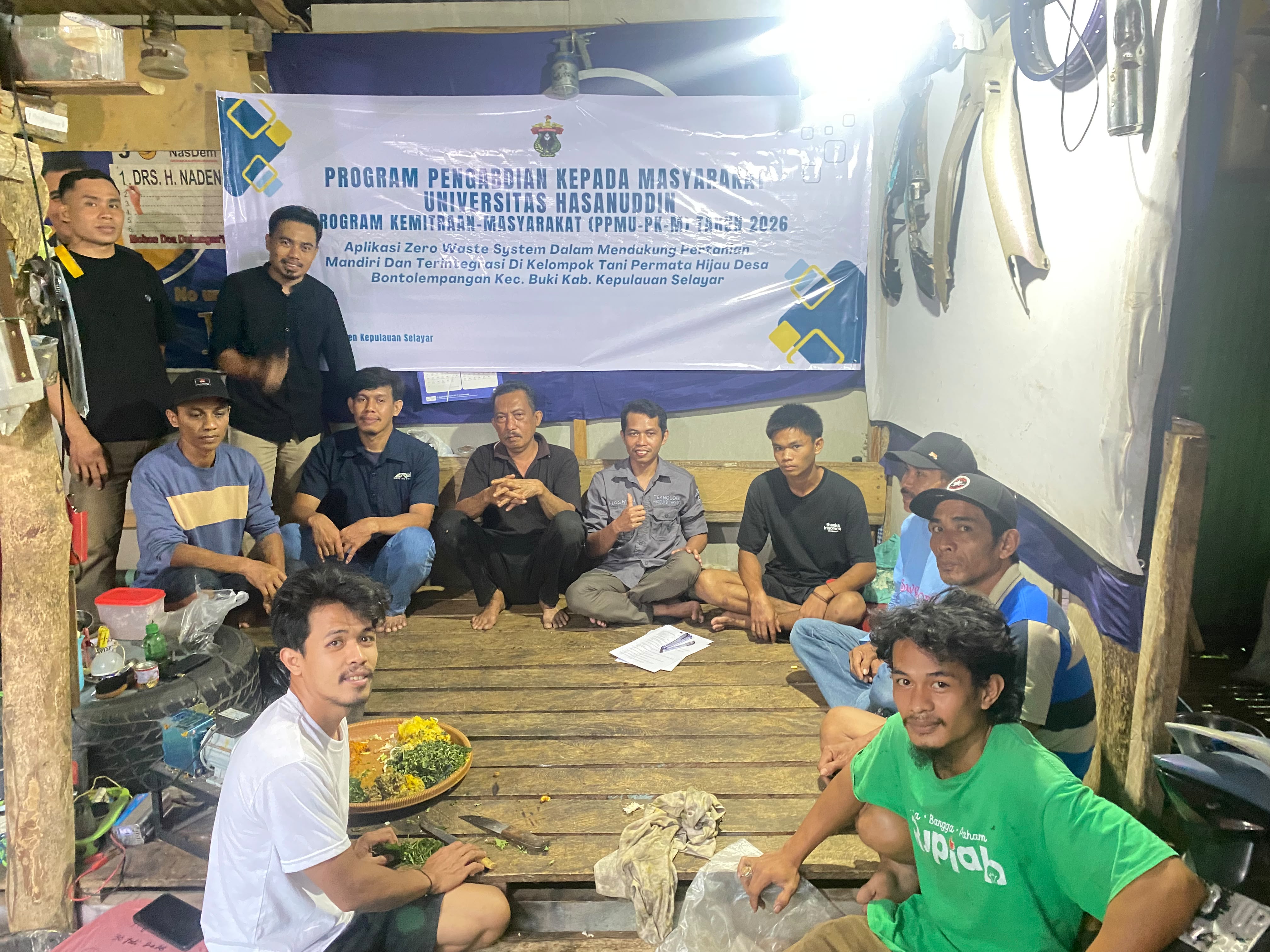
Kepulauan Selayar, July 11, 2026 – Hasanuddin University once again demonstrated its commitment to fulfilling the Tri Dharma Perguruan Tinggi (Three Pillars of Higher Education) through the implementation of the 2026 Hasanuddin University Community Service Program – Community Partnership Program (PPMU-PK-M). This time, a team of Hasanuddin University lecturers conducted a community service activity focusing on Training for Processing Livestock Waste into Compost and Livestock Urine-Based Biopesticides, held with the Permata Hijau Farmers Group in Bontolempangan Village, Buki District, Kepulauan Selayar Regency.
The activity was led by Hasman, S.Pt., M.Si., alongside a team of Hasanuddin University lecturers, with the objective of improving public knowledge and skills in processing livestock waste into value-added products, namely organic compost and biopesticides. In addition to serving as a solution to reduce environmental pollution caused by livestock waste, this training is also expected to support sustainable agriculture, reduce dependence on chemical fertilizers and pesticides, and open up new business opportunities that can boost community income.
In his remarks, the Head of the Community Service Team, Hasman, S.Pt., M.Si., stated that livestock waste is a resource with great potential if managed properly.
"For a long time, livestock waste has often been viewed as an environmental problem. In fact, livestock feces can be processed into compost fertilizer, while livestock urine can be utilized as an eco-friendly organic biopesticide. Through this training, we hope the community will be able to transform waste into useful products with economic value, while supporting a sustainable agricultural system," Hasman expressed.
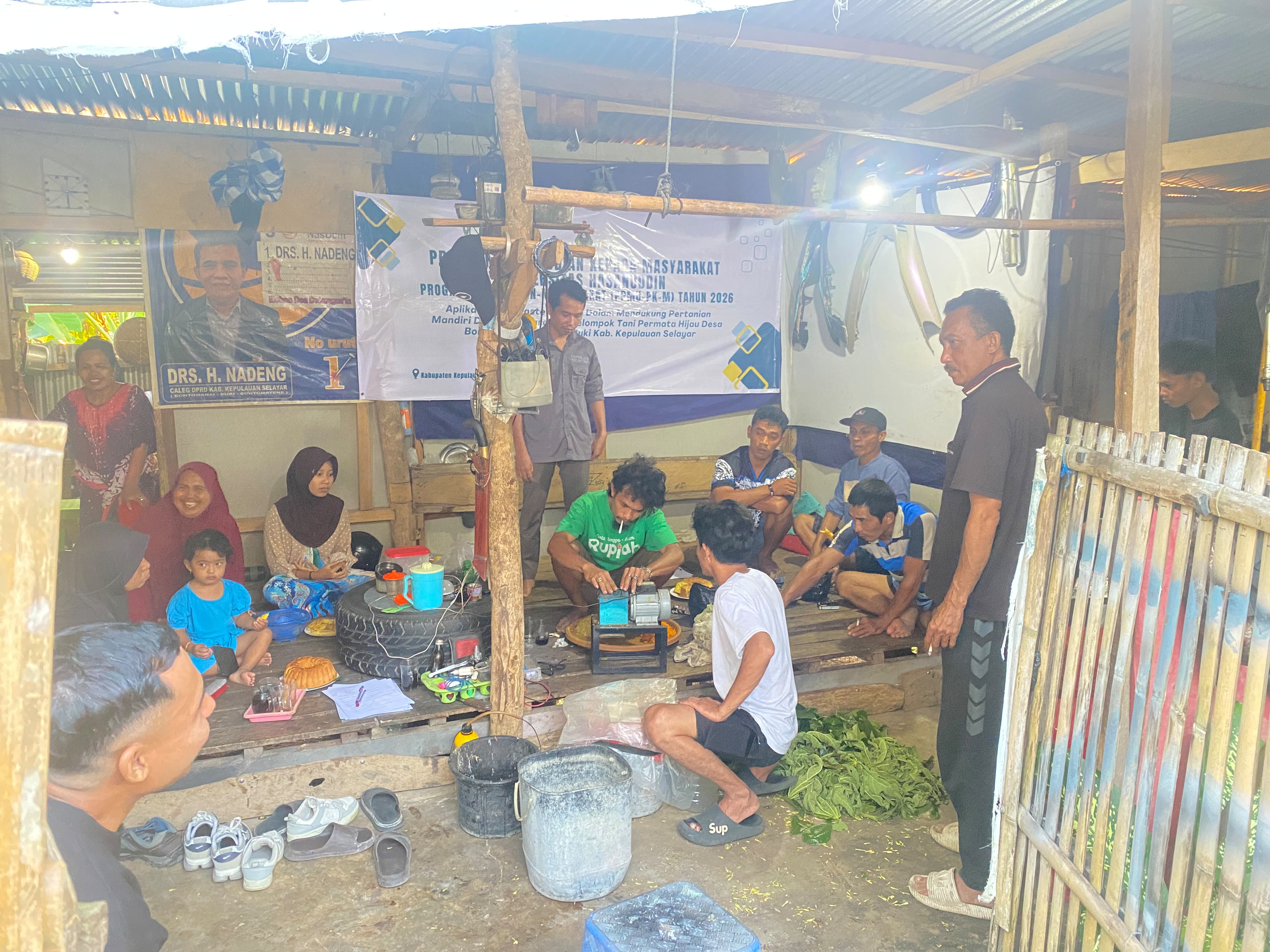
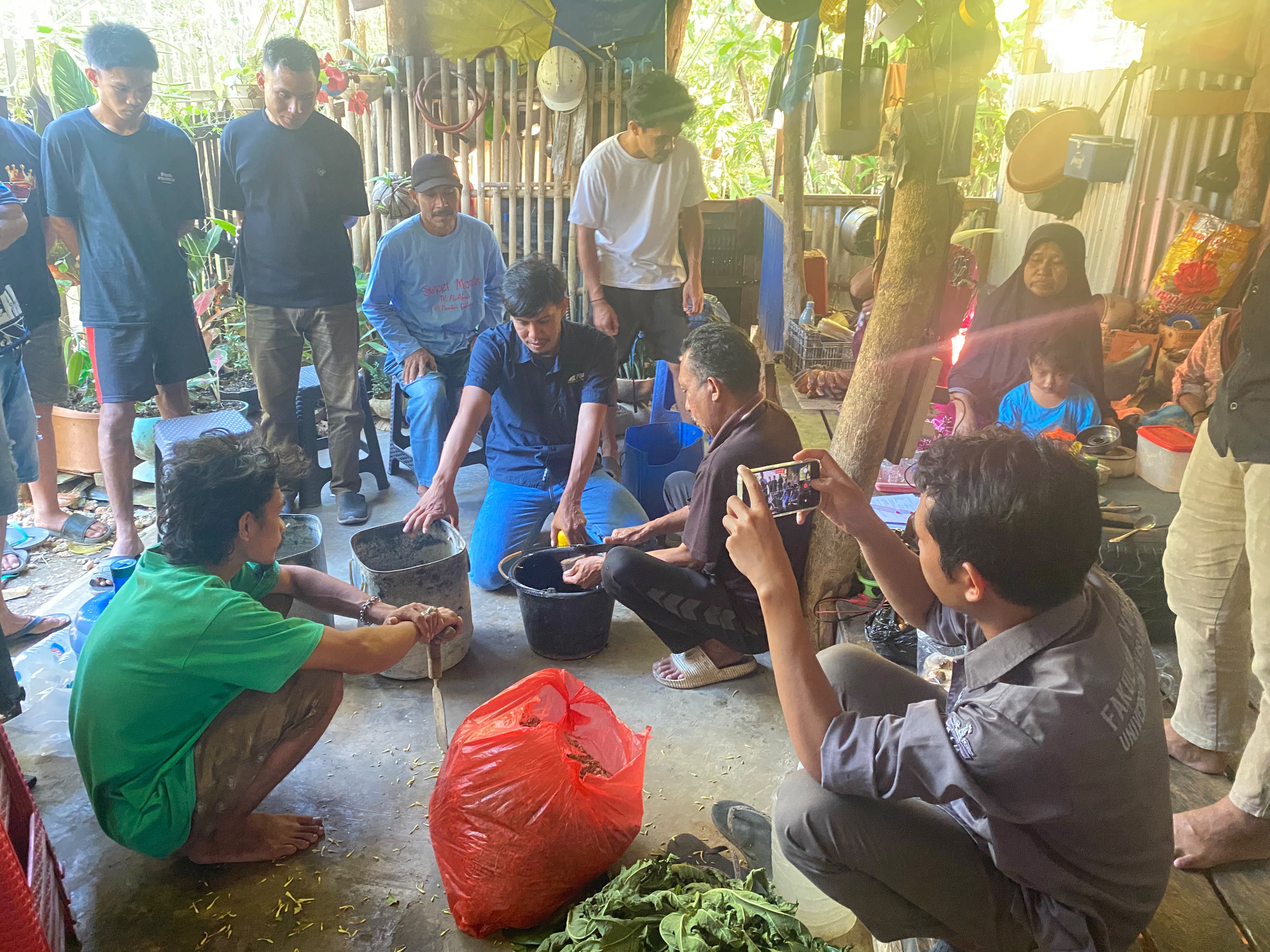
The training was attended by members of the Permata Hijau Farmers Group, the majority of whom are farmers and livestock breeders. The event began with counseling on the importance of integrated livestock waste management as part of implementing sustainable agriculture. Subsequently, participants received materials on the techniques of processing livestock feces into compost, ranging from raw material selection, organic material mixing, bio-activator usage, moisture control, fermentation processes, compost turning, to packaging techniques to produce high-quality organic fertilizer.
Additionally, participants received training on making organic biopesticides derived from livestock urine. In this session, the service team explained urine collection techniques, the fermentation process using natural ingredients and microorganisms, and methods for applying biopesticides to crops to help suppress pest and disease attacks while reducing the use of chemical pesticides.
As part of the activity, participants engaged in hands-on practice in producing compost fertilizer and biopesticides, ensuring that every group member gained direct experience across all stages of the production process. The participants' enthusiasm was evident from their high level of participation during the practice sessions and discussions regarding business development opportunities based on livestock waste processing.
The Bontolempangan Village Government expressed its appreciation for the implementation of this community service activity. The program was deemed highly beneficial as it provides concrete solutions to livestock waste issues while introducing appropriate technology that is easily applied by rural communities.
Meanwhile, the Head of the Permata Hijau Farmers Group expressed gratitude for the guidance provided by the Hasanuddin University team.
"We greatly hope that through this training, the members' ability to process livestock waste into compost and biopesticides will continue to improve. With the skills we have acquired, livestock waste that was previously underutilized can now be processed into high-quality organic products with selling value. Moving forward, we hope this activity will not only meet the organic fertilizer and pesticide needs of our members' farmland, but also evolve into a community enterprise that can boost family income and the welfare of Bontolempangan Village residents," he stated.
Through this initiative, Hasanuddin University hopes to foster sustainable synergy between higher education institutions and the community in developing innovations based on local potential. The utilization of livestock feces into compost and livestock urine into biopesticides represents the application of the zero waste livestock concept, where all livestock waste is repurposed into products beneficial to the agricultural sector. This approach is expected to support eco-friendly agriculture, enhance farming efficiency, strengthen food security, and create new economic opportunities for rural communities.
This activity is part of the implementation of the 2026 Hasanuddin University Community Service Program – Community Partnership Program (PPMU-PK-M), which focuses on community empowerment through the application of science and technology tailored to regional needs and potentials. It is hoped that the outcomes of this activity can be further developed by the Permata Hijau Farmers Group as a model for circular economy-based community empowerment in livestock waste management within Kepulauan Selayar Regency