The Vision and Mission of the Undergraduate Study Program in Public Administration at the Faculty of Social and Political Sciences (FISIP), Hasanuddin University, are formulated holistically to address public governance challenges at the local, national, and international levels. All directions of academic development, research, and community service within this study program are driven by a shared commitment to realizing adaptive, transparent, and globally competitive bureaucratic governance.
The scientific vision of the Undergraduate Study Program in Public Administration at FISIP UNHAS focuses on becoming a professional and excellent study program in the development and application of adaptive and inclusive public governance science based on the Indonesian Maritime Continent. This vision affirms the study program's commitment to not only producing human resources who are responsive to the dynamics of digital transformation and global governance changes, but who also possess a comparative advantage in the form of a deep understanding of the unique characteristics of archipelagic regions and maritime communities.
To realize this scientific vision, the study program carries out four integrated main missions:
First Mission: Demonstrated through the delivery of high-quality undergraduate education with an adaptive, innovative, and internationally standardized curriculum harmoniously combined with maritime insights.
Second Mission: Focused on developing multidisciplinary research in the fields of public policy, public management, and digital governance capable of producing evidence-based recommendations and providing a real impact on solving social and community problems.
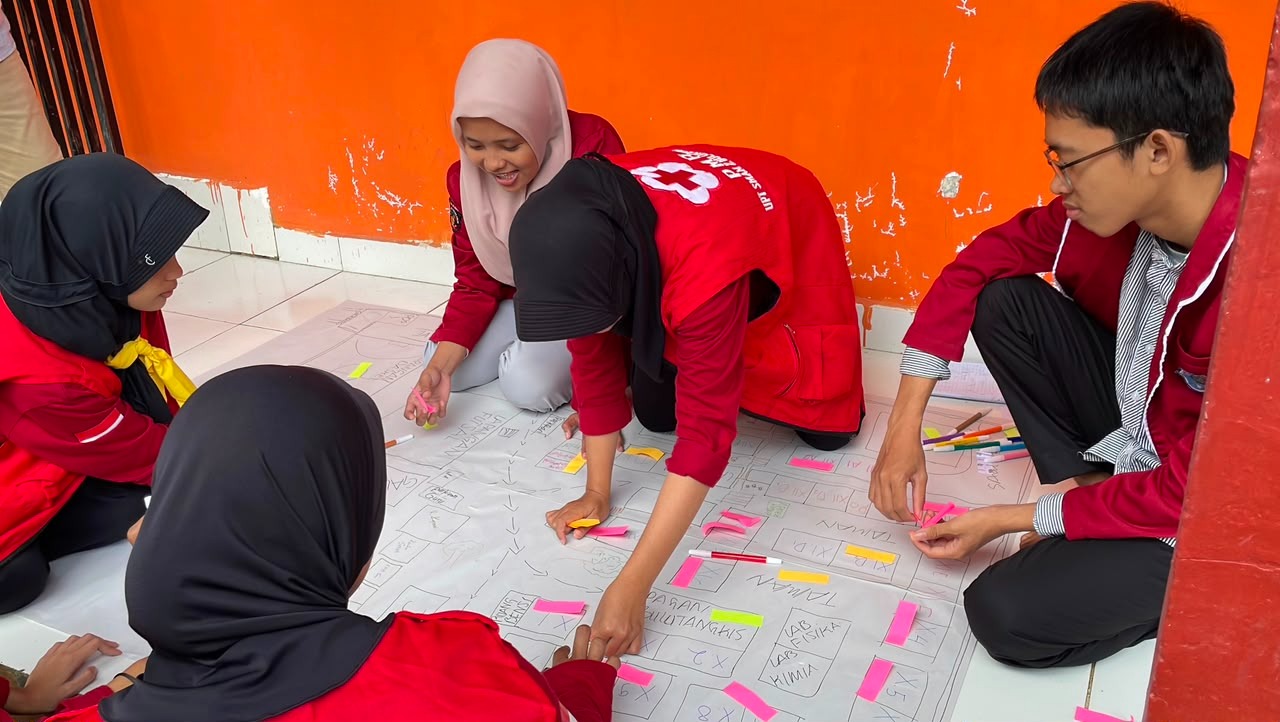
Third Mission: Realized through the implementation of community service activities based on strategic partnerships to provide contextual solutions to various governance challenges at both local and national levels.
Fourth Mission: Executed by continuously strengthening transparent, accountable, and inclusive internal study program governance, supported by the utilization of modern information technology and the expansion of cooperation networks with government institutions, industry, and internationally reputable higher education institutions.