
Unhas’s LPPM Trains Students at SMAN 2 Bulukumba to Become Disaster Preparedness Agents
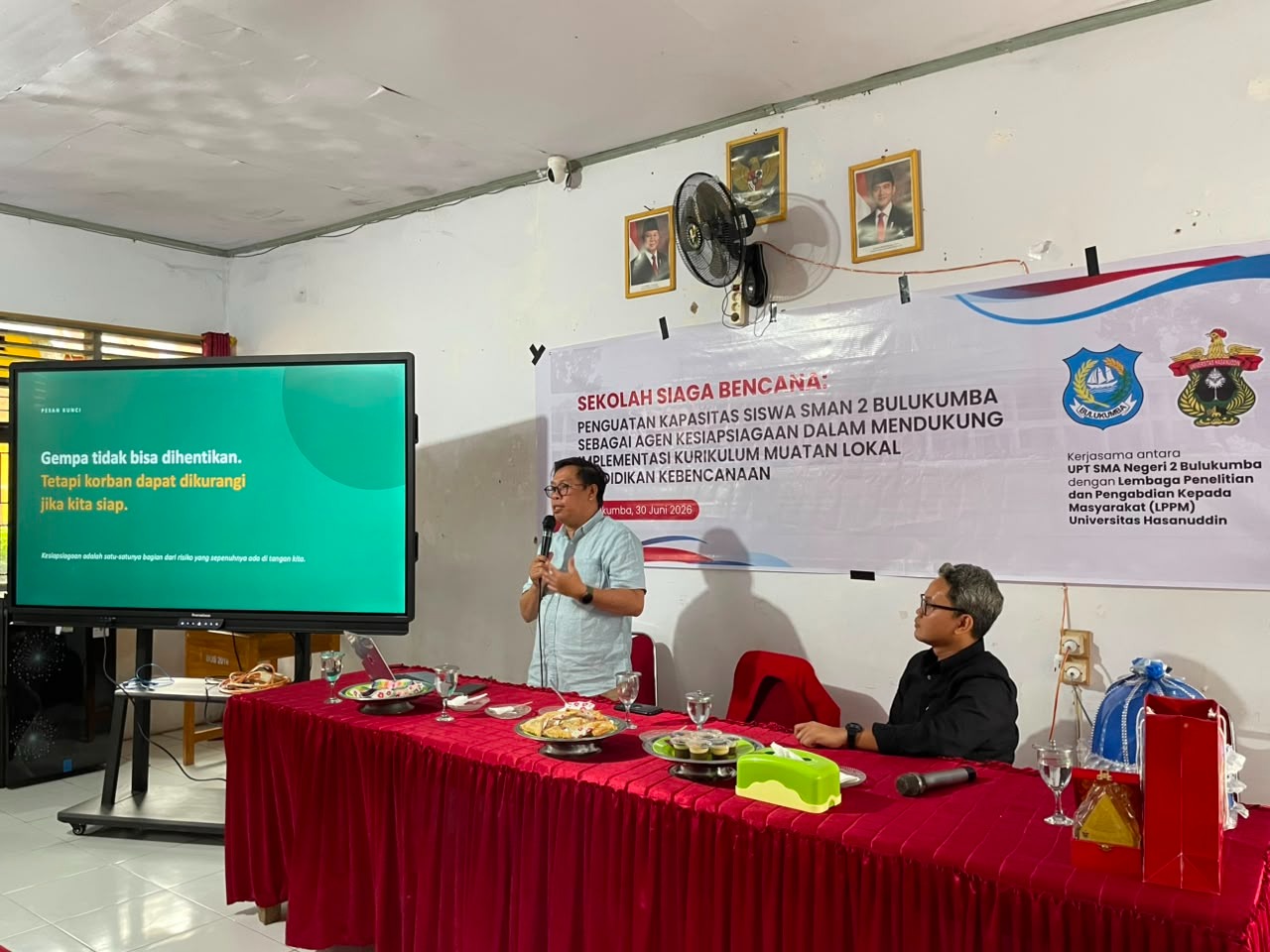
BULUKUMBA — The Institute for Research and Community Service (LPPM) at Hasanuddin University (Unhas), in collaboration with the Bulukumba State Senior High School No. 2 (SMAN 2 Bulukumba), organised a technical guidance session (bimtek) on Disaster-Ready Schools for students. The event took place in the hall of Bulukumba State Senior High School No. 2 on Tuesday (30 June 2026) and was attended by dozens of students, comprising members of the Wira Youth Red Cross (PMR) and the school’s Student Council (OSIS). The event was themed “Strengthening the Capacity of Students at State Senior Secondary School No. 2 Bulukumba as Preparedness Agents in Supporting the Implementation of the Local Content Curriculum on Disaster Education.” The training aimed to enhance students’ knowledge, attitudes and skills in disaster preparedness, whilst fostering student leadership as preparedness agents within the school environment. This initiative was spearheaded by Dr Amril Hans, S.AP., MPA, a lecturer in Public Administration at Hasanuddin University specialising in disaster management, as part of the community service activities organised by the Unhas Research and Community Service Institute (LPPM).
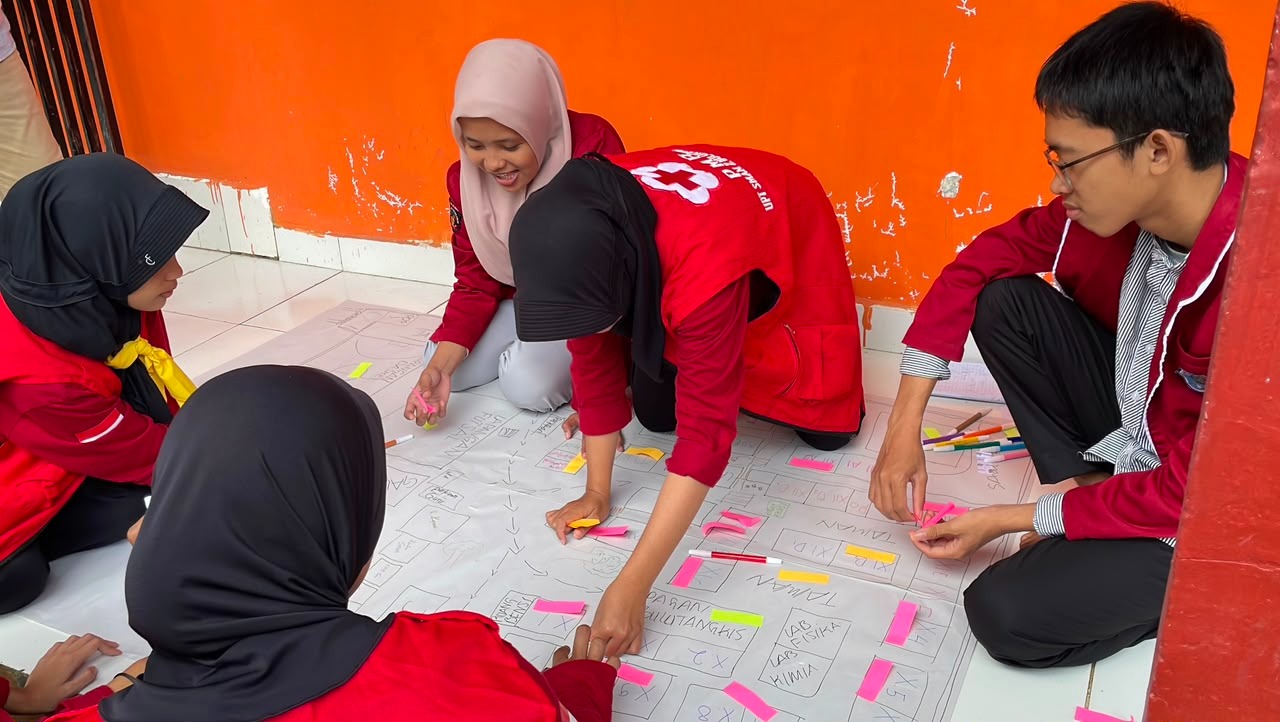
He was accompanied by a team of facilitators comprising Andi Rahmat Hidayat, S.Sos., M.Si, and Sulfadli, S.Sos., MAP. The Head of the State Senior Secondary School No. 2 Bulukumba Unit (UPT), Margawati, S.Pd., M.Pd, welcomed the initiative. “We appreciate this activity as it equips students with life-saving skills whilst supporting the implementation of the local curriculum on disaster education at our school,” she said. Dr Amril Hans explained that the training workshop was designed as a series of learning sessions taking students from risk awareness, through a willingness to play a part and understanding procedures, to the ability to take action. “We want students not merely to be potential victims, but to be part of the solution. A safe school is not one that is never struck by a disaster, but one that is always prepared to face it,” he said. The activities took place interactively across several sessions. In the initial session, pupils were guided to recognise the concept of risk, with the key message that disasters such as earthquakes cannot be prevented, but casualties can be minimised if the school community is prepared. Next, the pupils carried out participatory risk mapping by drawing a comprehensive floor plan of the school — from classroom buildings and laboratories to the schoolyard and sports field. Each area was then identified and marked using coloured markers into three categories: high-risk or hazardous, requiring attention, and safe. Each group presented the results of their mapping to receive feedback from the team of facilitators. The series of activities continued with strengthening the pupils’ role as agents of preparedness, as well as training in self-rescue procedures and techniques, including the ‘Drop–Cover–Hold On’ manoeuvre during an earthquake and evacuation procedures. To measure progress, participants completed pre- and post-tests and filled in a preparedness assessment form. As a follow-up, the activity paved the way for the formation of a Student Disaster Preparedness Team, which is expected to drive a culture of safety within the school, in line with the Disaster-Resilient Educational Institution (SPAB) programme. Through this collaboration, the Unhas Research and Community Service Institute (LPPM) and State Senior Secondary School No. 2 Bulukumba hope to further enhance the preparedness of the school community, support the implementation of the local curriculum on disaster education, and enable other schools in Bulukumba Regency and the surrounding areas to replicate this initiative.