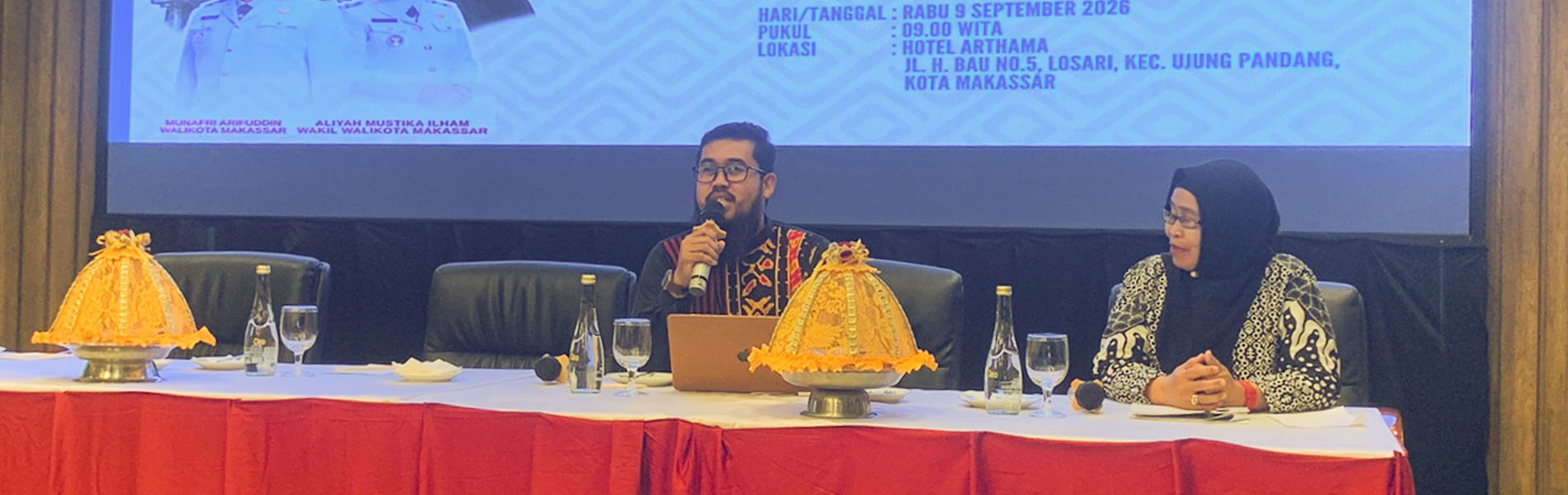
Seminar on the Findings of a Study into the Makassar City Museum Collection: Uncovering the Historical and Cultural Value of the Samovar Kettle as a Metal Artefact in the Collection
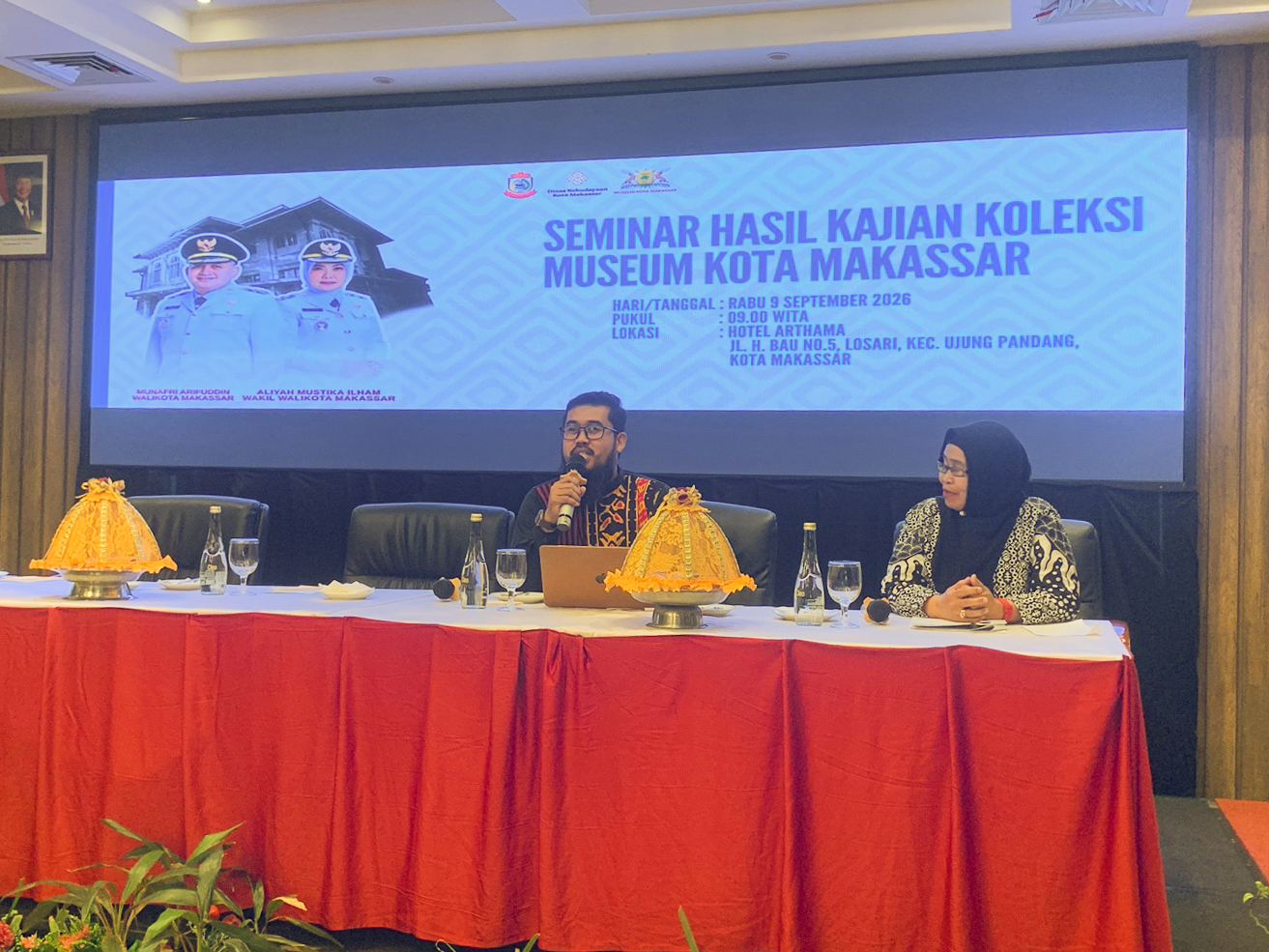
Makassar – With a view to enhancing understanding of the historical and cultural value, as well as the information contained within the museum’s collections, the Makassar City Museum Unit (UPT) under the Makassar City Department of Culture organised a seminar on the findings of a study into the Makassar City Museum’s collections, supported by the Non-Physical Special Allocation Fund (DAK) for the 2026 financial year.
The seminar, held on Wednesday, 9 September 2026 at the Arthama Hotel, Jalan Haji Bau No. 5, Makassar, featured Dr Erwin Mansyur Ugu Saraka, M.Arch., M.A.T., Sc., from the Department of Archaeology at Hasanuddin University as the keynote speaker. This seminar forms part of the Makassar City Museum’s efforts to conduct an in-depth study of its collections, particularly those made of metal, as a basis for strengthening the information on the collections before they are displayed to the public. The material presented at the seminar focused on the findings of a study into one of the Makassar City Museum’s flagship collections: the Samovar Kettle. This artefact is a metal object of great historical and cultural significance, as it represents the development of domestic technology and the tradition of tea drinking within Russian society.
In his presentation, Mr Erwin explained that a samovar is a traditional metal kettle originating from Russia, the name of which literally means ‘boils by itself’ or ‘self-boiler’, derived from the Russian words ‘sam’ (self) and ‘varit’ (to boil). This appliance not only serves as a household item for providing hot water, but has also been a symbol of hospitality, social interaction and the Russian tea-drinking culture since the 18th century. The study of the collection explains that there are several theories regarding the origins of the samovar. The first theory links it to Western influence through Peter I’s travels to Europe, particularly the Netherlands, although no strong documentary evidence has yet been found. The second version links it to a traditional Chinese cooking utensil called the ‘hogo’, although it serves a different function. Meanwhile, the most widely accepted version is that the samovar was a Russian innovation that developed through advances in the metalworking industry and the tradition of tea drinking from China. Furthermore, Erwin explained that the development of the modern samovar began in Russia in 1778 through the craftsmen Ivan Fyodorovich and Nazar Fyodorovich Lisitsyn in the city of Tula, which later became known as the centre of samovar production. The development of the metalworking industry in Russia enabled the widespread production of samovars and established them as one of the symbols of Russian metalwork.
In terms of function and technology, the samovar is designed to keep water hot continuously as part of the tradition of serving tea. Traditional samovars use fuels such as charcoal or wood via a heating pipe situated in the centre of the water chamber. At the top is a compartment for placing a teapot containing the tea concentrate (zavarka); the hot water is then used to mix this and produce tea ready for consumption. In terms of materials, the samovar collection demonstrates the development of metalworking technology through the use of various materials such as iron, copper, brass, bronze, silver, gold, tin and nickel. The shape of the samovar has also evolved into various forms, such as urns, craters, barrels, cylinders and spheres, featuring a variety of decorative motifs that reflect the cultural character and period of their production.
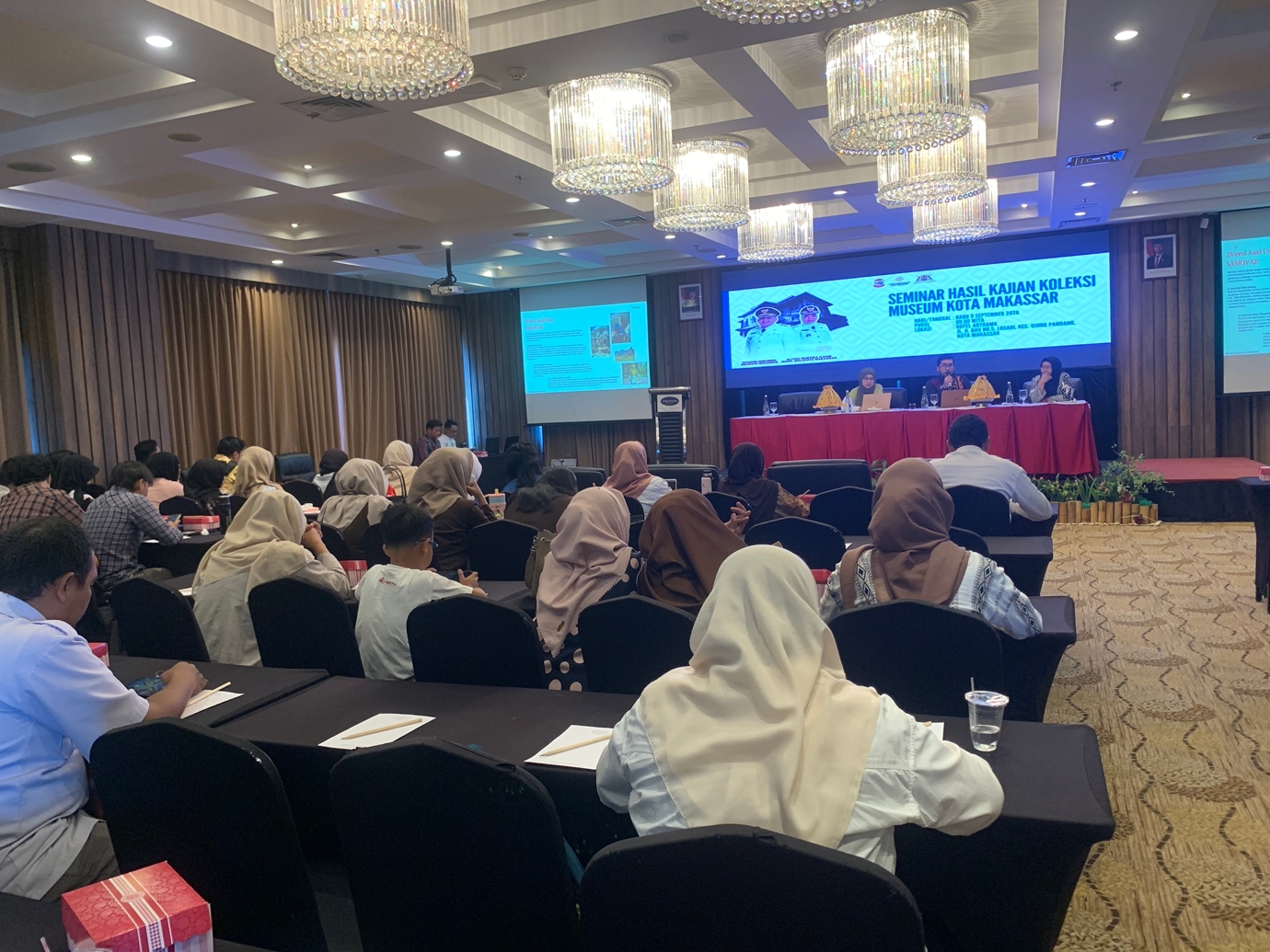
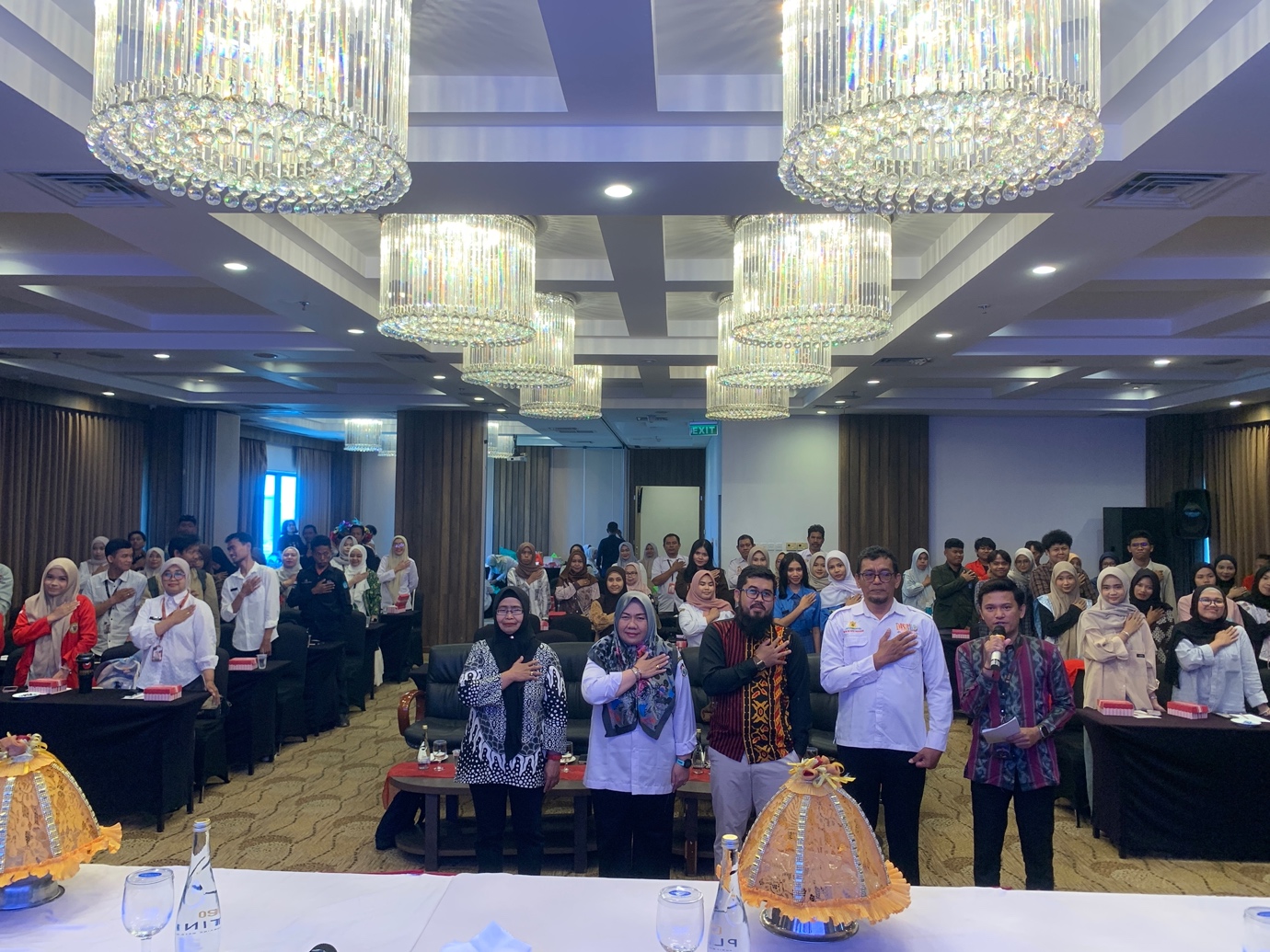
The seminar was attended by various stakeholders from the cultural and educational sectors, including the Head of the Makassar City Department of Culture, the Secretary of the Makassar City Department of Culture, the Director of the Mandala Monument Museum, the Karaeng Pattingalloang Museum, the Lantamal Museum, representatives from the South Sulawesi Provincial Association of Regional Museums (AMIDA), the Makassar Social Studies Teachers’ Association, arts and culture communities from Makassar City, students from Hasanuddin University (UNHAS), Bosowa University (UNIBOS), Makassar State University (UNM), the Makassar City Cultural Ambassadors, as well as social studies teachers at lower and upper secondary schools across Makassar City.
Through this seminar presenting the findings of the collection study, the Makassar City Museum is not only seeking to document information about the collection, but also to strengthen the museum’s role as a centre for research, education and the dissemination of cultural knowledge. Studies of items such as the samovar kettle are a crucial step towards understanding the history of objects, technology and the intercultural relationships reflected in the museum’s collection. Through in-depth academic research, it is hoped that the Makassar City Museum’s collection will develop a stronger narrative, enabling the public not only to view objects as physical artefacts, but also to understand the historical, technological and cultural value inherent within them. A museum is not merely a place for storing objects from the past, but a space for interpreting the human journey, peSocialisation Materials