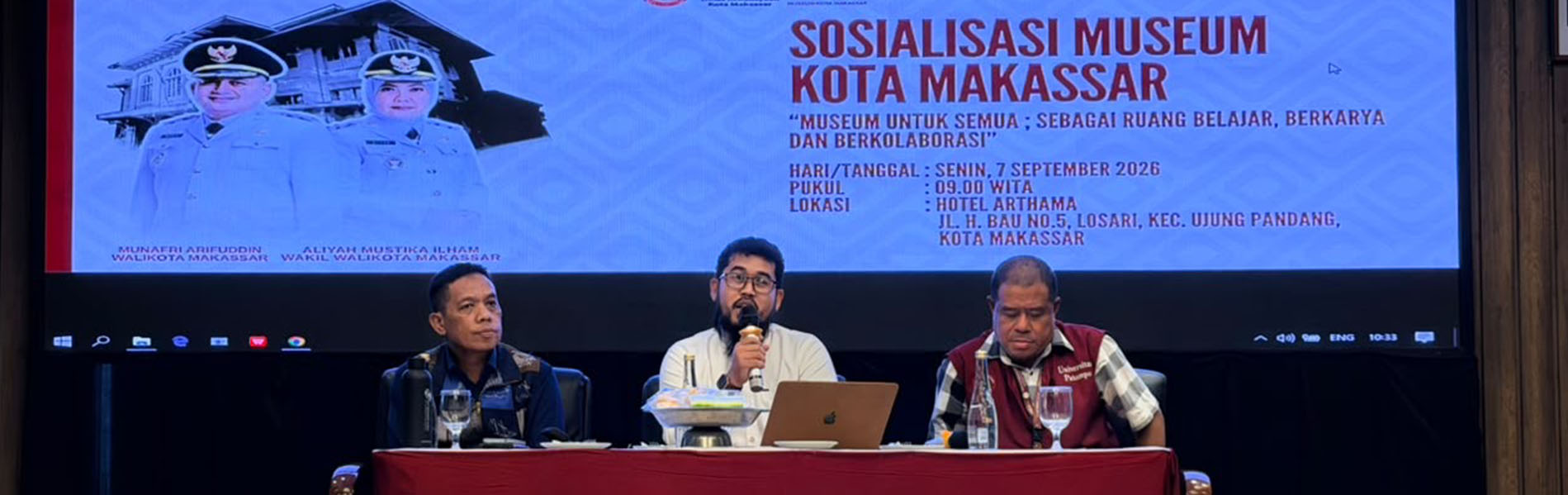
UNHAS Archaeology Lecturer Speaks at an Information Session on the Makassar City Museum, with the Theme “Museums for All: As Spaces for Learning, Creating and Collaborating”
Makassar – With a view to enhancing understanding of, and the strategic role of, museums as inclusive public spaces, the Makassar City Museum Unit (UPT) under the Makassar City Department of Culture organised a museum awareness-raising event under the theme ‘Museums for All: As Spaces for Learning, Creating and Collaborating’, supported by the Non-Physical Special Allocation Fund (DAK) for the 2026 financial year. The event, held on Monday, 7 September 2026 at the Arthama Hotel, Jalan Haji Bau No. 5, Makassar, featured Dott. Erwin Mansyur Ugu Saraka, M.Arch., M.A.T., Sc., a lecturer from the Department of Archaeology at Hasanuddin University, as the keynote speaker. During the event, he presented material on the concept of “A Museum for Us All”, which positions the museum as an open, participatory space that plays a vital role in community life.
In his presentation, Mr Erwin explained that modern museums are no longer understood merely as places for storing and displaying collections, but as spaces for interaction capable of connecting the public with history, culture, creativity and knowledge. Referring to developments in global museum concepts, particularly the definition of a museum according to the International Council of Museums (ICOM) in 2022, a museum is an inclusive institution, accessible to the wider public, and serving to support education, research, enjoyment and the sharing of knowledge.
The concept of ‘Museums for All’ in this event was explained through three main pillars, namely:
1. Museums as Learning Spaces
Museums serve as a source of historical and cultural literacy and a means of fostering community identity. Through their collections and educational programmes, museums can become learning spaces that bring the public into direct and contextual contact with a wide range of knowledge. Museums are not merely places to view historical artefacts, but also spaces for understanding the values and meanings embedded within the collections.
2. Museums as Spaces for Creative Work
Museums also serve as a platform for creativity, enabling the public to produce new works inspired by their collections and cultural values. Through art, innovation, research and other creative activities, museums can become spaces that foster the emergence of ideas and cultural expression amongst today’s generation.
3. Museums as Spaces for Collaboration
Museums serve as hubs where various stakeholders come together, ranging from local communities, academics, the government and the education sector to those working in the creative industries. Such collaboration is key to creating museums that are vibrant, relevant and capable of meeting the needs of the community.
This awareness-raising event was attended by various cultural and educational stakeholders, including **the Head of the Makassar City Department of Culture, the Secretary of the Makassar City Department of Culture, the Director of the Mandala Monument Museum, the Karaeng Pattingalloang Museum, the Lantamal Museum, representatives from the South Sulawesi Provincial Association of Regional Museums (AMIDA), the Makassar Social Studies Teachers’ Association, arts and culture communities from Makassar City, students from Hasanuddin University (UNHAS), Bosowa University (UNIBOS), Makassar State University (UNM), the Makassar City Cultural Ambassadors, as well as social studies teachers at lower and upper secondary schools across Makassar City.
The presence of these diverse stakeholders demonstrates that museum development requires the joint involvement of the government, academics, communities, educators and the general public. Museums are not merely spaces for preserving the past, but also spaces for dialogue and collaboration to shape the future of culture. Through this outreach activity, the Makassar City Museum seeks to reinforce the public’s understanding that the museum belongs to everyone. By transforming the museum into a space for learning, creativity and collaboration, it is hoped that the museum can grow closer to the community and play an active role in fostering historical and cultural awareness in Makassar. ‘A museum for all’ is not merely a concept, but a collective movement to make the museum a vibrant, open, creative and meaningful space for the entire community.
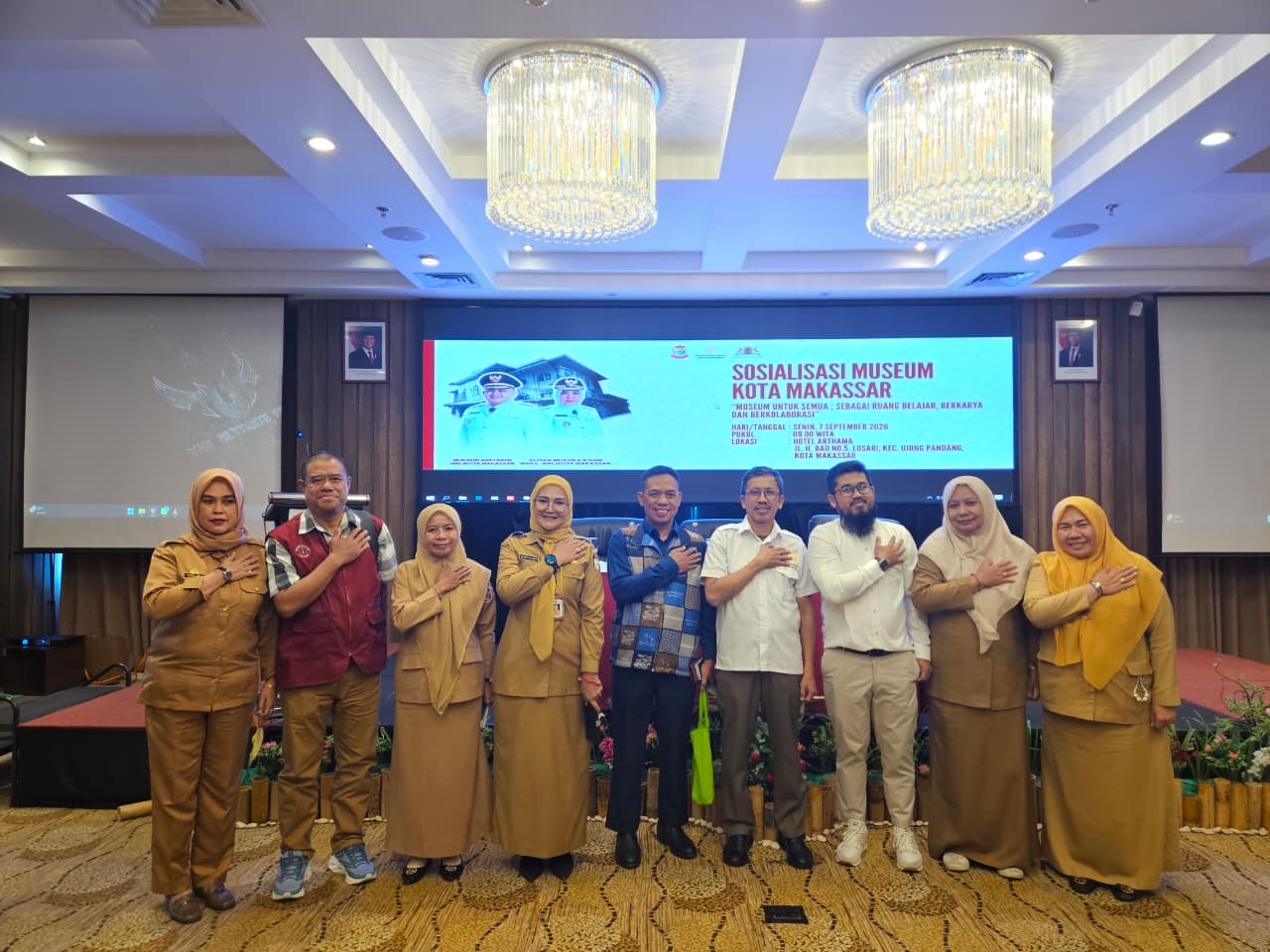 Group photo with the AMIDA South Sulawesi Executive Committee
 Photo of the speaker delivering a presentation