Semiotics Workshop: Reading Signs, Unraveling Meaning, Strengthening the Understanding of Faculty of Cultural Sciences (FIB) UNHAS Lecturers and Students
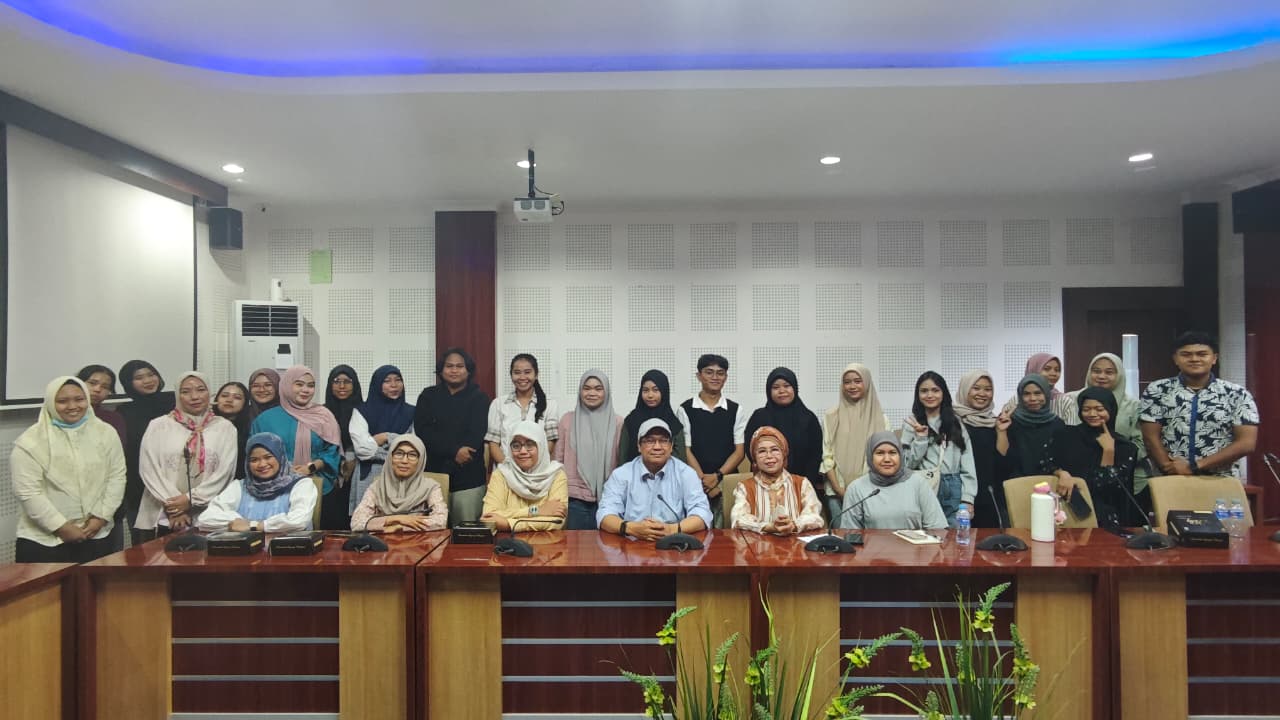
Makassar, September 24, 2025 – The Mandarin Language and Chinese Culture Study Program, Faculty of Cultural Sciences (FIB), Hasanuddin University (UNHAS), recently held a workshop titled "Semiotics: Reading Signs, Unraveling Meaning" on Wednesday, September 24, 2025. The workshop was attended by lecturers and students as an effort to deepen their understanding of semiotic theory in reading and interpreting texts and culture through the lens of signs and meaning.
The event featured two highly competent speakers in their fields, Dr. Ery Iswary, M.Hum., and Dr. Andi Faisal, M.Hum. They each presented material related to semiotic theory, which is widely recognized in the academic world. Dr. Ery Iswary opened the session with a topic titled "The Role of Semiotics in Understanding Texts and Culture: Pierce's Trilogy of Signs." In this topic, she explained Pierce's trilogy of signs, which consists of three main categories—icon, index, and symbol. These three categories, according to Pierce, are how we understand and interpret the world around us through signs that appear in texts, images, and even culture. This concept is highly relevant in analyzing cultural phenomena and communication in everyday life.
Meanwhile, Dr. Andi Faisal discussed Roland Barthes's semiological theory in a lecture entitled "Myth and Cultural Criticism: An Introduction to Roland Barthes's Semiology." Barthes argued that popular culture is often shaped by a system of signs called myths, which are hidden ideological discourses behind cultural products, including mass media. Through this approach, Barthes invites us to critique the meanings that emerge in advertisements, films, and other cultural works, where these signs not only have literal meanings but also ideological values that shape society's perspective on the world.
As part of the workshop, students were given the task of applying these two theories to analyze Chinese video advertisements. This assignment aimed to hone their ability to read signs in contemporary media and understand how these advertisements construct meaning through symbols, myths, and other sign systems. Students were asked to identify semiotic elements in advertisements, such as icons, indexes, and symbols according to Pierce, as well as the myths and ideologies that shape the hidden messages in the advertisements according to Barthes.
This activity received a positive response from participants, who considered it a valuable opportunity to deepen their knowledge and skills in cultural analysis. "This workshop opened new insights for me in understanding how every element in media—whether images, words, or symbols—has a deeper meaning that is not always apparent at first glance," said one student who attended the event.
Dr. Andi Faisal stated, "It is important for us not only to be consumers of culture, but also to be critical analysts of the messages conveyed in everyday life. By understanding this semiotic theory, we can be more discerning in reading the culture around us."
This workshop also provided a significant momentum for the Mandarin Language and Chinese Culture Study Program, Faculty of Cultural Sciences, Hasanuddin University, in developing an interdisciplinary approach to language and cultural studies. Through events like this, it is hoped that participants will gain a better understanding of the ever-evolving dynamics of global culture and how Chinese culture, particularly through media, plays a crucial role in conveying complex cultural values and messages.
The Mandarin Language and Chinese Culture Study Program, Faculty of Cultural Sciences, Hasanuddin University, plans to continue holding similar events in the future, providing a platform for students and faculty to delve deeper into various aspects of culture and communication, as well as enhancing their critical analysis of emerging social phenomena.