Hasanuddin University FIB Lecturers Contribute to the National Anthology A Century of Asrul Sani
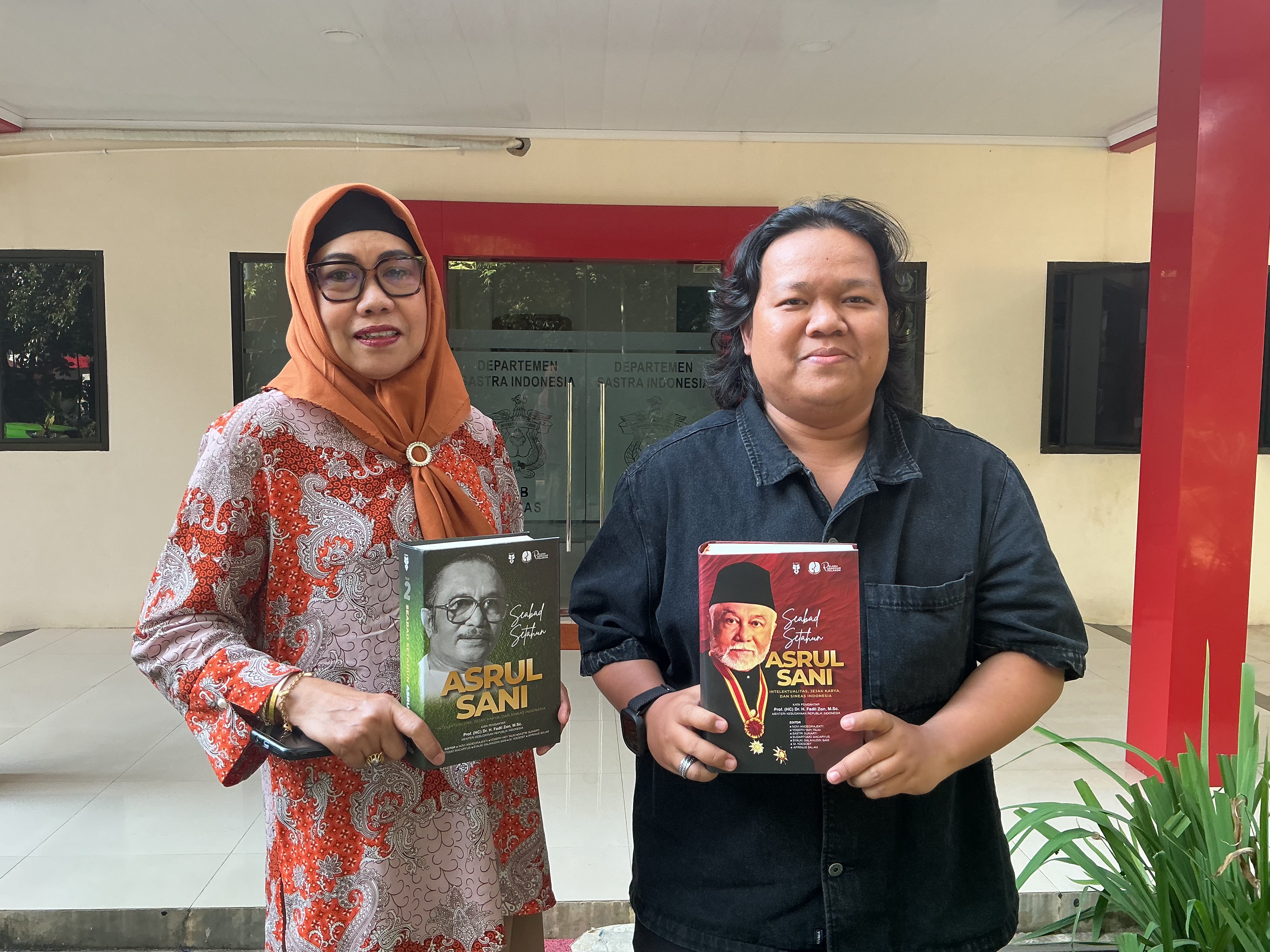
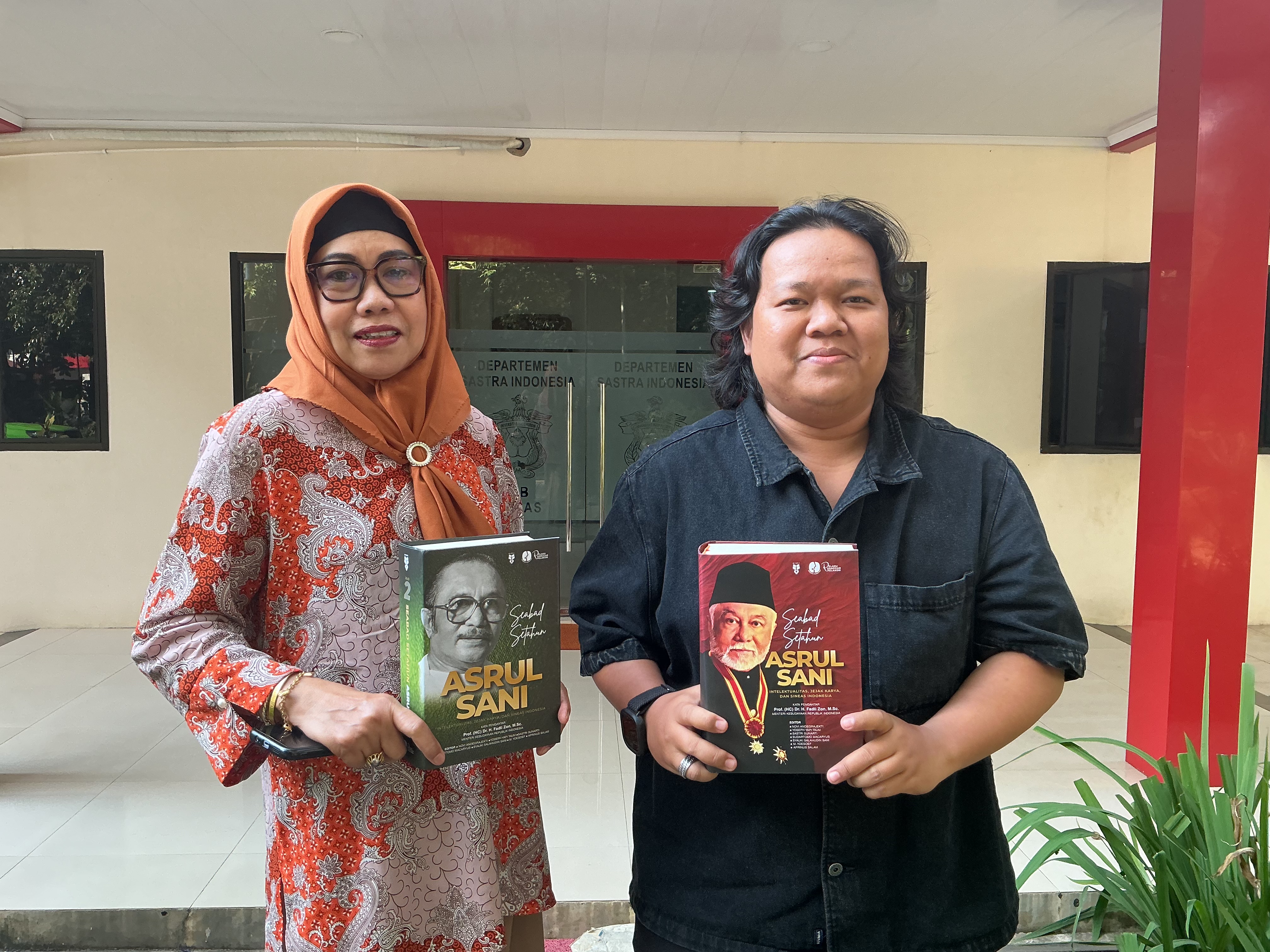
MAKASSAR — Two lecturers from the Indonesian Literature Study Program at the Faculty of Cultural Sciences (FIB), Hasanuddin University (Unhas), Inriati Lewa and Syahwan Alfianto Amir, have contributed to the publication of the book Seabad Setahun Asrul Sani: Intelektualitas, Jejak Karya, dan Sineas Indonesia (A Century of Asrul Sani: Intellectual Legacy, Literary Works, and Indonesian Cinema). Their participation in the anthology reflects the contribution of Unhas scholars to the advancement of Indonesian literary studies at the national level.
The 1,784-page anthology, published in two volumes, was issued by the Indonesian Literary Scholars Association (HISKI) to commemorate the centennial of Asrul Sani's birth and the first anniversary of the centennial celebration.
The anthology was edited by Novi Anoegrajekti, Yoseph Yapi Taum, Sastri Sunarti, Sudartomo Macaryus, Syauki Salahudin Sani, M. Yoesoef, and Aprinus Salam. It was published through a collaboration between HISKI and Pelaku Sanggar Pelakon, led by Mutiara Sani. The book was officially launched at the National Library of Indonesia in Jakarta on June 10, 2026.
Examining Mantera Through an Existentialist Perspective
In the anthology, Inriati Lewa and Syahwan Alfianto Amir authored an article entitled "The Face of Indonesian Poetry in the Hands of Asrul Sani," published on pages 633–650 of the first volume.
The article offers an in-depth analysis of Asrul Sani's only poetry collection, Mantera, first published in February 1975 by Budaja Djaja. The collection consists of 22
The authors position Asrul Sani as one of the most influential figures in the history of Indonesian literature. They note that renowned literary critic H.B. Jassin included six of Asrul Sani's poems in Gema Tanah Air: Prosa dan Puisi, Volume II: "Anak Laut" (Child of the Sea), "Surat dari Ibu" (Letter from Mother), "Elang Laut" (Sea Eagle), "Orang dalam Perahu" (The Man in the Boat), "Pengakuan" (Confession), and "Orang dari Gunung" (The Man from the Mountain).
According to Inriati and Syahwan, the strength of Asrul Sani's poetry lies in its profound reflections expressed through calm and restrained language. Rather than relying on excessive romanticism or emotional outbursts, his poems invite readers into thoughtful contemplation of humanity, history, and social reality.
Employing an existentialist approach, the authors examine several poems, including "Anak Laut," "Elang Laut," "Wajah" (Face), "Untuk N" (For N), "Pengungsi" (Refugee), "Variasi atas Suatu Tanggapan-Sesaat" (Variations on a Momentary Response), and "Mantera." Symbols such as the sea, twilight, and wandering are interpreted as representations of the human journey through hope and
In their conclusion, the two Unhas academics argue that the poems in Mantera serve as both aesthetic and humanitarian documents that transcend their era. They contend that the collection successfully bridges universal existential struggles with Indonesia's socio-historical context, spanning the Japanese occupation, the War of Independence, and the post-independence period.
The Contribution of Hasanuddin University Scholars
The participation of Inriati Lewa and Syahwan Alfianto Amir in this publication highlights the growing role of Hasanuddin University scholars in advancing Indonesian literary scholarship.
Together with hundreds of academics, cultural figures, writers, and filmmakers from across Indonesia, they have contributed to preserving and passing on the intellectual legacy of Asrul Sani, a leading literary figure of the Generation of '45, who—alongside Chairil Anwar and Rivai Apin—is widely recognized as one of the pioneers of modern Indonesian poetry.
The publication of Seabad Setahun Asrul Sani forms part of a broader commemorative program organized by HISKI in collaboration with Pelaku Sanggar Pelakon and the National Library of Indonesia. The program includes exhibitions, cultural dialogues, film screenings, national seminars, and the publication of scholarly works, all aimed at documenting and preserving Asrul Sani's intellectual and cultural legacy for future generations.