Indonesian Literature Department of Hasanuddin University Socializes SIPANTAU, Encourages Faster Completion of Students’ Final Projects
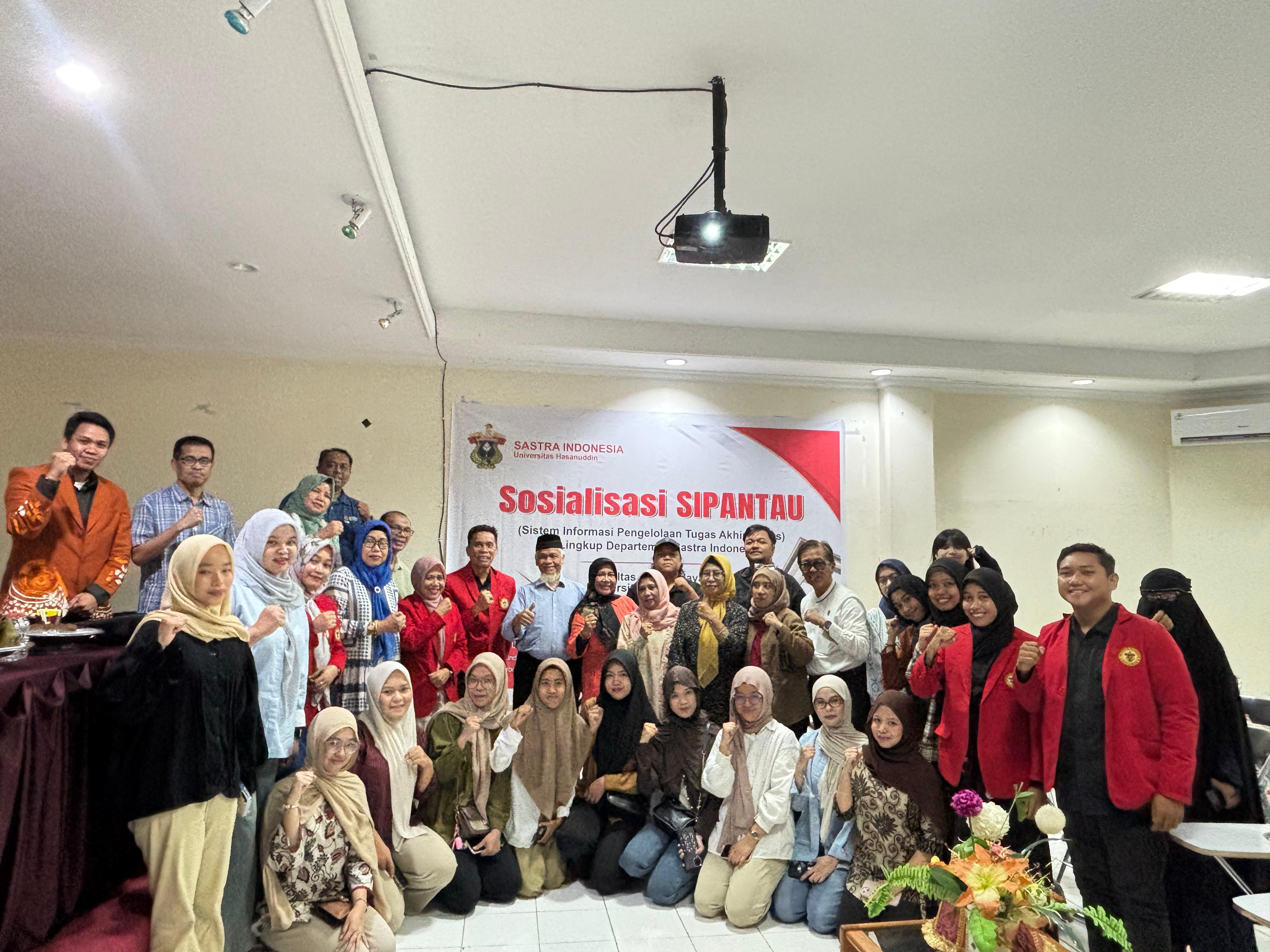
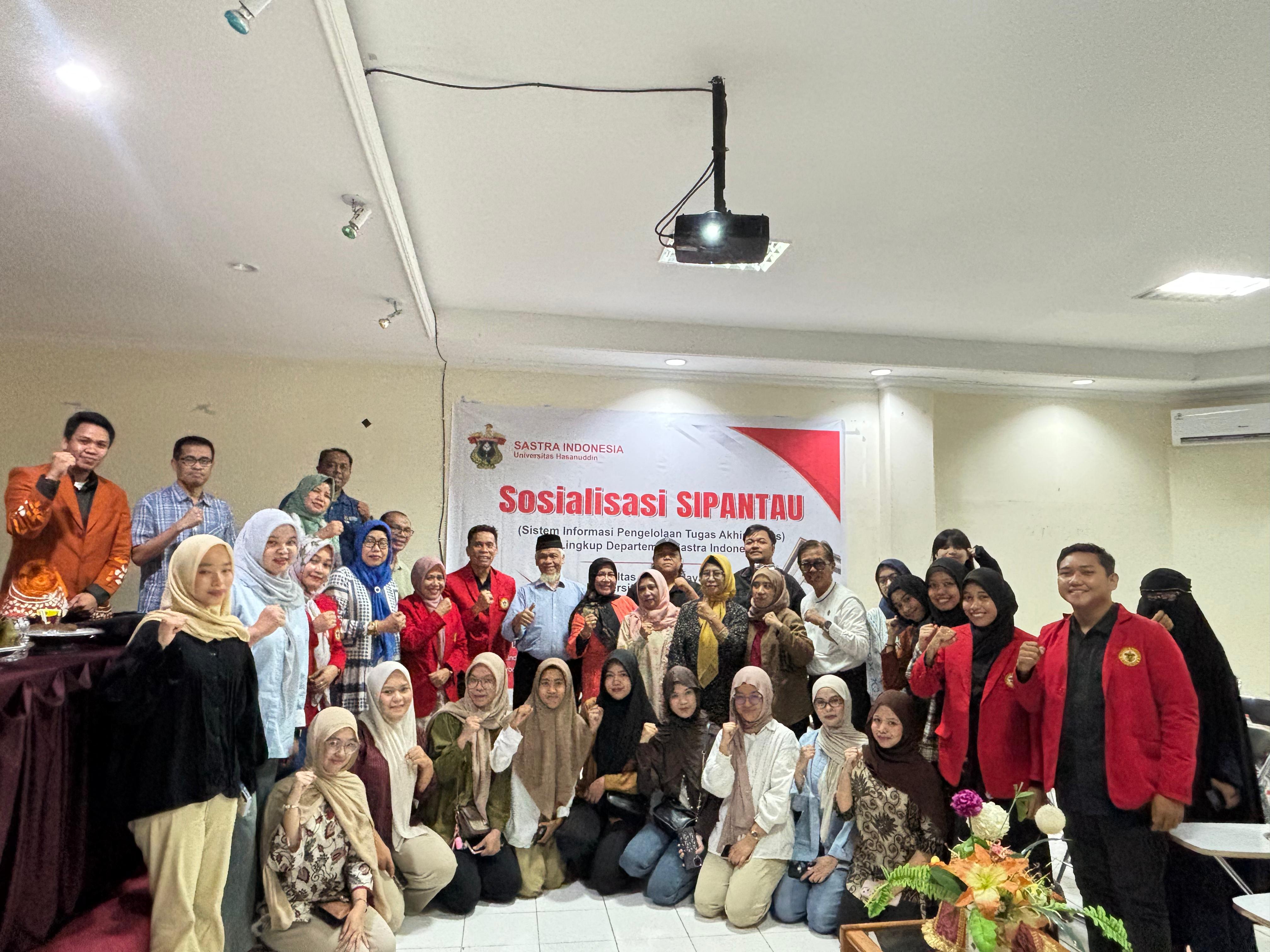
MAKASSAR — The Indonesian Literature Department, Faculty of Cultural Sciences (FIB), Hasanuddin University, held a socialization session on the Final Project Management Information System (SIPANTAU) on Saturday (April 18, 2026), at the JSI Room, Unhas. The session featured Dr. Hendra, S.Si., M.Kom., Head of the Subdirectorate of Technology and Learning Innovation at Unhas, and was attended by lecturers and students of the Indonesian Literature program.
The organizing committee chair, Dr. Muhammad Nur Iman, S.S., M.Hum., explained that the activity aimed to improve understanding and effectiveness of digital-based academic administration, particularly in managing students’ final projects.
“Through SIPANTAU, it is expected that all lecturers and academic staff will understand how to use this system so that academic administrative processes become more effective and integrated,” he said.
He added that the indicators of success for this activity include a minimum attendance rate of 80 percent, increased use of SIPANTAU, and sustainability through user assistance and system integration at the faculty and department levels.
Head of the Indonesian Literature Department, Dr. Dra. Muslimat, M.Hum., stated that SIPANTAU is one of the priority programs for 2026 and has received a positive response from the academic community. According to her, the application can accelerate the completion of students’ final projects.
“This application greatly assists lecturers, students, and university leaders. The thesis process becomes easier because it is technology-based. There is no longer
a need to wait long to upload grades after the examination is completed,” she explained.
She also emphasized that through this system, students’ supervision progress can be monitored transparently, from the proposal stage to the final writing stage.
“Around 40 students were invited and attended this activity,” she added.
Meanwhile, the Dean of FIB Unhas, Prof. Dr. Andi Muhammad Akhmar, S.S., M.Hum., assessed that the presence of SIPANTAU provides a solution to the issue of prolonged study periods among students.
“So far, one of the recurring questions from the academic senate has been why many Cultural Sciences students do not graduate on time. With SIPANTAU, the supervision process can be monitored, both by lecturers and university leaders,” he said.
He explained that the system enables monitoring of both students’ and supervisors’ activities, including cases where there is no progress within a semester. “This is where leadership plays a role in conducting evaluations and encouraging the acceleration of study completion,” he added.
However, he acknowledged that the use of SIPANTAU still needs improvement. “Currently, only about 30 percent of lecturers actively use it. This serves as a trigger to enhance digital literacy among lecturers,” he noted.
Professor of Indonesian Literature at Unhas, Prof. Dr. Muhammad Darwis, M.S., also highlighted the importance of evaluation in the supervision process. He pointed out that delays in completing theses can be detrimental to students and their families.
“There needs to be appreciation for lecturers who perform well, for example in the form of awards. Conversely, if supervision does not run optimally, it can be reassigned to another lecturer,” he stressed.
In line with this, Prof. Dr. AB. Takko Bandung, M.Hum., proposed the addition of a communication system involving students’ parents to monitor academic progress.
“Semester-based evaluations are important so that students facing difficulties can be promptly assisted,” he said.
Through this socialization, it is hoped that the implementation of SIPANTAU will run optimally and serve as a solution to accelerate the completion of students’ final projects within the Faculty of Cultural Sciences, Hasanuddin University. (*)