Indonesian Literature Lecturer at Hasanuddin University Muhammad Nur Iman Earns Doctorate with Dissertation on the Complexity of Legal Language
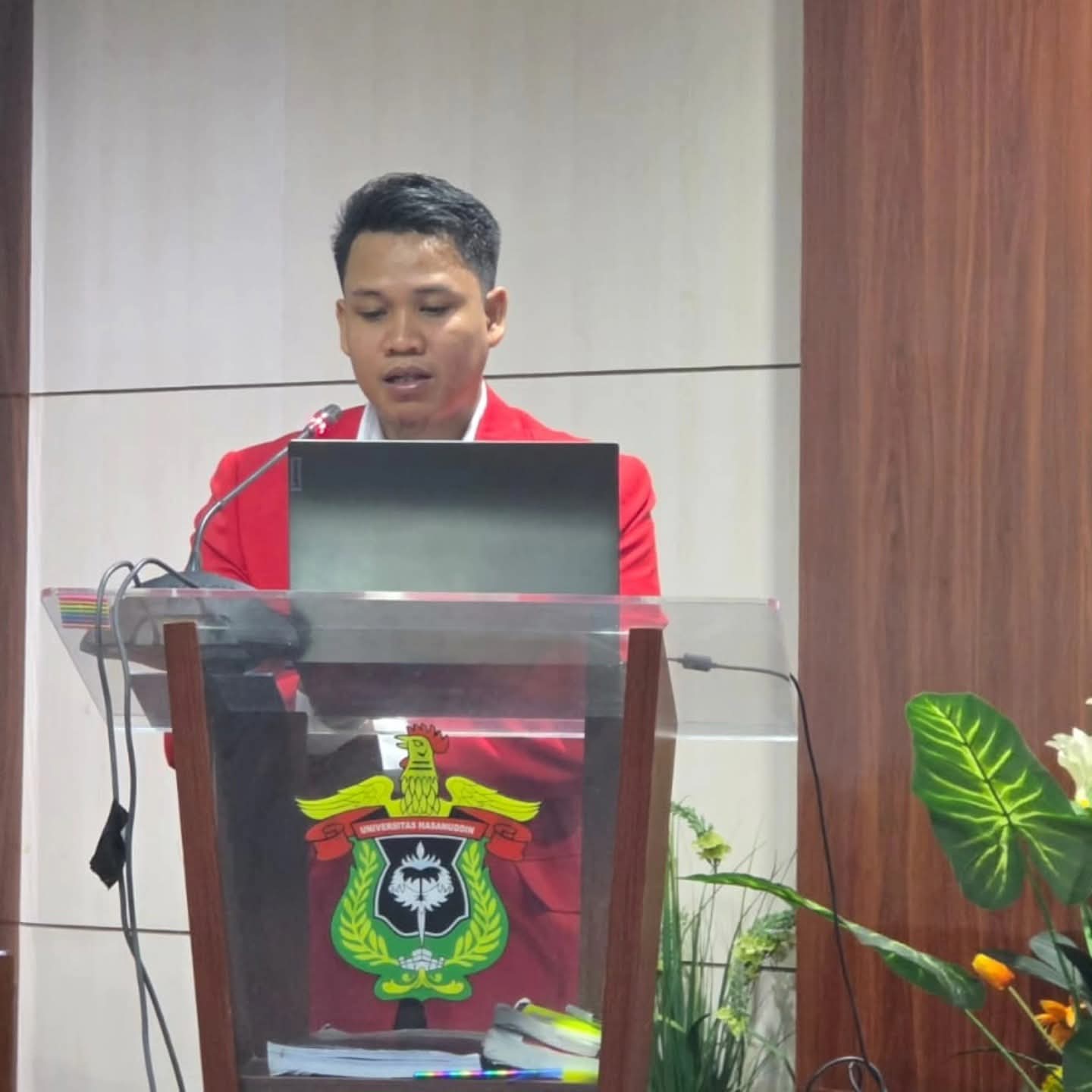
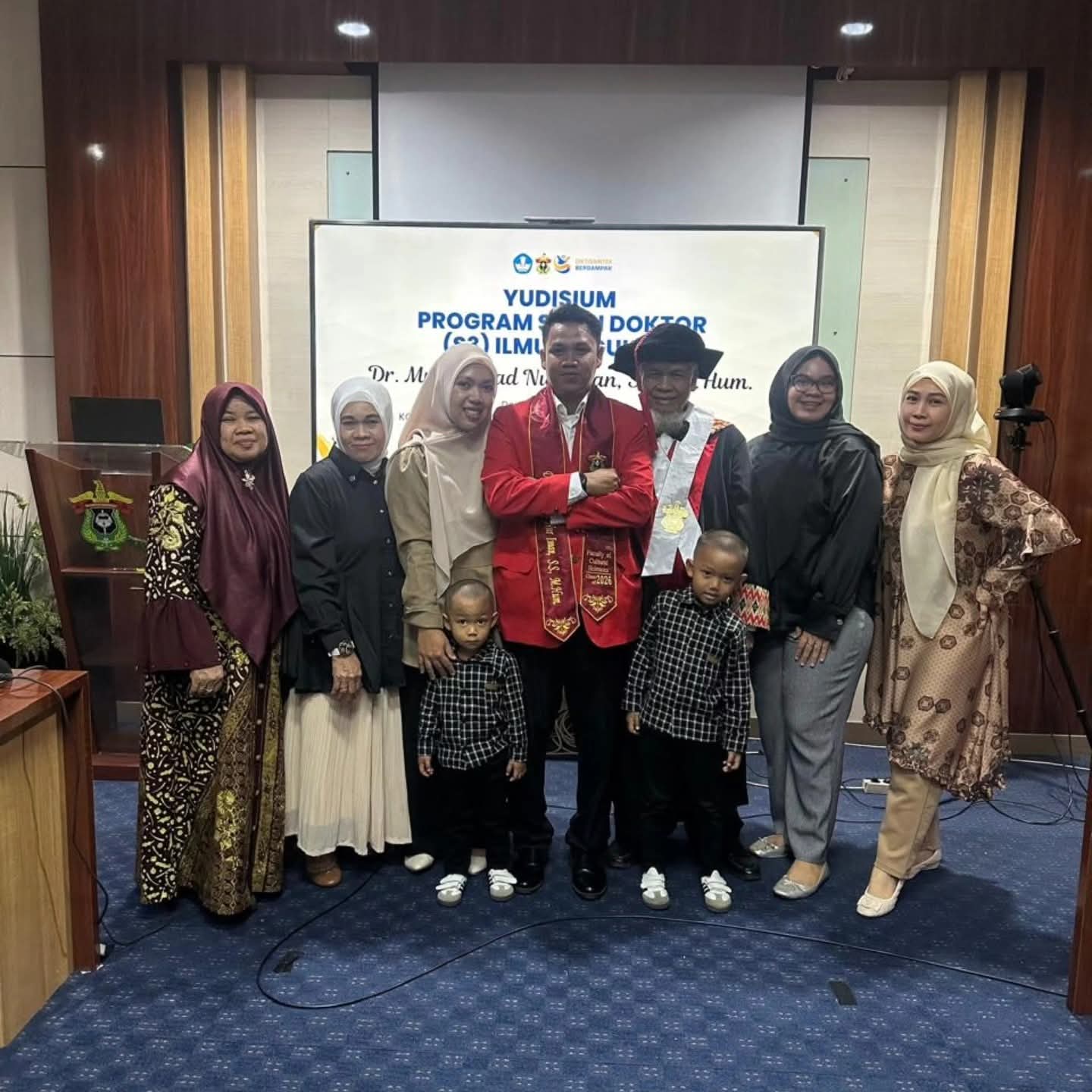
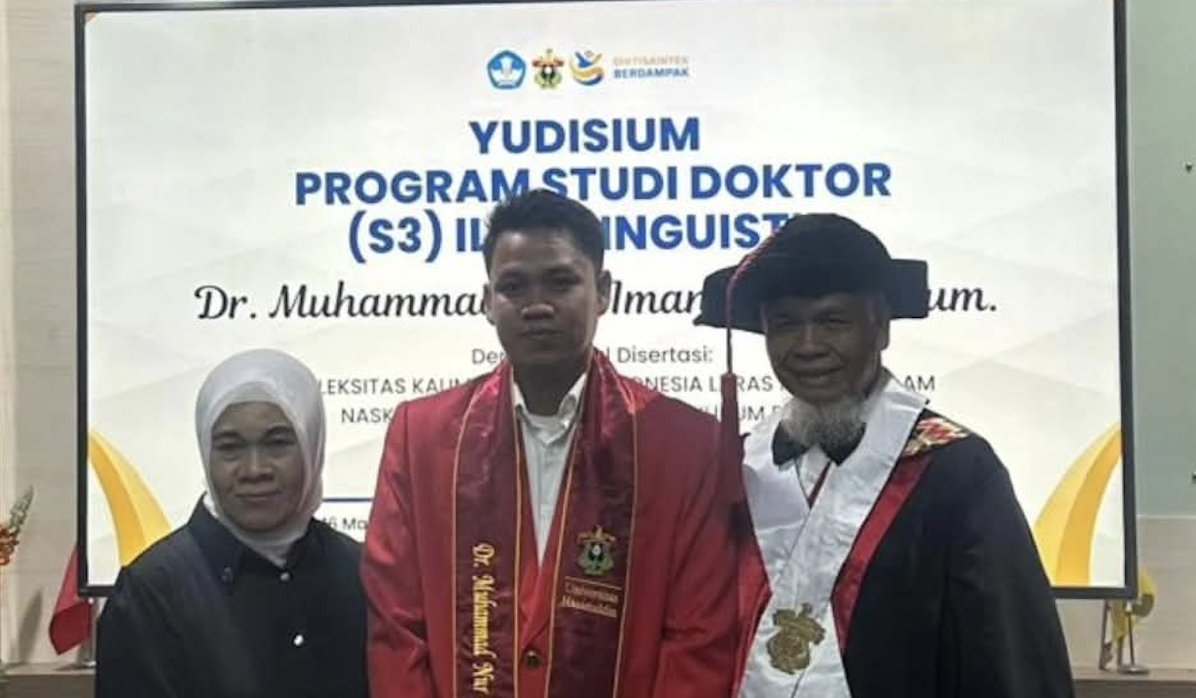
MAKASSAR — Muhammad Nur Iman, S.S., M.Hum., a lecturer at the Department of Indonesian Literature, Faculty of Cultural Sciences (FIB), Hasanuddin University (Unhas), has officially earned his doctoral degree after successfully defending his dissertation in the Doctoral Program in Linguistics at FIB Unhas on Monday (March 16, 2026).
The doctoral examination was held in the Faculty Senate Meeting Room on the second floor of the Dean's Building and was attended both in person and virtually via Zoom by the external examiner.
His dissertation, titled "The Complexity of Indonesian Legal Language Sentences in the Criminal Code (KUHP)", examines the syntactic complexity of Indonesian legal language, focusing on two primary dimensions: paradigmatic and syntagmatic complexity.
The examination was chaired by Prof. Dr. Andi Muhammad Akhmar, S.S., M.Hum., with an examination committee comprising Prof. Dr. Muhammad Darwis, M.S., Prof. Dr. Kaharuddin, M.Hum., Prof. Dr. Suhandano, M.A., Prof. Dr. Lukman, M.S., Prof. Dr. Asriani Abbas, M.Hum., and Prof. Dr. Harlinah Sahib, M.Hum.
In his research, Muhammad Nur Iman analyzed sentence structures found in the Indonesian Criminal Code (KUHP), revealing that legal language exhibits a distinctive level of syntactic complexity shaped by the demands of legal precision.
"The most prominent paradigmatic complexity is found in the subject and adverbial functions, which are frequently filled by subordinate clauses layered up to thirteen levels," he wrote in the dissertation abstract.
According to Muhammad Nur Iman, such complexity should not be regarded as a grammatical irregularity but rather as a linguistic consequence of legal discourse, which requires highly precise and detailed descriptions of actions, participants, and circumstances.
From a syntagmatic perspective, the study found that canonical legal sentence patterns are predominantly realized through passive and copular constructions. Meanwhile, non-canonical patterns display inversion structures such as Predicate–Complement–Subject (P-C-S), Adverbial–Complement–Subject (Adv-C-S), and Predicate–Adverbial–Complement–Subject (P-Adv-C-S).
The dissertation also highlights the use of numbering mechanisms as a distinctive strategy in drafting legal provisions.
"The numbering mechanism serves as an important strategy for breaking long sentences into topical units so that legal information remains structured, systematic, and communicative," he stated.
The findings demonstrate that the sentence structure of Indonesian legal language follows a consistent and adaptive organizational logic despite its apparent complexity. Syntactic complexity, the study argues, is an essential characteristic of legal language to ensure precision, legal certainty, and the avoidance of multiple interpretations.
The dissertation contributes theoretically by proposing a two-dimensional analytical model for legal sentence structures. Practically, it provides a linguistic foundation for future efforts to reformulate legal language so that it becomes more accessible and communicative without diminishing its authority or legal accuracy.
Born in Ujung Pandang on September 3, 1993, Muhammad Nur Iman completed his primary education at SDN Inpres Kampus Unhas I in 2005, continued his studies at MTsN Model Makassar (2008) and MAN 2 Model Makassar, majoring in Natural Sciences, in 2011.
He earned his Bachelor's degree in Indonesian Literature from Hasanuddin University in 2015 and completed his Master's degree in Indonesian Language at the same university in 2022. In 2026, he successfully completed his doctoral studies in Linguistics at the Faculty of Cultural Sciences, Hasanuddin University. (*)