UNHAS Geophysics Lecturer Brings Disaster Risk Reduction Lessons from Tohoku University
Tohoku University, July 29 to August 1, 2026 – UNHAS Geophysics Lecturer Brings Disaster Risk Reduction Lessons from Tohoku University.
Strengthening disaster literacy requires more than scientific research. Universities also need to ensure that knowledge reaches communities and contributes to building disaster preparedness and resilience.
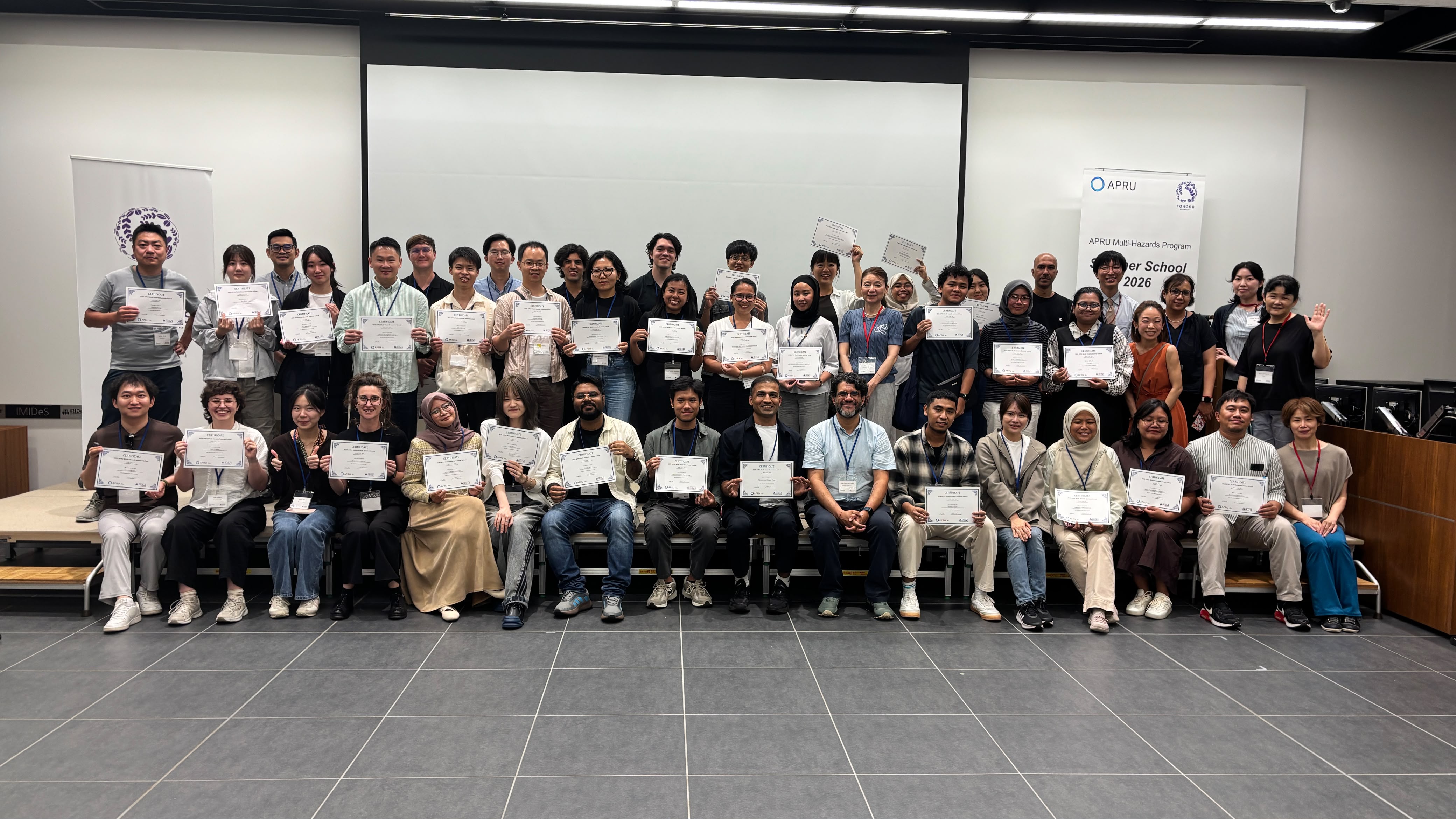
This was among the key lessons highlighted by Saaduddin, Ph.D., a lecturer at the Department of Geophysics, Faculty of Mathematics and Natural Sciences (FMIPA), Hasanuddin University (UNHAS), after participating in the APRU Multi-Hazards Summer School 2026 at Tohoku University, Japan.
Organized by the International Research Institute of Disaster Science (IRIDeS), Tohoku University, the program was held from July 29 to August 1, 2026. It brought together around 50 participants from more than 20 countries, most of whom were early-career researchers working in disaster science, Disaster Risk Reduction (DRR), and related disciplines.
For Saaduddin, the summer school offered more than an opportunity to deepen scientific knowledge. It provided valuable perspectives on the importance of integrating research findings, government policies, community engagement, and technological innovation throughout the disaster management cycle.
“Through this summer school, I gained valuable perspectives on disaster management before, during, and after a disaster. One of the important lessons is how universities can take a more active role in disseminating disaster knowledge and strengthening disaster literacy within communities,” Saaduddin said.
The four-day program opened with a seminar titled “Lessons Learned from the 2011 Great East Japan Earthquake and Tsunami.” Participants examined how Japan’s experience with the 2011 disaster has shaped and strengthened disaster preparedness, mitigation, emergency response, recovery, and long-term resilience.
The discussion went beyond the physical impacts of disasters. Participants also explored how lessons learned from major disasters can be transformed into knowledge, policies, disaster education, and community-based preparedness.
On the second day, the discussion focused on the roles of various stakeholders in Disaster Risk Reduction. Local governments, non-governmental organizations (NGOs), universities, and communities were viewed as interconnected actors in building effective disaster management systems.
Through group discussions, participants shared experiences from their respective countries and examined how collaboration among stakeholders can strengthen disaster preparedness, particularly at the local level.
The third day focused on the growing role of Artificial Intelligence (AI) and Big Data in Disaster Risk Reduction. Participants explored how data-driven approaches and emerging technologies can support risk assessment, early warning systems, preparedness, and decision-making in disaster management.
The program concluded with a field visit to Onagawa, one of the coastal communities severely affected by the 2011 Great East Japan Earthquake and Tsunami.
During the field visit, participants observed how post-disaster reconstruction has been carried out alongside efforts to preserve disaster memory, increase risk awareness, and strengthen community resilience. Lessons from past disasters have become an important part of Onagawa’s development following the disaster.
Saaduddin considers the experience in Japan highly relevant to the development of disaster-related activities at Hasanuddin University, particularly within the Geophysics Study Program.
As an academic discipline closely associated with earthquakes, tsunamis, volcanic activity, and other geophysical hazards, Geophysics has significant potential to translate scientific research into practical and accessible disaster knowledge for communities.
One opportunity that could be developed is stronger collaboration between the Geophysics Study Program and Regional Disaster Management Agencies (BPBD) at the regency and city levels. Such collaboration could include disaster literacy programs, community education, school outreach, preparedness training, and the development of science-based educational materials.
“Collaboration with BPBD can become an important platform for universities to translate scientific knowledge into practical disaster education. For the Geophysics Study Program, this collaboration can also strengthen community service activities as part of the Tri Dharma of Higher Education, while ensuring that our expertise has a direct impact on society,” Saaduddin said.
Through this approach, research findings are expected to move beyond academic publications and classroom learning. Knowledge about earthquakes, tsunamis, and other disaster hazards can be transformed into accessible information that enables communities to better understand the risks in their surroundings and improve their preparedness.
Strengthening collaboration between universities, government agencies, and communities would also provide opportunities to develop disaster education programs that are more closely aligned with local needs. In this context, the expertise of Geophysics can contribute not only to hazard identification and scientific assessment, but also to communicating disaster risks in ways that are easier for communities to understand and apply.
The APRU Multi-Hazards Summer School 2026 also provided an opportunity to expand international networks with young researchers from diverse countries and academic backgrounds. These connections may open further opportunities for collaboration in disaster science, multi-hazard assessment, disaster education, and community-based Disaster Risk Reduction.
For Saaduddin, the experience reinforces the idea that the role of universities in Disaster Risk Reduction should extend beyond research and education to meaningful engagement with communities.
Universities have an important role in ensuring that scientific knowledge does not remain confined to academic publications or classrooms, but can be transformed into practical knowledge that helps communities recognize disaster risks, strengthen preparedness, and build long-term resilience.