UNHAS ADMINISTRATIVE SCIENCE STUDENTS CONDUCT BARRANG CADDI ISLAND EXPEDITION: EXPLORING MARITIME GOVERNANCE ON SMALL ISLANDS
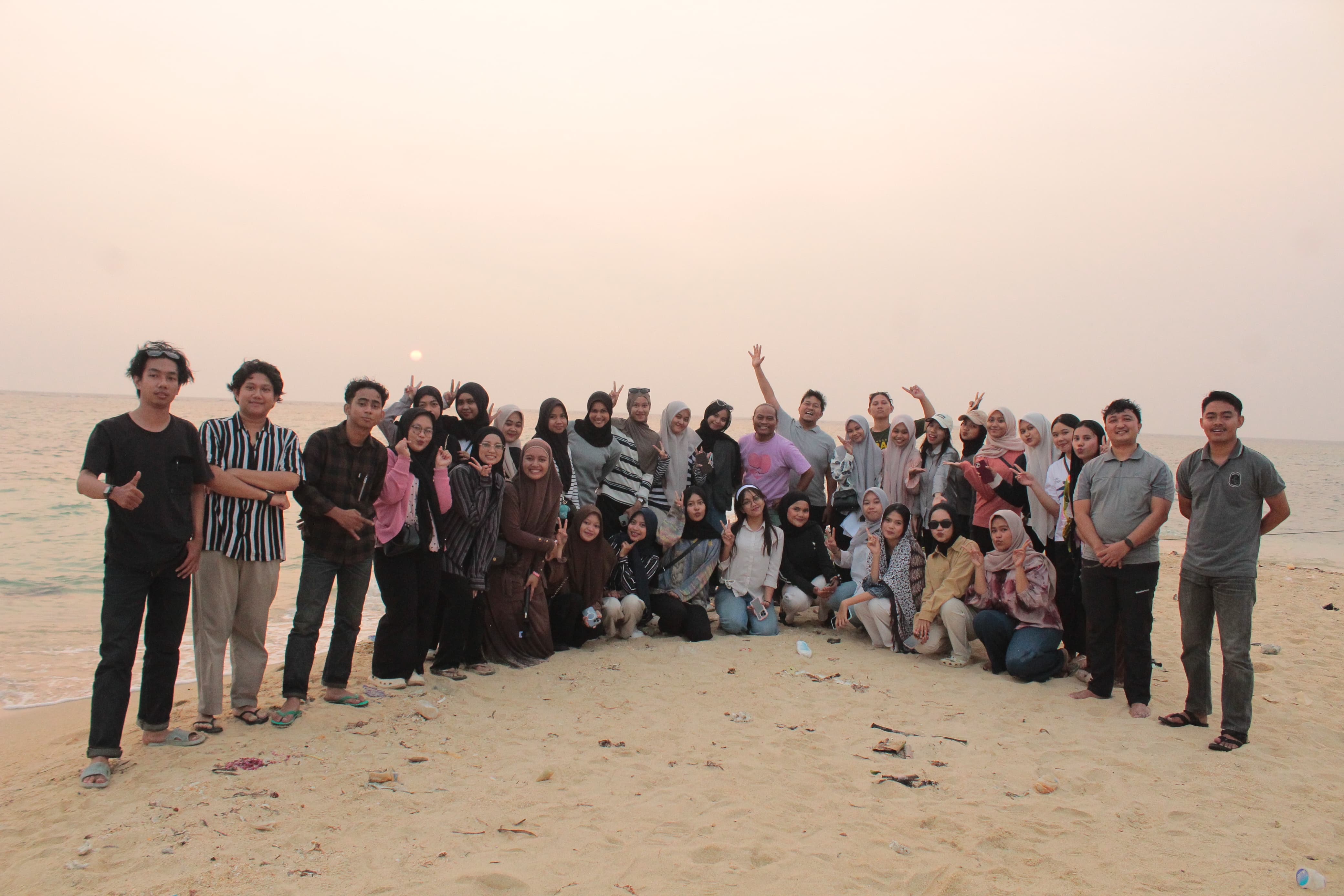
Makassar, 11 October 2026 — A total of 49 students from the Administrative Science Study Program, Department of Administrative Science, Faculty of Social and Political Sciences (FISIP), Hasanuddin University (Unhas), accompanied by two sign language interpreters (JBI) and four faculty members, conducted a field expedition entitled “Barrang Caddi Island Expedition: Exploring Maritime Governance on Small Islands.” Participants included both undergraduate students and students enrolled in the Master’s Program in Public Administration. The expedition took place on 10–11 October 2026, with Unhas’s research vessel, the Unhas Explorer, providing transportation throughout the two-day activity.
The expedition formed part of the learning activities for the Maritime Governance and Policy course. Its primary objective was to produce a Profile of Barrang Caddi Island from a Maritime Governance Perspective, going beyond a description of the island’s conditions to examine how its marine environment is governed, which actors are involved, what rules apply, and what challenges coastal communities face.
Participants travelled to Barrang Caddi Island aboard the Unhas research vessel. During the journey, they also had the opportunity to enjoy the waters of the Spermonde Archipelago, including swimming and snorkeling near Kodingareng Keke Island. This experience allowed students to engage directly with the marine ecosystems they were studying while deepening their understanding of the importance of sustainable maritime governance.
The presence of two sign language interpreters demonstrated the expedition’s commitment to accessible and inclusive communication, as one Deaf student participated in the entire program. With support from the interpreters, all participants had equal access to the field learning activities. The expedition was accompanied by four faculty members: Dr. Ishak Salim, SIP., MA.; Andi Ahmad Yani, S.Sos., M.Si., MPA., M.Sc.; Nuralamsyah Ismail, S.AP., M.AP.; and Sri Nurindah Sari Arsyad, M.AP. (Research Assistant at the Policy and Governance Laboratory, Department of Administrative Science).
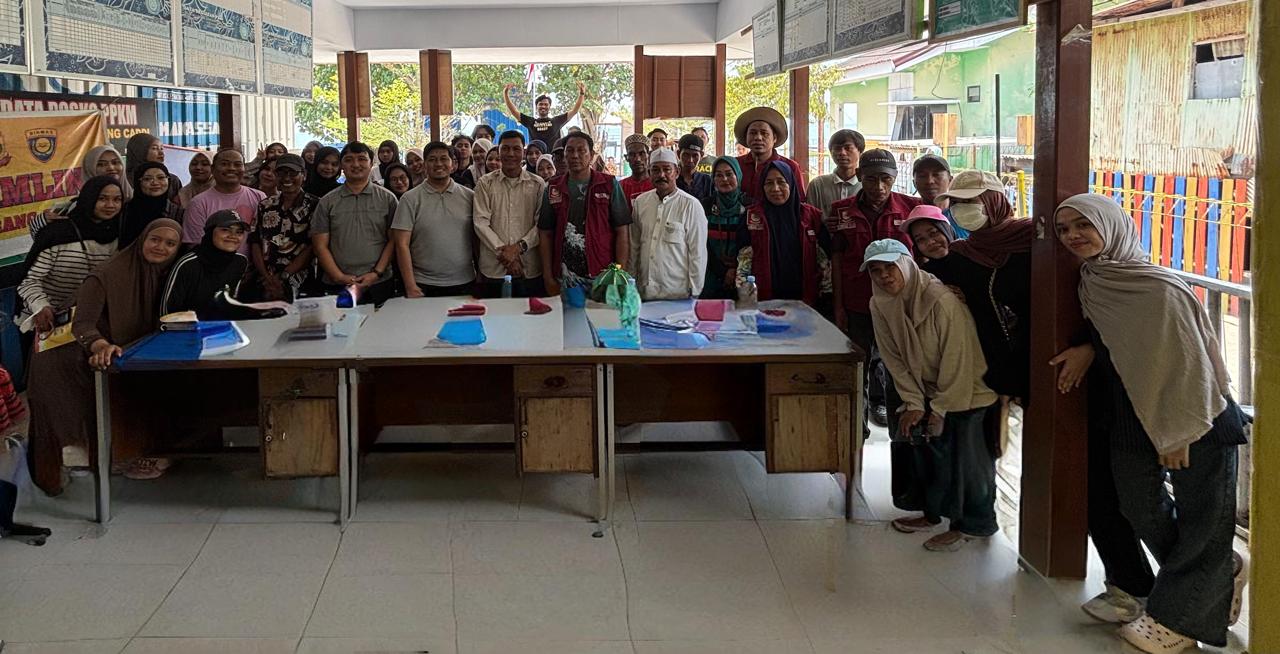
On Barrang Caddi Island, the team held a focus group discussion (FGD) with the local administrative ward head (lurah), ward office staff, and community leaders. During the meeting, the research team donated ten flotation devices to the ward head to support residents’ safety during sea travel. The team also conducted in-depth interviews with various informants and observations across the island. Covering approximately four to six hectares, Barrang Caddi Island was small enough for the team to access and observe its entire area comprehensively.
The activity adapted Roe’s theoretical framework (2013, 2016, 2020), encompassing three main concepts: Governance Mismatch (the gap between central government policies and local realities); Speed, Flow, Form, Process (the dynamics of small-island governance); and Juxtaposition (conflict and synergy among actors). The study also incorporated perspectives on environmental governance, critiques of the blue economy, and the local wisdom of coastal communities.
Students were divided into three teams according to the three research instruments used. Team 1 developed the Barrang Caddi Island Profile using the Maritime Governance Instrument, covering location information, demographics, sociocultural conditions, the economy, political and institutional structures, biodiversity, environmental conditions and disaster risks, and maritime governance. Team 2 analyzed Citizen-Based Governance using the Self-Organization Instrument, examining the presence of triggers, relationships of trust, the focus of interaction, the locus of interaction, boundary spanning, and the adaptation of practices. Team 3 mapped the Maritime Governance Spectrum using the Maritime Governance Actor Spectrum Instrument, examining the degree of policy integration and the degree of external coordination among actors. Research methods included participant observation, in-depth interviews, focus group discussions, biodiversity inventories, and participatory mapping with the community.
One local partner that became a focus of the study was Komunitas Lestari Penyu (KLP), a conservation group established on 11 November 2022 on Barrang Caddi Island. According to interviews with its management team, KLP actively protects three species of sea turtles in the surrounding waters: hawksbill turtles (Eretmochelys imbricata), green turtles (Chelonia mydas), and olive ridley turtles (Lepidochelys olivacea). Through regular patrols, community education, coral transplantation, and the release of turtle hatchlings, KLP provides a concrete example of civil society involvement in maritime governance.
The expedition aligns with the vision of the Unhas Rector for the 2026–2030 term, particularly in strengthening thematic research ecosystems, community service, and Unhas’s contribution to the Sustainable Development Goals (SDGs). Course instructor Dr. Ishak Salim stated that the expedition put classroom theory into practice in a real-world setting.
“Students do not merely learn concepts; they also experience firsthand the dynamics of maritime governance at the community level,” he said.
The expedition’s findings will be developed into a comprehensive island profile, a map of actors and institutions, documentation of local wisdom, a biodiversity inventory, policy recommendations, scholarly articles, and a video documenting the activity. The expedition is expected to contribute academically to the advancement of public administration and maritime policy in Indonesia, particularly in the governance of small islands.
The expedition team also extends its deepest appreciation and gratitude to the Barrang Caddi ward head and all ward office staff for granting permission, providing support, and facilitating the activities; to the island’s community leaders, customary leaders, and religious leaders for their willingness to share valuable stories, experiences, and knowledge; to all residents of Barrang Caddi Island for their hospitality, openness, and exceptionally warm welcome throughout the two-day expedition; to Komunitas Lestari Penyu (KLP) and all local partners for their collaboration; and to the leadership of Hasanuddin University and FISIP Unhas for the support that made the expedition possible. Without the support and participation of everyone involved, the expedition would not have been as successful. The team hopes that its outcomes will contribute to the advancement of knowledge and the welfare of the people of Barrang Caddi Island.